
Project Guides
Custom Hotel Wall Sconces: Resolve the Wall Finish Before Production
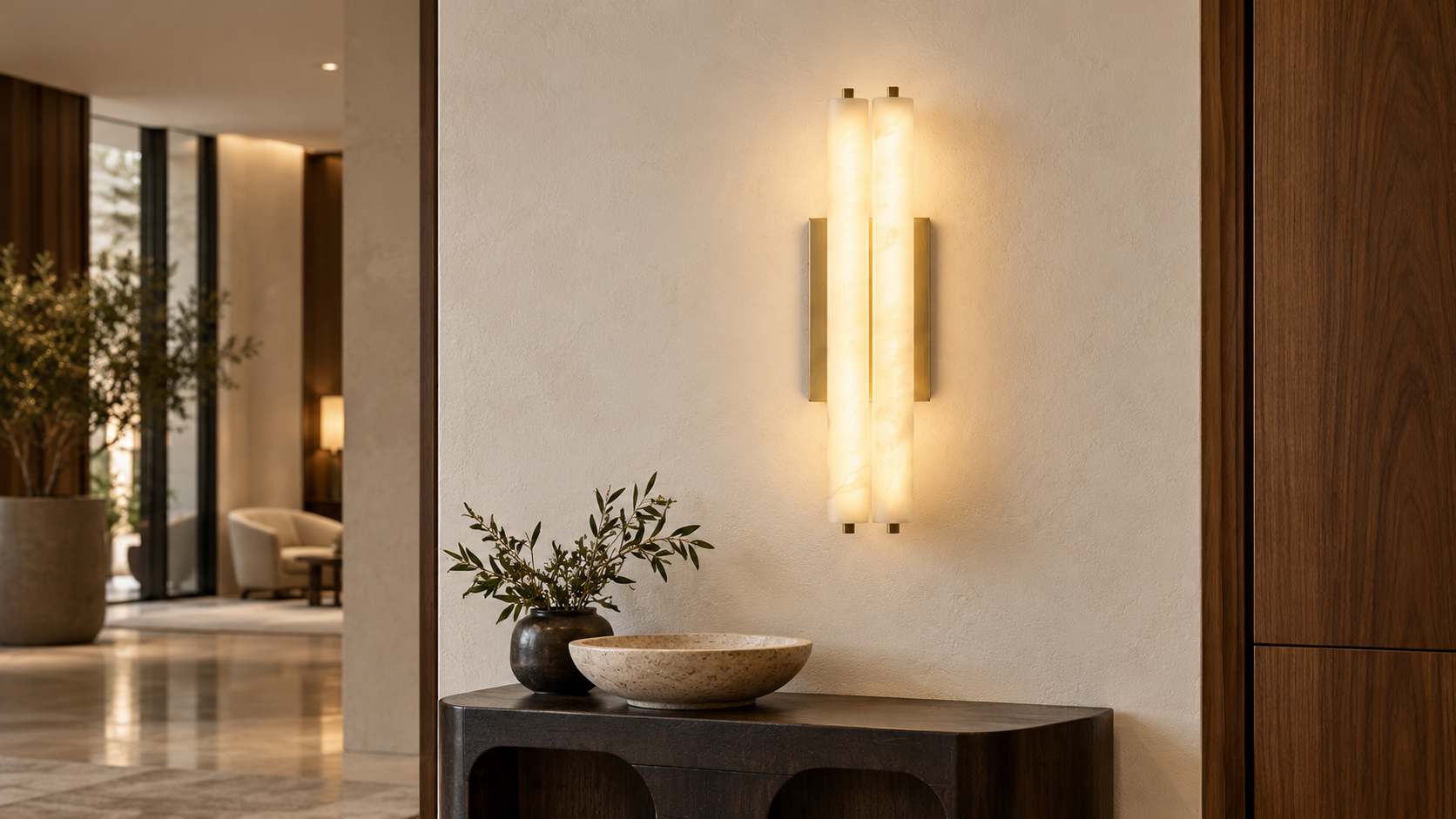
Scene illustration
A decorative wall light is approved against a real wall, not an empty elevation. For hotel renovations and new interiors, coordinate the finished surface, visible backplate and removal route before releasing a bespoke sconce order.
One fixture, three drawings that must agree
Consider a proposed hotel vestibule with a tall stone wall sconce beside walnut panels. This is a coordination example, not a completed Meiyun project. The lighting elevation places the fixture on an axis, the joinery drawing sets the panel joints, and the electrical drawing locates the connection. If those drawings use different reference points, a visually balanced rendering can conceal an unresolved installation.
Put the fixture outline, backplate outline and connection position on the same approved elevation. Add the finished wall build-up in section. Ask the contractor to confirm the actual site condition against that drawing before manufacture; a decorative cover cannot be assumed to solve a mismatch behind it.
What changes when the wall finish changes?
Replacing paint with timber slats, stone panels or a thicker decorative lining changes the surface that the fixture meets. Review the support arrangement and connection with the responsible installer rather than treating every finish as an interchangeable backdrop. The appropriate fixing detail depends on the fixture, substrate and local project requirements.
For a ribbed or stepped surface, request a section through the proposed mounting position. Establish whether the backplate sits on one continuous plane and whether any visible gap is intentional. Do not approve a larger cover merely because it hides more of the opening: first establish which issue is visual and which requires a revised mounting detail.
The sample should include the wall
An isolated lighting sample can confirm an attractive metal colour while leaving its relationship with the surrounding finish untested. For custom decorative lighting procurement, review the proposed sconce beside the actual wall-finish sample. Compare the brass or painted metal with nearby handles, trims and joinery under the lighting conditions agreed for the review.
Record the accepted finish sample and drawing revision together. Photograph the assembly from the normal approach direction as well as straight ahead. A seam that disappears in a front view may become conspicuous from the corridor; the decision should reflect the way guests will encounter the fitting.
Leave a route for the next maintenance visit
Before surrounding the fitting with permanent joinery or a closely fitted decorative border, ask how its removable components are reached. Have the manufacturer identify the removal direction and have the contractor check the available space against the actual assembly instructions. A clean elevation should not depend on trapping a serviceable part behind another trade's work.
This review does not establish electrical compliance or a universal clearance. Installation and maintenance arrangements require confirmation for the selected model and destination. Treat a scene illustration as an explanation of the design relationship, not evidence of fixing strength, access dimensions or light output.
How Meiyun can support the coordination
Zhongshan Meiyun Lighting Co., Ltd. manufactures wall sconces and bespoke decorative lighting, with in-house metal processing, polishing, electroplating and paint-finishing. Its project support includes engineering shop drawings, material-sample approval and pre-assembly testing. These stages provide opportunities to agree the wall interface before production; the exact detail remains subject to project review.
Send Meiyun a wall elevation, a section of the finished build-up, the intended fixture position and photographs or samples of adjacent materials. Identify who will confirm the support and electrical arrangements on site. For the wider sequence of drawing and manufacturing approvals, see our custom lighting production process guide. A useful enquiry explains the wall as carefully as it describes the lamp.