
Project Guides
Metal Finishes for Custom Hotel Lighting: Match the Sample, Not the Name
Scene illustration
For custom hotel lighting, a finish name is a starting description. Approve the relationship between the luminaire, furniture hardware and architectural metalwork using physical references, then record whether each item should match or deliberately contrast.
A procurement schedule might call a pendant, a door handle and a console trim “brushed gold” even though three suppliers interpret that description differently. The lighting order can meet its written colour name while still missing the designer's intended palette. The problem is not necessarily a defective product; the purchasing brief may never have defined the relationship between the three finishes.
Choose what needs to match
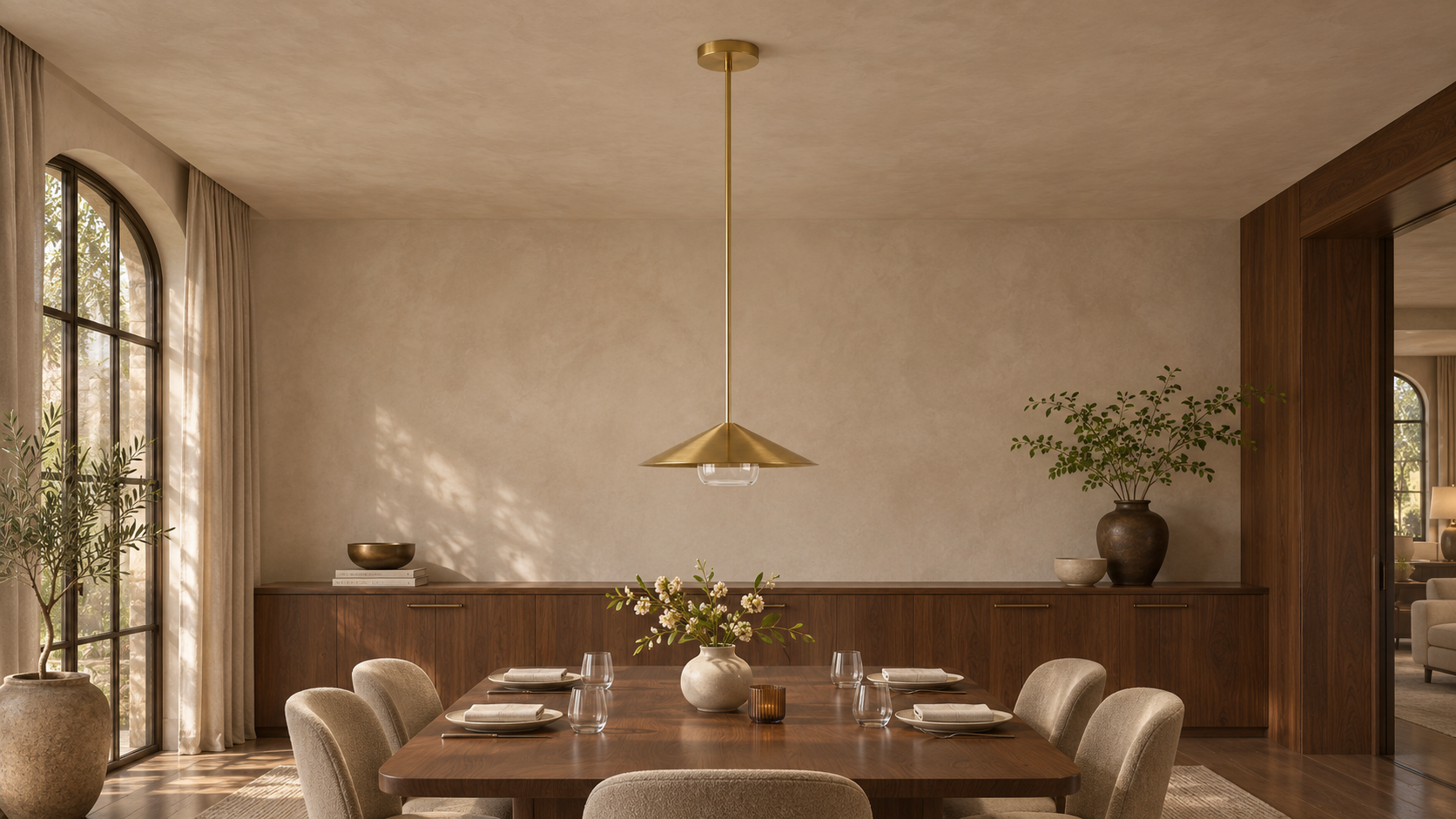
In a hypothetical hotel dining room, the pendant may be the principal warm-metal feature while cabinet hardware uses a darker accent. Requiring every supplier to copy the pendant would erase that decision. Conversely, accepting unrelated gold tones around one table could undermine an intended coordinated set. State the design choice before asking a custom lighting manufacturer to develop a finish.
Separate the base material from the appearance. Ask the supplier to identify the proposed substrate and finishing process for the selected fixture. A brass-coloured surface alone does not establish that the component is solid brass, and the same colour description should not be used as a substitute for a material specification. Confirm both in the order documents.
Create a short relationship schedule: the pendant follows sample L-01; adjacent handles contrast with L-01 and follow sample H-02; visible screws or canopy components belong to the lighting finish scope. These identifiers are illustrative, not Meiyun catalogue codes. The schedule tells each supplier which reference governs its work without pretending every metal in the room must be identical.
A flat swatch is only part of the review
Review the proposed lighting finish on a representative component as well as a sample swatch when the visible geometry matters. A broad conical shade presents metal differently from a narrow stem, joint or canopy. Ask which surfaces the submitted sample represents and identify any exposed parts that require separate agreement.
Place the lighting reference beside the actual handle or trim sample rather than comparing separate phone photographs. Review them together under the intended room-lighting conditions and from the normal viewing positions. Record whether the decision concerns colour, sheen, brushing direction or an intentionally different accent; “make it warmer” leaves too much room for another interpretation.
If a rendered scene shows a pleasing palette, use it to communicate the intended relationship. It does not establish the exact delivered colour, substrate, coating process or durability. Physical approval and product-specific documentation remain necessary. This distinction is especially useful when an overseas project team reviews a bespoke pendant-light design remotely.
Keep the decision usable after approval
Retain an identified approved reference with the relevant revision and an agreed production comparison method. If a late request changes a canopy or shade, ask whether the existing finish approval still covers the revised visible part. Do not assume an accepted swatch automatically approves a new manufacturing detail.
For repeat rooms or later project phases, tell the manufacturer which earlier reference should govern the new enquiry. Ask what comparison samples are needed before placing the next order. This is a request for controlled review, not a promise that separate batches or unrelated suppliers will produce an imperceptible match.
What Meiyun can develop with your team
Zhongshan Meiyun Lighting Co., Ltd. provides bespoke decorative lighting with in-house polishing, electroplating and paint-finishing workshops. Its material-sample approval and engineering shop-drawing stages allow the proposed finish and visible component scope to be discussed together. Available substrates, treatments, feasibility and acceptance criteria must be confirmed for the particular design.
For a useful custom lighting enquiry, send the intended fixture design, quantities, destination, metal references and the matching or contrasting relationships you want to retain. Include a clear photograph for context and the availability of physical samples. Our custom lighting production process guide explains how sample decisions fit into the wider manufacturing sequence. The goal is an agreed palette that every supplier can understand before production begins.