
Project Guides
Hotel Restaurant Pendant Lights: What Happens When Two Tables Become One?
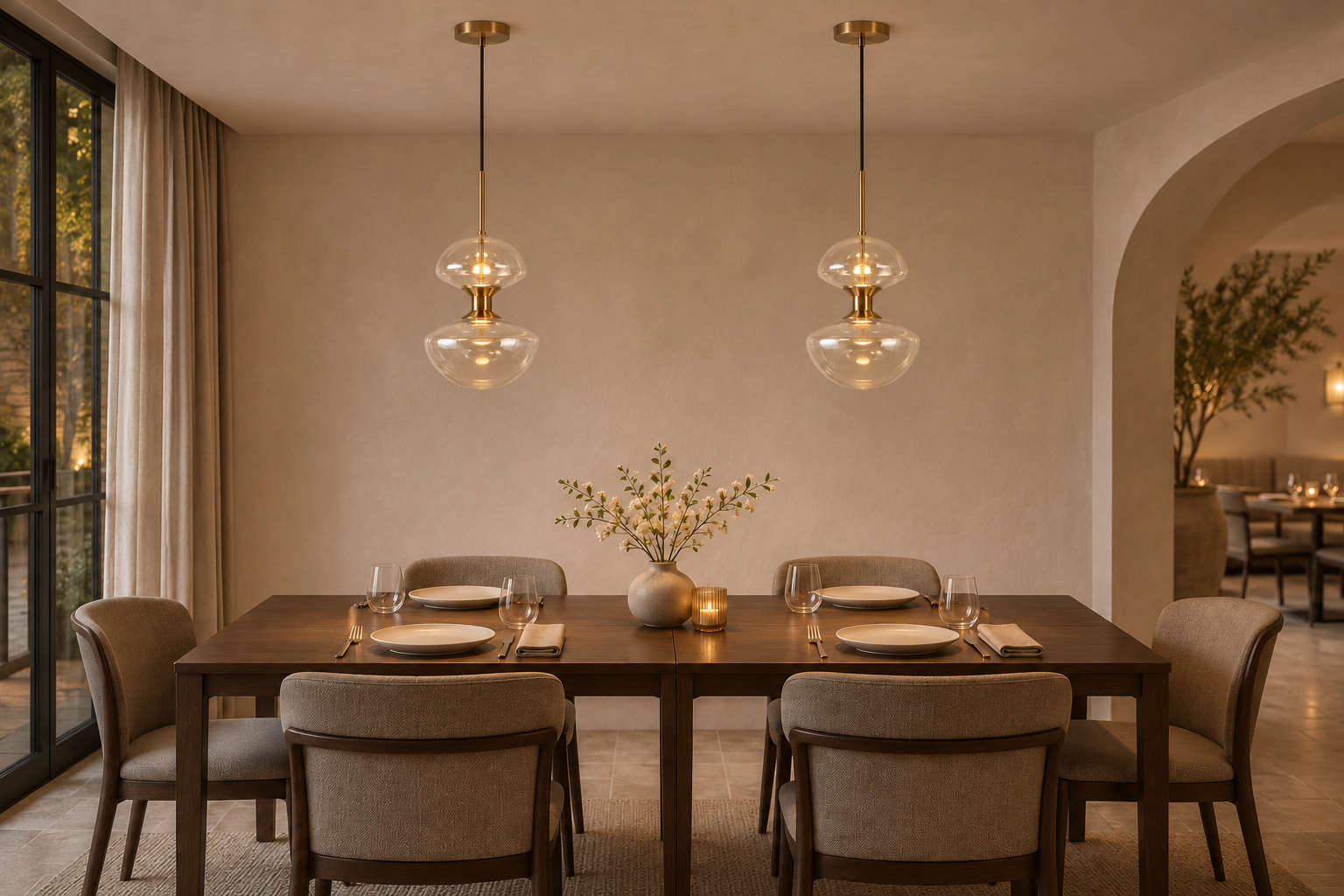
Scene illustration
Before ordering custom pendant lights for a hotel restaurant, compare the separate-table and joined-table layouts. Decide which furniture positions the ceiling arrangement must serve, then check the occupied setting rather than choosing a fixture from table shape alone.
A restaurant operator may separate two tables for breakfast and join them for a group booking that evening. The furniture moves; a fixed pendant normally stays where it was installed. That creates a design question which a beautiful dining-room photograph cannot answer: does the decorative lighting belong to each table, or to the dining zone as a whole?
Ask for the layouts staff will actually use
Request a normal service plan and the alternative seating plans the operator intends to use regularly. Put the proposed pendant centres on each drawing without moving them between versions. Include the chairs in use, not just empty tabletops. This comparison reveals whether a fixture remains above dining furniture or ends up over a gap, an aisle or a chair when the arrangement changes.
Also distinguish a routine change from an exceptional event. A restaurant that joins tables every evening needs a different discussion from a private dining room converted once a year. Ask who moves the furniture and whether staff have a documented position to return it to. The answer establishes how precise the relationship between a pendant and a table can realistically be.
A two-table example: the middle is not the only reference
Imagine two equal square tables, each centred beneath one pendant. If staff bring the tables together symmetrically, their individual centres move towards the join while the pendants remain apart. The combined table now has a new overall centre, but that does not automatically mean it needs one central chandelier. Two pendants may still form a deliberate composition above the longer setting; their relationship to the end seats and the table edges needs reviewing.
Now consider a different operation: one table stays still and the second moves towards it. The joined arrangement shifts to one side of the original ceiling composition. These are two different coordination problems even though both plans say “two tables joined”. Record the movement on the drawing. A generic promise that repeated pendants are flexible does not resolve either case.
Choose what stays fixed before choosing the decorative form
One approach is to keep defined dining positions and limit furniture changes to layouts reviewed against those positions. This can suit a scheme where individual pendants are intended to mark each setting. It requires the operator to accept that furniture placement is part of the lighting concept, rather than an unrestricted daily choice.
Another approach is to treat the decorative fixtures as a composition for the whole dining zone, with the table lighting assessed separately. This gives the interior designer a different brief: the pendant arrangement should make sense across the occupied room without depending on a perfect centre above every table. It does not establish that the decorative fixtures alone provide sufficient illumination. Have the lighting designer assess the working layouts and the proposed light sources.
Review the changed setting at a real table
For the shortlisted arrangement, mark the fixture envelope and proposed suspension position in a mock-up or coordinated room view. Check the smallest regular setting as well as the joined one. Sit in the end seats, stand up beside the table and consider staff approaching with service items. Look for awkward visual relationships and potential conflicts; do not use this exercise as a substitute for project-specific clearance, mounting or electrical approval.
Write a short decision record naming the accepted furniture layouts, pendant locations and any operating restrictions. Attach the same revision to the furniture plan and the custom lighting enquiry. If the operator later changes the table sizes or joining direction, flag the arrangement for review before the manufacturer releases the affected drawings for production.
Where Meiyun fits into the coordination
Zhongshan Meiyun Lighting Co., Ltd. manufactures bespoke decorative lighting for hospitality and high-end residential projects. Its in-house metalworking, finishing, LED assembly and hand-blown-glass workshops support the development of project-specific fixtures. For this type of restaurant enquiry, send the alternative table plans together with the intended fixture form, material references and proposed suspension details, so feasibility can be discussed against an actual operating brief.
Meiyun can support engineering shop drawings, material-sample approval and pre-assembly testing as part of the agreed project scope. Its custom lighting production process guide explains the manufacturing stages. Resolve the furniture-layout decision before asking the factory to finalise the decorative lighting: changing the shape of a shade cannot, by itself, solve an undefined seating plan.