
Lighting Guides
Alabaster Pendant Lights for Kitchen Islands: Size, Height & Buying Guide
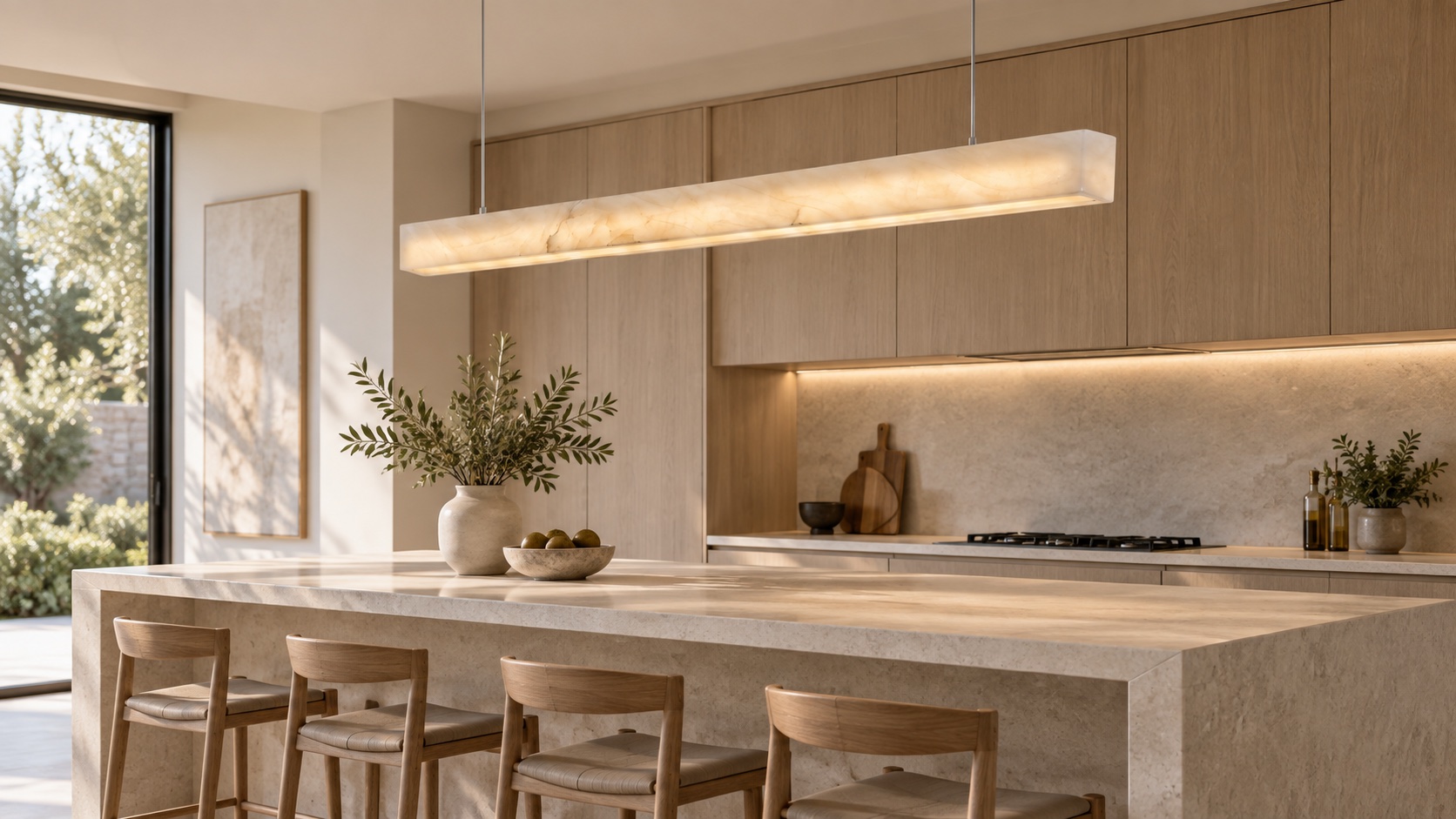
For a balanced kitchen island layout, start with a pendant or linear fixture that is about one-half to two-thirds of the island length. Hang its lowest point 30–36 inches (75–90 cm) above the countertop, then adjust for ceiling height, sightlines and fixture scale. A 2700–3000K light source, CRI 90 or higher, dimming and good glare control will usually provide the most comfortable result.
A kitchen island may serve as a prep station, breakfast bar, coffee corner, social hub and temporary workspace. The lighting above it therefore has two jobs: it must support everyday tasks and create a visual link between the kitchen and the surrounding dining or living area.
Alabaster pendant lights are especially effective here because the stone looks sculptural when switched off and develops a soft, luminous pattern when lit. Appearance alone, however, is not enough. Size, hanging height, material, color temperature, glare, cleaning and ceiling support all affect whether the fixture works in daily use.
1. Is the shade natural alabaster, engineered stone or a faux material?
The term “alabaster” is sometimes used loosely in decorative lighting. A fixture may use natural translucent alabaster, engineered stone or a composite made to reproduce the look of stone. These materials can differ significantly in veining, weight, light diffusion, cost and maintenance.
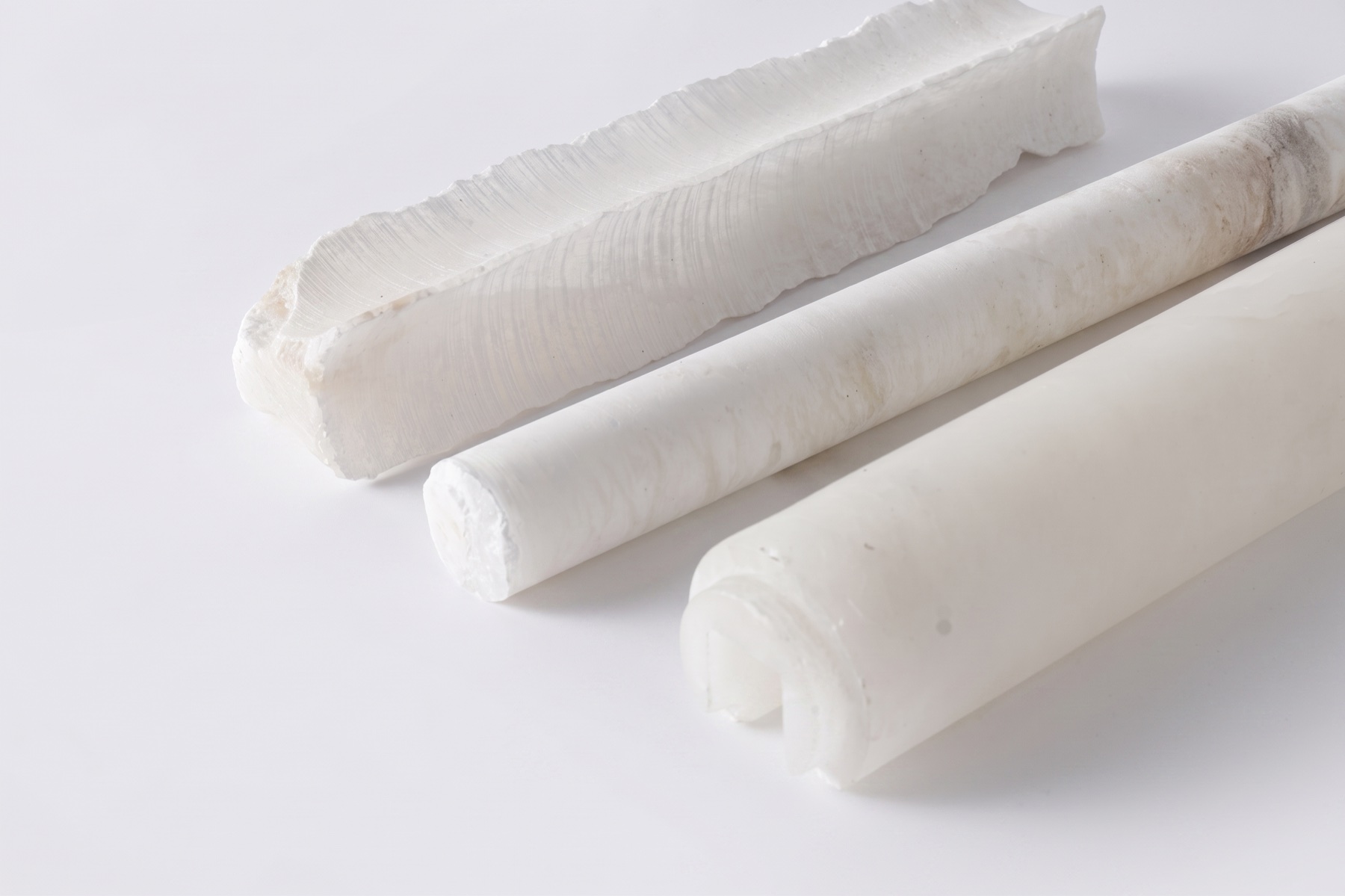
Before ordering, ask the supplier to confirm:
- whether the material is natural alabaster, engineered stone or a faux-stone composite;
- whether close-up photographs, lit and unlit comparisons, or a physical sample are available;
- the net fixture weight, packing method and ceiling load requirement;
- whether stone parts can be removed and whether replacement pieces are available; and
- what range of natural color and vein variation should be expected.
No two pieces of natural alabaster are identical. If a project requires very consistent color or veining across several fixtures, define the acceptance range before production and review material photographs or samples before cutting.
2. What size pendant light works over a kitchen island?
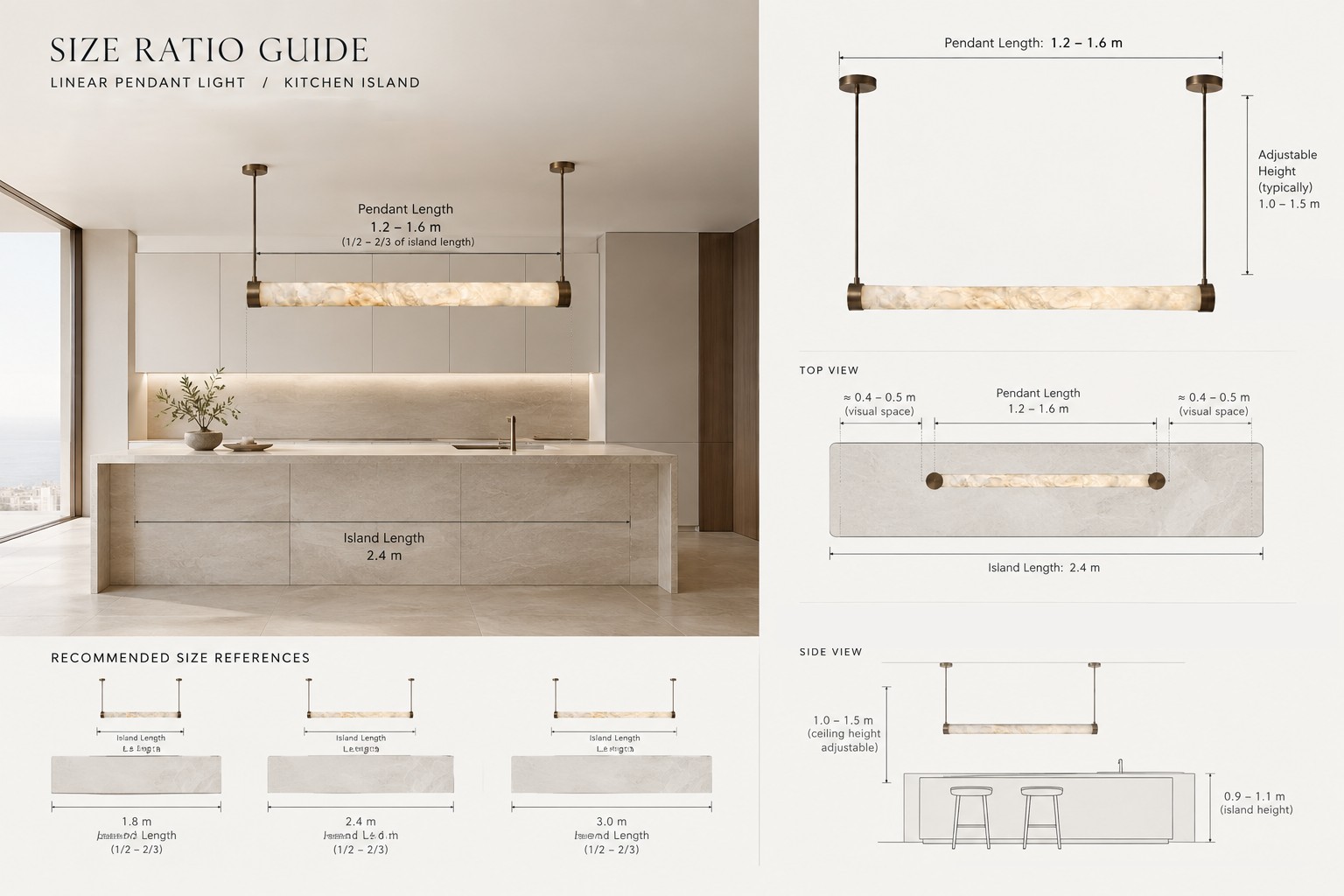
Measure the island length and width, countertop height and finished ceiling height before selecting the light. For a long island, a practical starting point is a linear or oval fixture measuring one-half to two-thirds of the island length.
For example, above a 2.4 m (about 7.9 ft) island, a linear fixture approximately 1.2–1.6 m (47–63 in) long will usually have enough visual presence while leaving comfortable space at both ends.
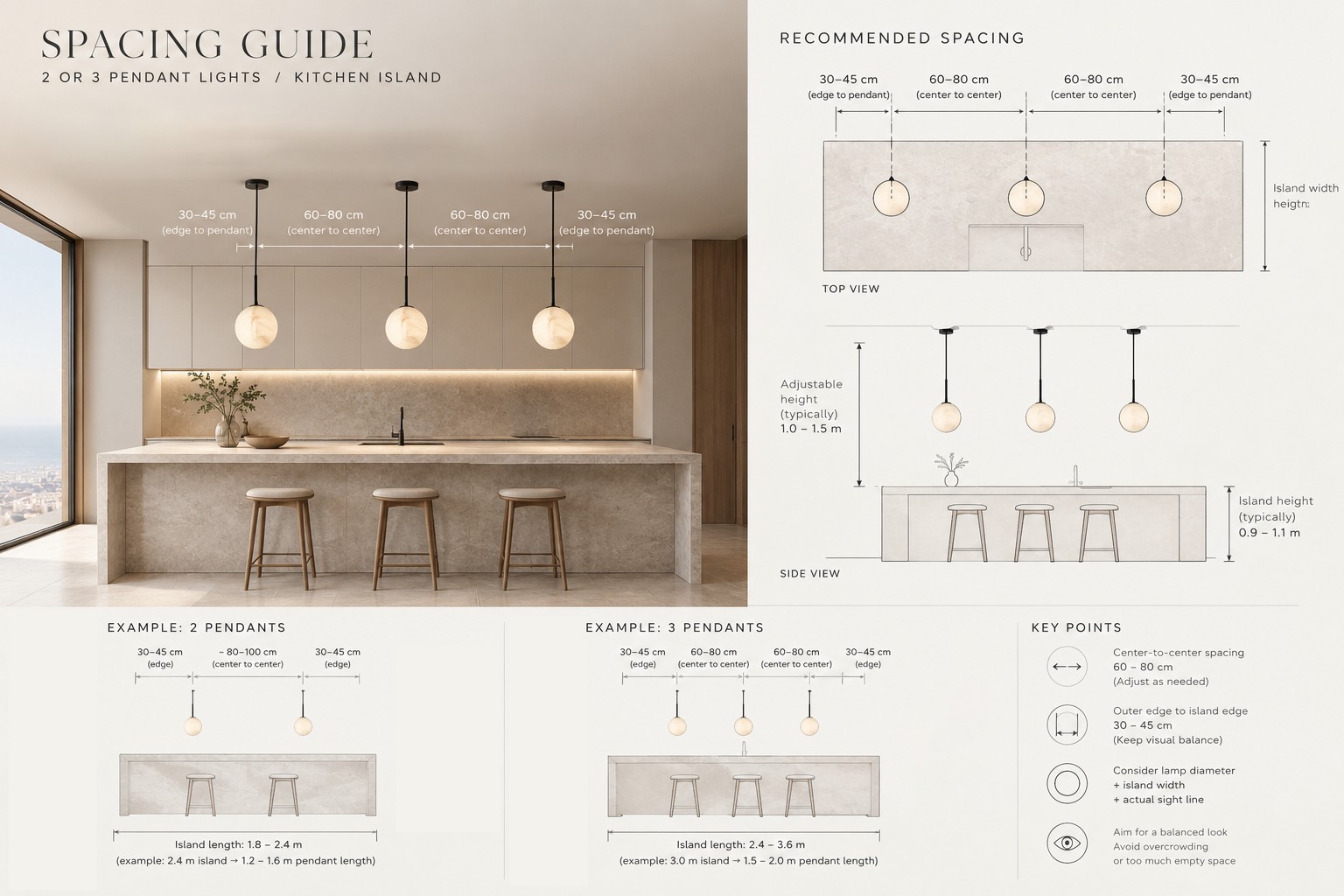
For two or three smaller pendants, plan the overall composition before choosing an individual shade diameter. A useful first layout is 24–31 inches (60–80 cm) from center to center, with the outer fixtures about 12–18 inches (30–45 cm) from the island ends. Treat these as planning ranges, not fixed rules: larger shades need more space, while narrow islands may require smaller diameters.
3. How high should an alabaster pendant hang above the island?
In a typical residential kitchen, begin with the bottom of the fixture 30–36 inches (75–90 cm) above the countertop. Then adjust for the height of the users, the visual weight of the fixture and the ceiling height.
A pendant that hangs too low can interrupt conversation and get in the way during serving or cleaning. One that hangs too high may feel disconnected from the island and spread light too widely. In an open-plan kitchen, review the fixture from the living and dining areas as well as from the cooking side so it does not block artwork, cabinetry or a key view.
Vaulted or unusually high ceilings need a project-specific suspension length. Establish the desired visual position first, then specify adjustable cables or custom downrods rather than applying the standard 30–36 inch range mechanically.
4. Which pendant shape best matches the island?
| Fixture shape | Best suited to | Design effect |
|---|---|---|
| Linear rectangle | Long islands, especially 1.8 m (6 ft) or more; modern kitchens | Even visual rhythm and straightforward alignment |
| Oval or ring | Rounded islands and warm contemporary interiors | Softer geometry that pairs well with timber, leather and curved cabinetry |
| Globe cluster | Small to medium islands or layouts that need more rhythm | Flexible composition; spacing and glare require extra attention |
| Multi-tier ring | Large islands, open-plan rooms and higher ceilings | A stronger sculptural statement that needs generous space |
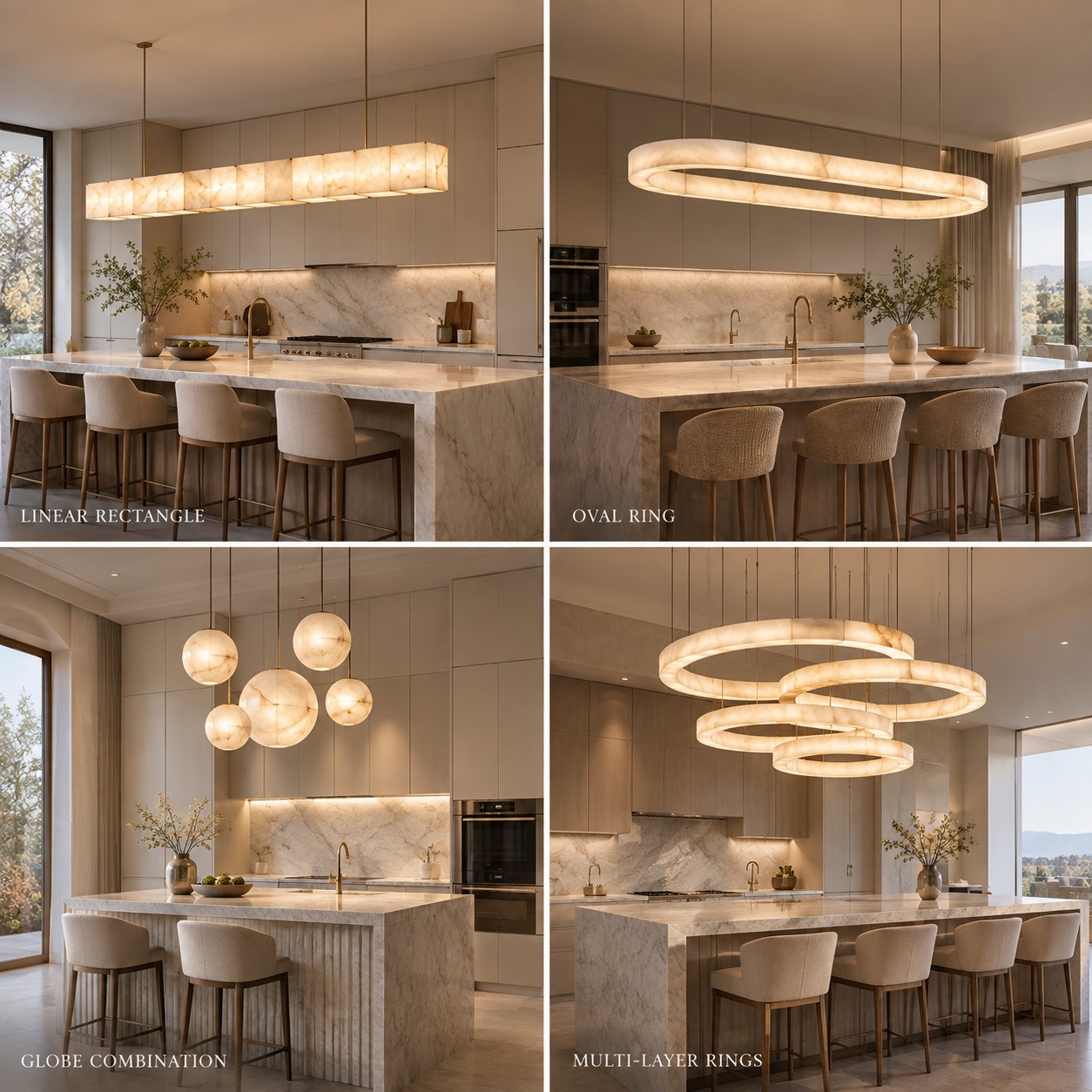
A simple rule is to align the fixture’s main axis with the island’s long axis. Oval and ring forms tend to suit curved corners and rounded cabinetry, while a rectangular linear pendant usually sits more naturally in a kitchen with crisp, orthogonal lines.
5. What color temperature and light quality should you specify?
Translucent stone needs the right light source to reveal depth without creating hot spots. For an island that combines task and ambient lighting, review these four specifications:
- Color temperature: 2700K produces a warmer atmosphere; 3000K gives a useful balance between warmth and visual clarity for most kitchens.
- Color rendering: choose CRI 90 or higher so food, stone countertops and timber finishes appear natural.
- Dimming: brighter output supports food preparation, while a lower level is more comfortable for dining or evening use.
- Glare control: prefer a design with concealed LEDs and even diffusion, then check whether the light source is visible from a seated position.
An alabaster pendant is best used as feature and task lighting rather than the kitchen’s only light source. Under-cabinet lighting and general ceiling lights on separate circuits will provide a more adaptable scheme.
6. How should alabaster and metal finishes be coordinated?
Warm white alabaster works with several hardware finishes, but each creates a different character:
- brushed brass feels refined and suits warm contemporary or modern-classic interiors;
- black hardware creates clearer contrast for modern and minimalist kitchens; and
- antique bronze or dark brown leather details feel warmer beside timber cabinetry.
If the island countertop already has strong marble veining, a quieter stone selection can prevent visual competition. Against a simple background, more expressive alabaster veining can become the focal point. The goal is a clear hierarchy, not maximum pattern in every surface.
7. What must be confirmed before installation?
- Ceiling support: natural stone fixtures can be heavy. The fixing points must connect to a reliable structural element, not only to a decorative ceiling panel.
- Power location: coordinate the electrical outlet with the final island centerline before the cabinetry and countertop are fixed.
- Suspension range: verify the finished ceiling height, fixture drop and space available in the canopy for excess cable.
- Driver access: confirm the driver location, ventilation and future replacement access.
- Cleaning conditions: avoid placing the fixture directly above heavy grease or splash zones. Use a soft dry or slightly damp cloth and avoid strong acidic or alkaline cleaners.
- Qualified installation: stone components, irregular frames and multi-point suspension systems should be installed by experienced electrical and installation professionals.
8. Common buying mistakes to avoid
Choosing the fixture without checking the island proportion. A product photograph cannot show whether the same light will feel crowded or undersized in your room.
Prioritizing brightness but ignoring glare. People often sit at an island, so evaluate the exposed light source from seated eye level as well as while standing.
Treating every natural variation as a defect. Vein and color differences are normal in natural alabaster. Instead, agree on material selection standards, structural integrity and workmanship.
Selecting the light after construction is complete. Weight, fixing points, power locations and dimming controls affect early site work. Confirming the fixture sooner reduces rework.
Frequently asked questions
What is the best pendant size for a 7- to 8-foot kitchen island?
As a starting point, choose a linear fixture about one-half to two-thirds of the island length. For a 7–8 ft island, that often means a fixture roughly 42–64 in long, followed by a visual check against the island width and room scale.
How far above the countertop should the pendant hang?
Start at 30–36 in (75–90 cm) from the countertop to the lowest point of the fixture. Raise or lower it to protect sightlines, provide adequate task light and suit the ceiling height.
Is 2700K or 3000K better for alabaster lighting?
Choose 2700K for a softer, warmer mood. Choose 3000K when the island is used frequently for preparation and you want warmer light with slightly clearer visual definition.
Are natural alabaster pendants difficult to maintain?
Routine care is simple when the fixture is kept away from heavy grease and direct splashes. Dust with a soft cloth, use only a slightly damp cloth when needed and follow the supplier’s care guidance for the specific stone and finish.
What information should I send when requesting a custom island pendant?
Provide the island length and width, countertop height, finished ceiling height, ceiling construction, power-point location, room photographs, preferred style and project country. These details allow the supplier to review proportion, suspension, electrical specification and installation requirements.
Plan the pendant as part of the kitchen, not as an isolated object
The best alabaster pendant is not simply the most dramatic design. It is the fixture whose scale belongs with the island, whose light is comfortable, whose structure can be installed safely and whose materials support the rest of the interior.
If you are selecting an alabaster pendant for a residence, villa, restaurant or hospitality project, send your plan, room photographs and dimensions to Meiyun Lighting. Our team can review the fixture size, material combination, suspension and project-specific electrical requirements before quotation.