
Project Guides
Onyx vs Alabaster: Which Stone Is Better for Custom Lighting?
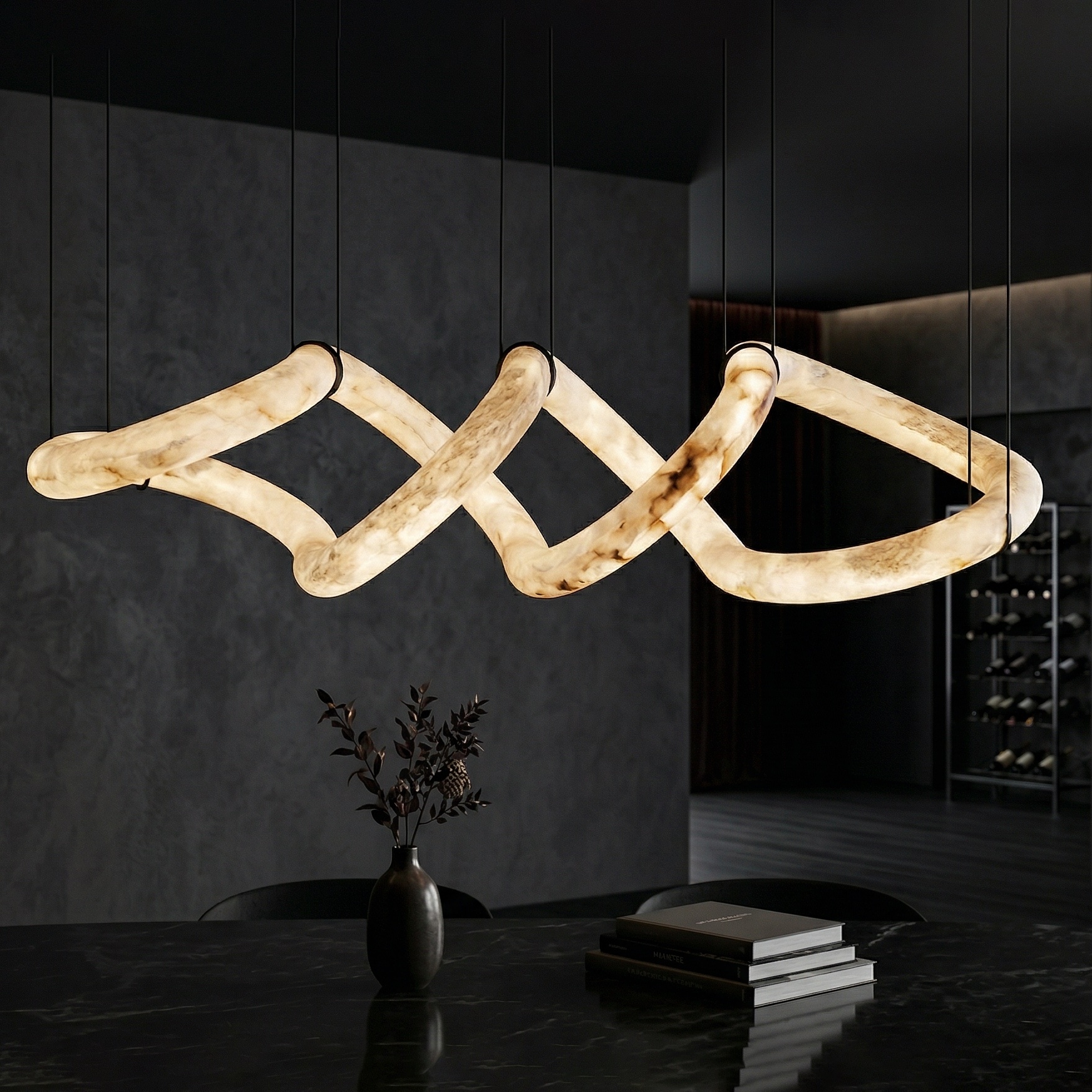
A practical comparison for architects, interior designers, contractors and lighting buyers
Quick answer: Neither stone is universally “better.” Onyx is often selected for stronger natural pattern, color contrast and visual drama, while alabaster is often chosen for a softer, warmer and more diffused glow. The right choice depends on the desired light effect, stone character, fixture design and project requirements.
Introduction
Onyx and alabaster are two of the most distinctive natural materials used in high-end decorative lighting. Both can transmit light, both have natural variation, and both can turn a chandelier or pendant into an architectural feature. Yet they create different visual experiences.
For a custom lighting project, the useful question is not simply which stone is more beautiful. It is which material gives the project the right balance of translucency, pattern, scale, structure, light diffusion and manufacturing flexibility.
This guide compares onyx vs alabaster lighting from a practical project perspective and shows how Zhongshan Meiyun Lighting can integrate the material decision into design development, engineering, sampling and production.
Onyx vs Alabaster: Quick Comparison
| Factor | Onyx Lighting | Alabaster Lighting |
|---|---|---|
| Visual character | Distinctive veining, stronger pattern and color variation | Soft, cloudy or layered natural appearance |
| Light effect | Can reveal layered natural pattern when backlit | Typically softer and more diffused |
| Best for | Statement chandeliers, feature walls, luxury lobbies | Ambient pendants, chandeliers, wall lights |
| Design language | Dramatic, sculptural, expressive | Calm, warm, refined, atmospheric |
| Natural variation | High; slabs differ in pattern and color | High; translucency and veining vary by piece |
| Customization | Bespoke shapes, slices and feature elements | Shades, panels, globes and decorative components |
1. What Makes Onyx Lighting Different?
Onyx is particularly attractive when the lighting design is intended to reveal the natural structure of the stone. Its veining and color zones can become part of the light composition rather than remaining a surface detail.
- Strong natural veining and visual contrast
- Distinctive color variation from slab to slab
- A strong relationship between stone pattern and light
- Suitable for statement pieces where the material is part of the design
- Works well with brass, bronze, black metal, glass and other premium materials
2. What Makes Alabaster Lighting Different?
Alabaster is often selected for its softer visual character. Instead of making the natural pattern the main visual event, the material can create a calm, warm and diffused lighting effect.
- Soft natural texture and subtle variation
- Warm, diffused appearance when appropriately illuminated
- Well suited to quiet luxury and warm contemporary interiors
- Useful for coordinated fixture families
- Pairs naturally with brass, bronze, wood, stone and neutral palettes
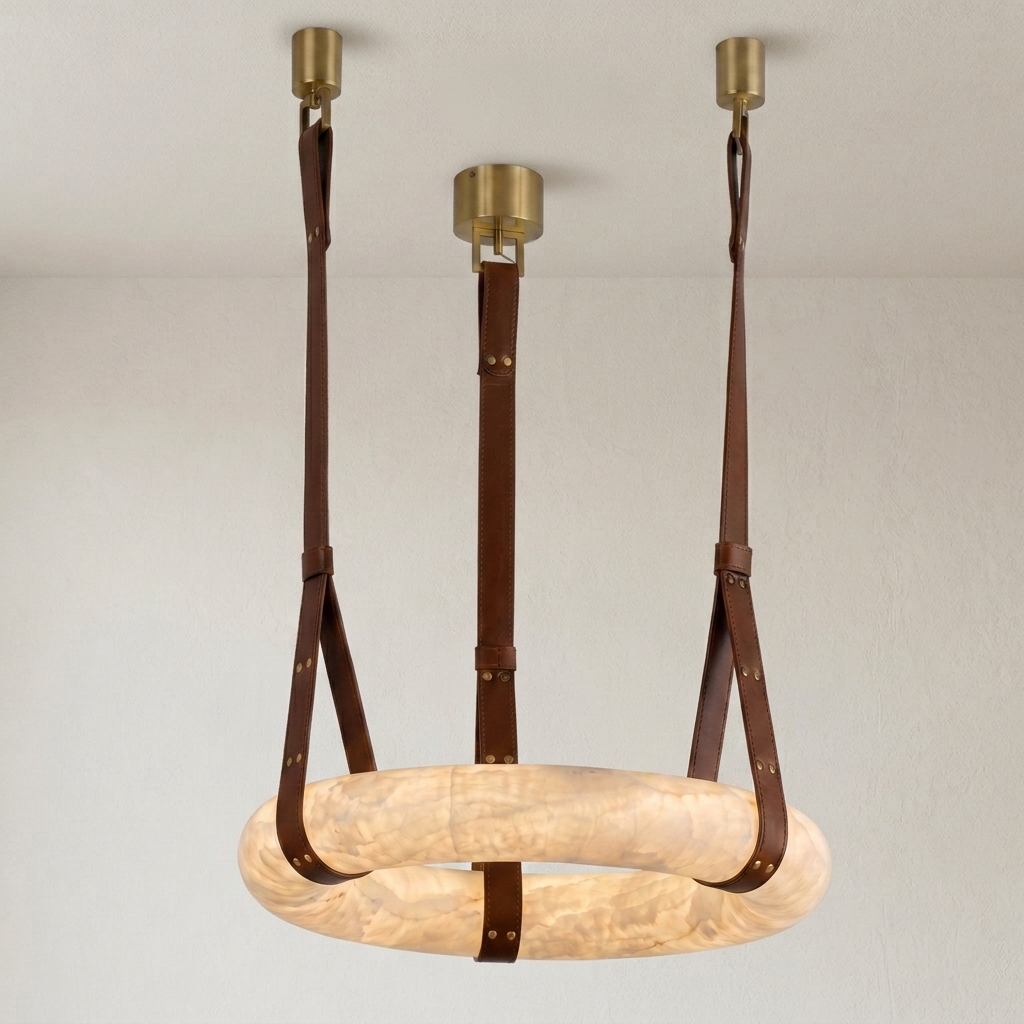
3. Onyx vs Alabaster: Which Has Better Light Transmission?
There is no universal answer because the visible lighting effect depends on the actual stone, thickness, color, structure, LED position and optical design. Two pieces of the same stone can produce noticeably different results.
Onyx can emphasize natural bands and pattern under backlighting, while alabaster is often preferred when the desired result is a softer and more even glow. The key is not simply how much light passes through the stone, but how that light interacts with the stone's natural structure.
Design tip: Do not approve translucent stone from an unlit photograph alone. Review the selected material both with the light OFF and with the light ON.
4. Which Has Better Natural Veining?
If the design brief prioritizes dramatic natural pattern, onyx often provides more visible variation and stronger visual contrast. This can be valuable for one-off statement fixtures where the stone itself is intended to become a focal point.
Alabaster can also contain attractive natural variation, but its character is usually quieter. For warm minimalism, organic modern interiors or restrained luxury, this softer expression can be more appropriate.
5. Which Is Better for Luxury Hotel Lighting?
Both materials can work in luxury hospitality. The decision usually depends on the role of the fixture within the architecture.
- Choose onyx when the fixture needs strong visual identity, natural pattern or a dramatic focal point.
- Choose alabaster when the fixture should create warmth, softness and a quieter atmospheric effect.
- For large hotel lobbies and double-height spaces, evaluate stone weight, suspension structure, access and installation together with appearance.
- For guest rooms, corridors and dining spaces, consider glare, viewing distance, light distribution and surrounding finishes.
Meiyun Lighting's current custom-lighting workflow begins with the project brief, dimensions, references and target requirements before moving into concept direction, engineering, material confirmation, production and packing.
6. Which Is Better for Custom Chandeliers?
For a custom chandelier, neither material should be selected in isolation from the fixture structure. Stone thickness, piece size, weight, suspension points, LED placement, maintenance access and installation conditions all affect the final design.
Onyx can be effective for sculptural statement chandeliers where each stone element is visually important. Alabaster can be effective for clustered pendants, rings, globes, panels and other compositions where a repeated soft glow creates visual rhythm.
Meiyun Lighting develops custom chandeliers and decorative fixtures from CAD drawings, 3D models, sketches, dimensions or reference images. Structure, suspension, wiring and lighting components can be coordinated during engineering.
7. Durability, Weight and Engineering Considerations
Natural stone lighting requires more engineering attention than a standard glass or metal fixture. Weight, stone geometry, mounting points and ceiling structure should be considered before production.
- Confirm finished fixture weight and major stone-component weight.
- Review ceiling load and suspension requirements.
- Consider access and replacement of individual stone elements.
- Confirm LED position, heat management, driver configuration and dimming.
- Plan export crate design, component protection and installation documentation early.
For US projects, electrical configuration and applicable certification requirements should be confirmed during engineering. Meiyun states that it supports global voltage customization, including 120V / 60Hz configurations for US and Canada, with certification and component requirements matched to the target market and product configuration.
8. Which Is Easier to Customize?
Both onyx and alabaster can be incorporated into custom lighting, but the manufacturing route depends on the specific stone and fixture geometry. Natural variation means the exact selected material should be confirmed before cutting when appearance consistency is important.
A custom manufacturer can translate a design reference into production information: dimensions, stone layout, metal finish, suspension, LED arrangement, wiring, assembly and packing. For larger projects, sample approval can reduce the risk of unexpected variation.
9. Can Onyx and Alabaster Be Combined?
Yes. Combining translucent stone types can create a layered material language, especially when the fixture uses different levels of brightness, pattern and scale.
A mixed-material fixture can also combine stone with brass, bronze, stainless steel, glass or crystal. Meiyun's custom-lighting manufacturing model supports stone, metal, glass, crystal and mixed-material decorative lighting, allowing material relationships to be considered during development and engineering.
10. Which One Should You Choose?
Instead of choosing a universal winner, start with the lighting effect and architectural role you need.
| If Your Project Needs… | Consider Starting With… |
|---|---|
| Strong natural pattern and visual drama | Onyx |
| A softer, warmer and more diffused atmosphere | Alabaster |
| A statement lobby chandelier | Onyx or another carefully selected translucent stone |
| Calm residential or hospitality lighting | Alabaster |
| A highly customized sculptural fixture | Either — decide after reviewing the actual material sample |
| A coordinated multi-fixture collection | Either — define acceptable natural-variation range first |
11. How Meiyun Lighting Fits into the Custom Stone Lighting Process
This is where the choice between onyx and alabaster becomes more than a material comparison. For a custom project, the manufacturer needs to connect the visual idea with engineering, production and delivery.
Zhongshan Meiyun Lighting positions itself as a custom decorative lighting manufacturer, with 14+ years of manufacturing experience, a 4,000+ m² manufacturing base and markets served in more than 100 countries. Its current workflow connects design review, concept direction, engineering, material confirmation, production, testing, packing and delivery.
- Reference review — CAD drawings, 3D models, sketches, renderings, dimensions or reference images.
- Material selection — stone appearance, translucency, thickness, color and natural variation.
- Engineering — structure, suspension, dimensions, LED placement, wiring and installation details.
- Sampling and approval — material or fixture samples for key projects when required.
- Manufacturing — stone, metal, glass, crystal and other components coordinated in one custom-lighting process.
- Testing and quality control — assembly, illumination and production details checked before export packing.
- Export support — protective packaging, component identification and installation information for overseas projects.
12. Questions to Ask a Custom Lighting Manufacturer Before Ordering
- Is the stone natural onyx or natural alabaster?
- Can I see the actual selected stone both lit and unlit?
- What natural variation should I expect between pieces?
- What is the finished fixture weight and ceiling-load requirement?
- Can the fixture be developed from a CAD drawing, 3D model or reference image?
- Can the manufacturer provide a sample or material approval before mass production?
- How will the LED source, driver and dimming system be integrated?
- What electrical and certification requirements apply to my destination market?
- How will the fixture be protected and packed for international shipping?
- Can the manufacturer provide shop drawings and installation information?
Frequently Asked Questions
What is the difference between onyx and alabaster lighting?
Onyx is often selected for stronger natural veining, color contrast and dramatic material expression. Alabaster is often selected for a softer, warmer and more diffused visual effect.
Is onyx better than alabaster for a chandelier?
Neither is universally better. Onyx can suit a dramatic statement chandelier, while alabaster can suit a softer atmospheric composition. The project brief and actual material sample should guide the decision.
Which stone is better for a luxury hotel lobby?
Both can be appropriate. Onyx is useful when natural pattern is intended to become a focal point; alabaster can be useful when the design needs a softer ambient effect.
Can Meiyun make a custom onyx chandelier?
Meiyun's current project information states that it develops custom onyx chandeliers for international residential and hospitality projects, with project-specific dimensions, stone selection, metal finish, electrical configuration and structural engineering.
Can Meiyun make custom alabaster lighting?
Yes. Meiyun's natural-stone lighting content describes custom alabaster components for chandeliers, pendants and other decorative fixtures, with material selection and engineering coordinated around the project.
Can a custom lighting manufacturer work from CAD drawings?
Yes. CAD drawings can provide dimensions and structural references for engineering. Meiyun also states that it can work from 3D models, sketches, renderings and reference images.
Should I compare the stone before production?
Yes. Natural stone varies from piece to piece. Reviewing material photographs, lit/unlit comparisons or physical samples can help establish the expected appearance before cutting.
Final Thoughts
Onyx vs alabaster is not simply a competition between two materials. It is a design decision about how natural stone should interact with light, architecture and the atmosphere of a space.
Choose onyx when the project calls for stronger natural pattern, visual contrast and a more sculptural statement. Consider alabaster when the goal is a softer, warmer and more diffused lighting experience. In both cases, the actual stone sample, fixture scale and engineering requirements matter more than a generic material label.
For architects, interior designers, developers and contractors, the manufacturing partner is equally important. A successful custom stone lighting project needs to connect material selection with engineering, sampling, production, quality control, packaging and installation support.
Meiyun Lighting brings these stages into one custom-lighting workflow, allowing a project to move from reference image or CAD drawing toward a production-ready fixture. Sharing the space, dimensions, quantity, reference images and target market is a practical starting point.