
Project Guides
Crystal vs. Glass Chandelier: A Designer’s Guide
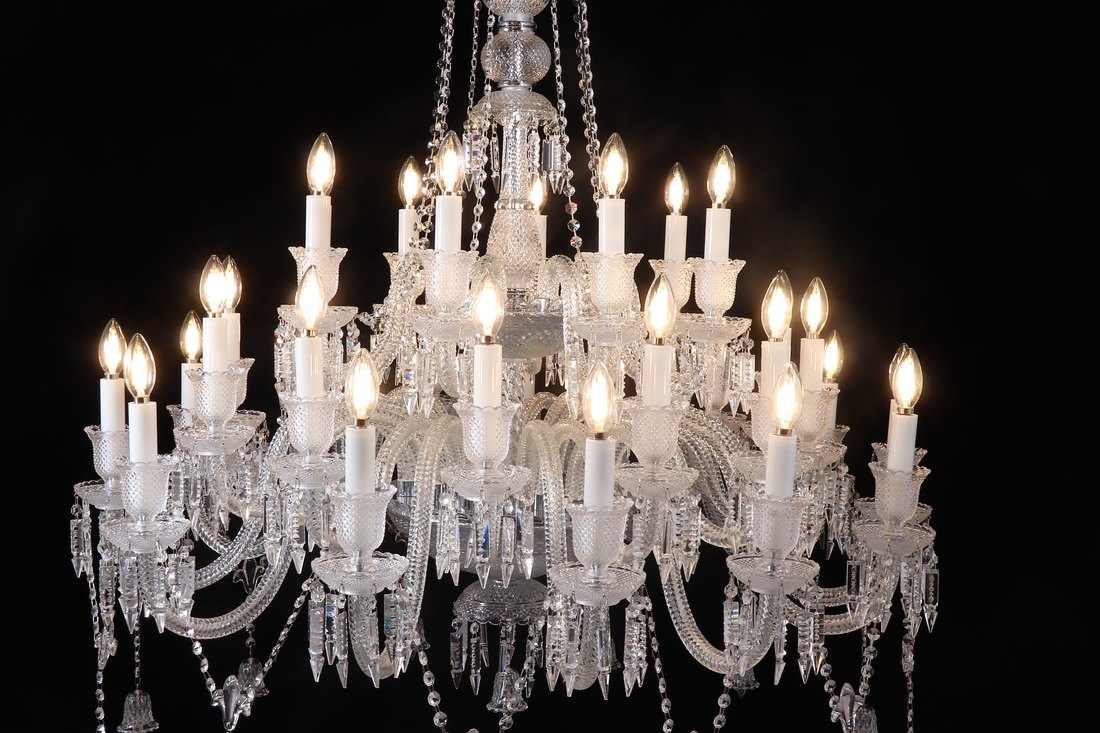
A practical guide to materials, light performance, craftsmanship, customization, and project selection
Introduction
Crystal and glass chandeliers can look similar, but they can create very different visual experiences. For designers, architects, hospitality teams, and professional lighting buyers, the right choice depends on material characteristics, optical performance, weight, craftsmanship, customization, budget, maintenance, and the overall spatial effect.
This guide compares crystal and glass chandeliers from both design and project perspectives. It also explains when crystal, glass, or a combination of both may be appropriate, and how Meiyun Lighting approaches material selection and custom chandelier development.
1. What Is the Difference Between Crystal and Glass Chandeliers?
Crystal and glass are both transparent or translucent materials, but they differ in composition, processing methods, and optical performance.
Crystal chandeliers typically emphasize high brilliance, faceting, and sparkle. Precision cutting and polishing allow light to reflect and refract through multiple facets, creating a distinctive shimmering effect.
Glass offers a broader range of design possibilities. Through blowing, casting, molding, frosting, ribbing, etching, coloring, and other surface treatments, glass can be transparent, translucent, diffused, textured, colored, or sculptural.
In simple terms, crystal is often selected when sparkle and luxury are central to the concept, while glass offers greater freedom in form, texture, color, transparency, and light diffusion.
2. How Material Changes the Look of a Chandelier
Material is one of the key elements that defines a chandelier’s overall character.
Crystal can create a more formal, luxurious, and ceremonial appearance, making it suitable for lobbies, ballrooms, villas, grand staircases, and other spaces where the chandelier is intended to become a visual focal point.
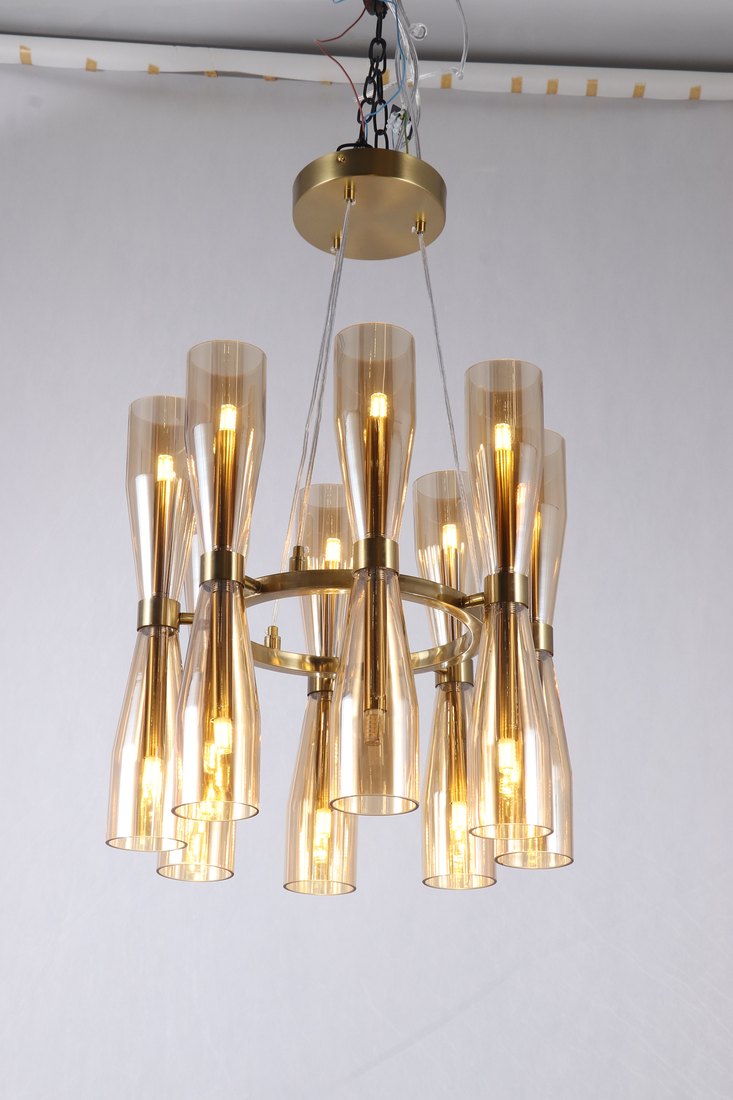
Glass covers a much wider design spectrum. Clear glass can feel light and transparent, opal or frosted glass can create soft diffused illumination, while colored, ribbed, or hand-blown glass can become an artistic feature within the interior.
For custom projects, Meiyun Lighting considers material together with fixture proportions, metal finish, installation height, light source, and architectural environment rather than treating material as an isolated decision.
3. Light Performance: Sparkle vs. Diffusion
This is one of the clearest differences between crystal and glass.
Crystal facets can create strong reflection and refraction. With point light sources or concentrated illumination, they produce highlights and sparkle that can enhance a luxurious, dramatic atmosphere.
Glass provides more opportunities for soft, even, and layered lighting effects. Opal glass can soften the light, clear glass can preserve transparency, and textured glass can create richer patterns of light and shadow.
Designers should first define whether the project calls for brilliant reflection or soft diffusion, then decide whether crystal, glass, or a combination is the most appropriate solution.
4. Weight, Structure, and Installation
Material selection affects not only appearance but also structural design and installation.
A crystal chandelier with many crystal elements can become relatively heavy, so ceiling support, the main structure, connectors, and site installation conditions should be considered early.
The weight of a glass chandelier depends on glass thickness, dimensions, processing method, and component count. Glass should not automatically be assumed to be lighter than crystal.
For engineering-oriented custom projects, Meiyun Lighting can consider fixture dimensions, component layout, metal structure, packaging, transportation, and installation requirements together to reduce potential issues during delivery and installation.
5. Craftsmanship and Manufacturing
Crystal chandeliers commonly involve precision cutting, polishing, faceting, finishing, and crystal component assembly. The accuracy of the facets directly influences how light is reflected and refracted.
Glass offers a wider range of manufacturing techniques, including hand blowing, casting, molding, frosting, etching, ribbing, coloring, and other surface treatments. For highly artistic or sculptural fixtures, glass can provide significant design freedom.
In custom projects, the final result depends not only on the material itself, but also on craftsmanship, dimensional control, metalwork, structural engineering, and the integration of the light source.
6. Crystal Chandelier or Glass Chandelier: Which Style Fits?
If the project emphasizes classic luxury, grandeur, and sparkle, a crystal chandelier can be an important design choice. Luxury hotel lobbies, ballrooms, villas, staircases, and high-end clubs are common applications.
If the project focuses more on modern design, artistic expression, architectural character, or natural material language, glass can provide greater freedom. Residential spaces, restaurants, boutique hotels, retail environments, and offices can use glass form, color, transparency, and texture to create distinctive results.
The two materials are not mutually exclusive. Combining crystal, glass, and metal can create richer visual layers and is a practical direction for bespoke lighting design.
Quick Comparison: Crystal vs. Glass
| Design Factor | Crystal Chandelier | Glass Chandelier |
|---|---|---|
| Visual Character | Luxurious, brilliant, formal, dramatic | Versatile, contemporary, artistic, understated or sculptural |
| Light Effect | Strong sparkle, reflection and refraction | Soft diffusion, transparency, texture and controlled glow |
| Design Styles | Classic luxury, grand, glamorous, statement interiors | Modern, minimalist, organic, architectural and artistic |
| Craftsmanship | Precision cutting, polishing, faceting and crystal assembly | Blown, cast, molded, frosted, ribbed, etched, tinted and textured options |
| Weight | Can become relatively heavy in large multi-element designs | Varies widely depending on thickness and manufacturing method |
| Customization | Shapes and faceting can be customized; best for sparkle-focused concepts | Highly flexible in shape, color, texture, transparency and finish |
| Typical Applications | Luxury hotels, villas, ballrooms, grand lobbies, feature staircases | Residential, hospitality, restaurants, retail, offices and contemporary interiors |
| Maintenance | Clear surfaces and facets need regular cleaning to preserve brilliance | Maintenance depends on surface texture, finish, and glass treatment |
| Project Considerations | Pay close attention to structural support and total weight | Consider glass thickness, component weight, molds, and installation requirements |
| Cost Drivers | Material grade, cutting, polishing, component count, and assembly | Glass type, handwork, molds, size, color, finish, and production volume |
| Best For | Projects where sparkle and visual luxury are central to the design | Projects where form, diffusion, color, texture, or transparency are central |
| Mixed-Material Option | Can be combined with glass and metal for layered visual effects | Can be paired with crystal, metal, and other materials for a bespoke design |
Designer Takeaway
There is no single material that fits every project. Crystal is particularly effective when sparkle, reflection, refraction, and luxury are central to the visual concept. Glass offers broader freedom in form, color, texture, transparency, and diffusion. The most suitable choice depends on the space, lighting objective, structural conditions, budget, and maintenance requirements.
7. Custom Chandelier Design: What Designers Should Specify
In a custom chandelier project, material is only the first step. Designers should also define the overall fixture dimensions, proportions, installation height, metal finish, light source, color temperature, dimming requirements, suspension method, and site conditions.
If a project has reference images, CAD drawings, dimensions, or specified materials, sharing them at the beginning can make engineering, sampling, and quotation more efficient.
Meiyun Lighting can participate in custom lighting development based on drawings, reference images, samples, or concept proposals, coordinating structure, materials, light sources, and manufacturing processes.
8. Maintenance and Long-Term Appearance
Crystal surfaces often contain many facets. Dust accumulation can reduce reflection and brilliance, so regular cleaning is important.
Glass maintenance depends on the specific surface treatment. Clear glass is generally straightforward to clean, while ribbed, frosted, or specially textured surfaces may require more careful maintenance.
For hotels and commercial environments with frequent use, considering cleaning and maintenance during the design stage can help preserve the fixture’s appearance over time.
9. Cost: Look Beyond the Material Name
Chandelier cost is not determined by whether the material is simply called crystal or glass.
Crystal projects can be influenced by crystal grade, cutting, polishing, faceting, component count, and assembly complexity.
Glass projects can be influenced by glass type, size, color, molds, handwork, surface treatment, and production volume.
For custom projects, it is more useful to evaluate total cost based on the complete design and engineering requirements rather than comparing the unit price of a material in isolation.
10. A Simple Decision Framework for Designers
If the project needs strong sparkle, luxury, and a visual focal point, crystal may be considered first.
If the project prioritizes form, soft illumination, color, texture, or transparency, glass may provide more design freedom.
If the goal is to combine luxury with a contemporary artistic character, crystal, glass, and metal can be developed as a mixed-material design.
The final selection should consider spatial scale, design style, lighting goals, structural conditions, budget, installation, and maintenance together.
11. Why Work with Meiyun Lighting for Custom Chandeliers?
Meiyun Lighting is a professional custom lighting manufacturer serving designers, interior design studios, contractors, hospitality projects, and professional buyers.
For custom chandelier projects, Meiyun Lighting can work from drawings, reference images, samples, or concepts through engineering development, sample making, production, inspection, packaging, and delivery.
In real projects, we consider not only the appearance of the fixture, but also dimensions, structure, material combinations, metal finishes, LED light sources, packaging, transportation, and installation conditions. Crystal, glass, marble, onyx, and other materials can also be combined and customized according to project requirements.
This design-to-production collaboration helps designers translate concepts into custom lighting products that are practical for real project applications.
12. FAQ: Crystal vs. Glass Chandeliers
Q1. Which chandelier material is best for a custom lighting project?
There is no single material that fits every project. Crystal is well suited to concepts centered on sparkle and luxury, while glass provides broader freedom in form, color, texture, transparency, and diffusion. The most suitable material should be selected according to the project’s design language, lighting goals, structural conditions, budget, installation, and maintenance requirements.
Q2. Is crystal always more expensive than glass?
Not necessarily. Project cost depends on many factors beyond the material name. Crystal cost can be influenced by crystal grade, cutting, polishing, faceting, component count, and assembly complexity. Glass cost can be influenced by glass type, molds, handwork, size, color, surface treatment, and production volume.
Q3. Can Meiyun Lighting develop a chandelier from a drawing or reference image?
Yes. Meiyun Lighting can work from drawings, reference images, samples, or concept proposals and coordinate engineering development, sampling, production, inspection, packaging, and delivery. Material combinations, dimensions, structure, metal finishes, and LED light sources can be developed according to project requirements.
Q4. What information should I provide when ordering a custom chandelier?
Useful information includes reference images or drawings, overall dimensions, installation height, material preferences, metal finish, light source, color temperature, dimming requirements, suspension method, and project site conditions. More complete information can make engineering, sampling, and quotation more efficient.
Q5. Which material is easier to maintain?
Maintenance depends on the specific design and surface treatment. Crystal facets need regular cleaning to preserve brilliance, while textured, frosted, or specially treated glass may require more careful cleaning. Maintenance requirements should be considered during the design stage.
Q6. Can crystal and glass be used together in one chandelier?
Yes. Crystal, glass, and metal can be combined to create layered visual effects. Mixed-material chandeliers can balance sparkle, transparency, texture, and contemporary design elements.
Q7. Can glass chandeliers be customized in color and shape?
Yes. Glass offers significant customization possibilities, including shape, color, transparency, texture, frosting, ribbing, and other surface treatments. These options make glass particularly useful for bespoke and artistic lighting projects.
Q8. Are crystal chandeliers heavier than glass chandeliers?
Not necessarily in every design. A crystal chandelier with many crystal components can become relatively heavy, while the weight of a glass chandelier depends on glass thickness, size, processing method, and component count. Structural support should therefore be evaluated for each specific project.
Q9. Which is better for a luxury hotel lobby, crystal or glass?
Both can be suitable depending on the design concept. Crystal can create a strong sense of luxury and visual brilliance, while glass can support contemporary, artistic, sculptural, or architectural concepts. The choice should also consider the lobby’s scale, lighting objectives, structure, and maintenance requirements.
Q10. What is the main difference between a crystal chandelier and a glass chandelier?
The main difference is in their visual and optical characteristics. Crystal typically emphasizes sparkle, reflection, refraction, and a luxurious appearance, while glass offers greater flexibility in shape, color, texture, transparency, and light diffusion.
13. Final Thoughts
Crystal and glass chandeliers are not a simple question of which material is better. Each offers different visual qualities, optical performance, manufacturing possibilities, and project applications.
Crystal emphasizes sparkle, reflection, refraction, and luxury, while glass offers greater freedom in form, color, texture, transparency, and light diffusion.
For custom architectural and hospitality projects, the most effective approach is to select the material based on the overall space and lighting objective, then refine the solution according to structure, craftsmanship, budget, installation, and maintenance.
Working with a lighting manufacturer that can support both design development and production can make it easier to turn a design concept into a reliable custom fixture.