
Project Guides
Why Does Marble Lighting Look Luxury or Normal? 7 Details Designers Should Get Right
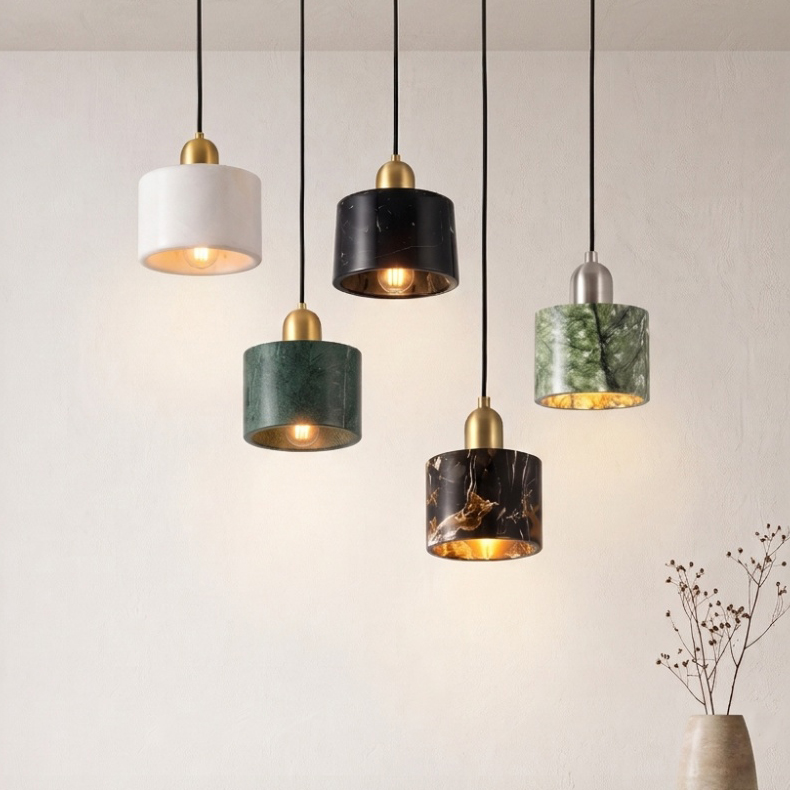
A practical specification guide for custom marble, onyx, alabaster and travertine lighting in luxury interiors
Introduction: The Stone Is Not the Whole Story
Natural stone has become a powerful material in contemporary luxury interiors, but simply putting marble or onyx on a light fixture does not automatically make the result look premium. In 2026, designers are increasingly treating decorative lighting as sculpture, with greater attention to natural materials, texture, warm illumination and custom proportions. The difference between a sophisticated stone light and an ordinary fixture often comes down to details that are easy to overlook: stone selection, thickness, veining direction, light distribution, metal finishing, scale and engineering.
1. Start With the Stone, Not the Shape
Each natural slab has its own color movement, veins, density and translucency. The stone should influence the proportions and orientation of the fixture. For translucent onyx or alabaster, internal structure becomes especially important after the light is switched on. Recent design discussions emphasize that translucent stone should be specified as part of the lighting system rather than treated as a simple decorative surface.
2. Veining Direction Can Change the Entire Design
Two identical pendants made from the same marble can look completely different if one follows the vein direction and the other cuts across it. For custom projects, designers should specify bookmatching, continuous visual flow, preferred vein direction or a deliberately random composition. This is particularly important when multiple stone modules form one chandelier.
3. Stone Thickness Controls More Than Strength
Stone thickness affects weight, structure and visual appearance. For translucent materials, it also affects how much light passes through the stone and how soft the illuminated surface appears. Production drawings should therefore define not only external dimensions but also stone thickness, edge treatment, mounting method and the relationship between the stone and LED source.
4. The Biggest Problem With Backlit Stone Is Usually Not the Stone
Backlit onyx can create a dramatic architectural effect, but uneven illumination can immediately reduce perceived quality. Visible LED points, bright centers and dark edges compete with natural veining. Recent technical guidance highlights the importance of the backing assembly and light distribution because natural stone varies in density and thickness across a slab. The stone, LED layout, distance from the light source, diffusion, heat management and structural frame should be developed as one system.
5. Metal Finish Should Support the Stone—Not Compete With It
Natural stone already provides visual information. Warm brass, brushed champagne gold, bronze, brushed stainless steel and matte black create different relationships with the same stone. The right finish depends on the architectural palette and desired contrast. Natural stone, warm metal and concealed warm light are especially compatible with the current movement toward layered, tactile interiors.
6. Scale Is What Makes a Custom Fixture Look Custom
A beautiful stone pendant can still look wrong if it is too small for the room. Custom lighting should be developed around ceiling height, table length, stairwell volume, viewing distance and surrounding furniture. For hotel lobbies, double-height villas and restaurants, ask not only 'How large is the lamp?' but also 'What percentage of the architectural space should the lamp occupy?'
7. The Engineering Behind the Stone Is Part of the Luxury
Suspension balance, concealed fasteners, canopy proportions, driver placement, wiring, LED accessibility, structural support and installation tolerances all influence the final result. A simple-looking stone chandelier can require substantial engineering. In project lighting, visual minimalism often means more attention behind the surface—not less.
A Practical Specification Checklist
Use this checklist when reviewing a custom stone-lighting proposal:
- Stone type and approved material reference
- Stone color, grade and acceptable natural variation
- Veining direction and matching requirements
- Stone thickness and edge treatment
- Overall fixture dimensions
- Number and spacing of stone modules
- LED type, color temperature, CRI and dimming requirement
- Backlighting distance and diffusion method
- Metal material and surface finish
- Suspension and structural support
- Driver location and maintenance access
- Destination-market electrical requirements
- Engineering drawings and approval process
- Prototype or material sample requirements
- Export packaging and installation identification
How Meiyun Lighting Helps Turn a Stone Concept Into a Real Fixture
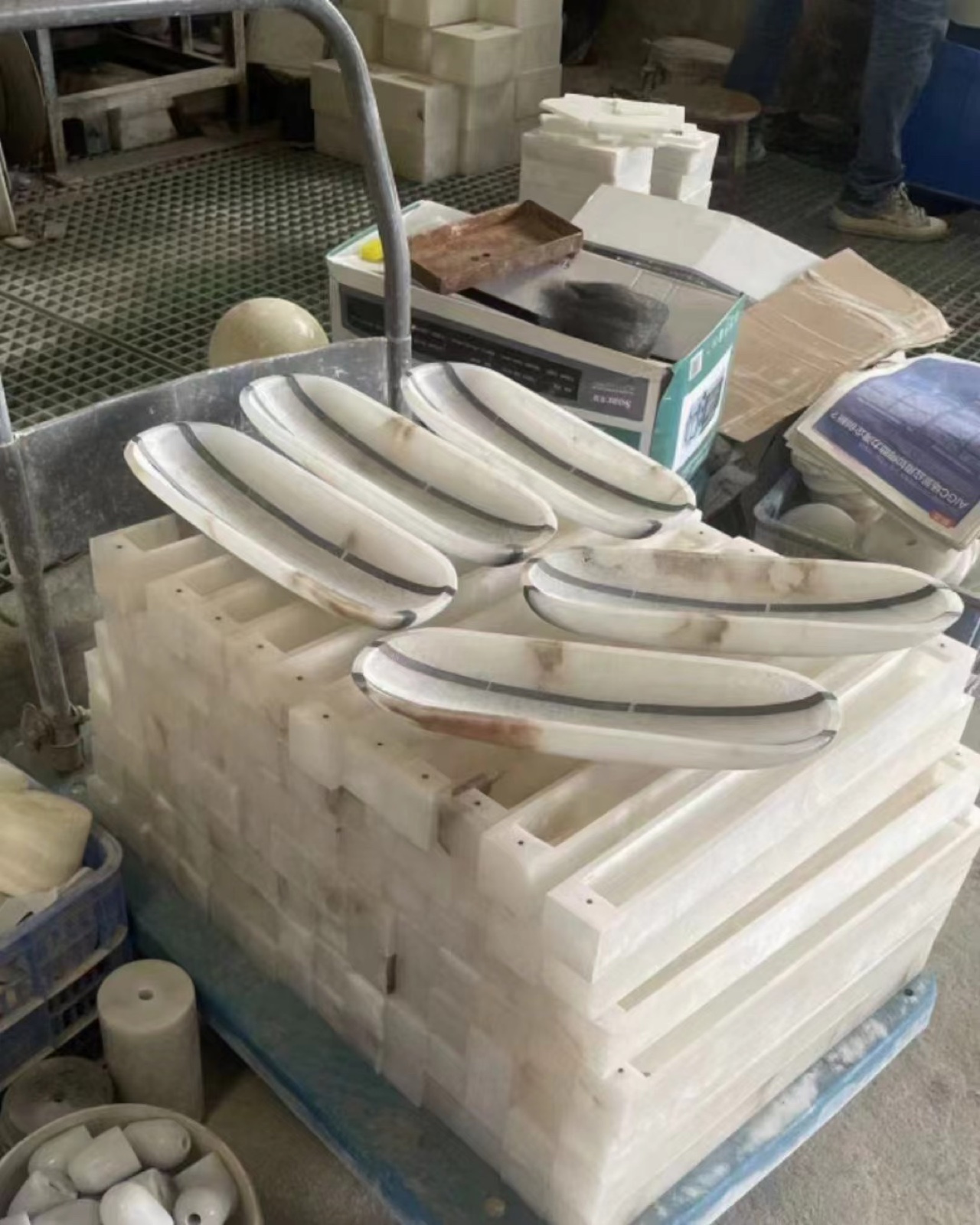
Meiyun Lighting works with architects, interior designers, contractors, developers and lighting buyers on custom decorative lighting projects. The company can coordinate stone, metal, structure and lighting as a project-specific product rather than simply adding stone to a standard fixture.
- Custom development from CAD drawings, 3D models, sketches, renders or reference products.
- Stone coordination for marble, onyx, alabaster, travertine and other decorative materials.
- Custom dimensions, module quantities, suspension heights and installation configurations.
- Metal fabrication and finish coordination.
- LED and linear-light integration.
- Engineering/detail drawings for review and production.
- Material samples and prototype development for selected projects.
- Assembly, illumination testing, quality inspection and export packaging.
- Support for overseas project communication and production coordination.
From Designer Sketch to Production
01 — Concept
Share the design intent, drawings, dimensions, materials and project requirements.
02 — Material & Engineering Review
Evaluate stone, structure, lighting integration, weight and manufacturing feasibility.
03 — Detailed Drawings
Develop the concept into production-ready engineering information.
04 — Sample Confirmation
Review stone, metal finish, lighting effect and key dimensions before production.
05 — Manufacturing
Coordinate stone processing, metal fabrication, electrical integration and assembly.
06 — Testing & Inspection
Check appearance, assembly and illumination before shipment.
07 — Export Packing
Pack and identify components for international project delivery.
FAQ: Custom Stone Lighting
Can marble lighting be made to a specific project size?
Yes. Custom stone lighting can be developed around ceiling height, table dimensions, architectural scale, module quantity and installation requirements.
Which stone is suitable for an illuminated effect?
Translucent onyx and alabaster are commonly considered when the stone itself needs to glow, while marble and travertine can be selected when the main goal is texture, mass and architectural character.
Can natural stone be combined with brass or stainless steel?
Yes. Stone can be paired with brass, bronze, stainless steel, aluminum and other metal finishes.
Can Meiyun develop a fixture from a designer's drawing?
Yes. Concepts can be developed from CAD drawings, 3D models, sketches, renders or reference images and translated into engineering and production information.
Is a physical stone sample recommended?
For high-value projects, sampling is useful because natural stone varies from slab to slab. It helps confirm color, veining, thickness and the intended illuminated effect.