Project Guides
Custom Lighting in Australia: 8 Specification Details Designers Should Confirm Before Production
A Practical Guide for Luxury Homes, Hotels, Restaurants and Bespoke Interior Projects
Australia’s luxury interiors often balance natural materials, architectural clarity and a strong connection to place. From Sydney waterfront residences and urban hotels to resort, restaurant and high-end residential projects, decorative lighting is increasingly expected to feel integrated with the architecture rather than added at the end.
Tourism Australia continues to position the country around a substantial high-end accommodation and luxury experience sector, while major Australian hospitality projects demonstrate the use of rare stone, marble, custom lighting and bespoke interior elements. For designers and project buyers, this makes specification quality especially important.
Instead of another general material guide, this article focuses on a more practical question: what should be confirmed before a custom chandelier or decorative fixture goes into production for an Australian project?
Why Specification Matters More Than the Product Image
A rendering can show the design intention, but it does not answer every production question. A fixture may look correct on screen and still require changes once ceiling height, weight, suspension points, stone thickness, LED placement, maintenance access and installation are considered.
For custom lighting, the goal is to preserve the design idea while turning it into a fixture that can be manufactured, packed, installed and maintained successfully.
1. Confirm the Fixture Scale Against the Architecture
One of the most common custom-lighting mistakes is specifying a fixture independently from the room.
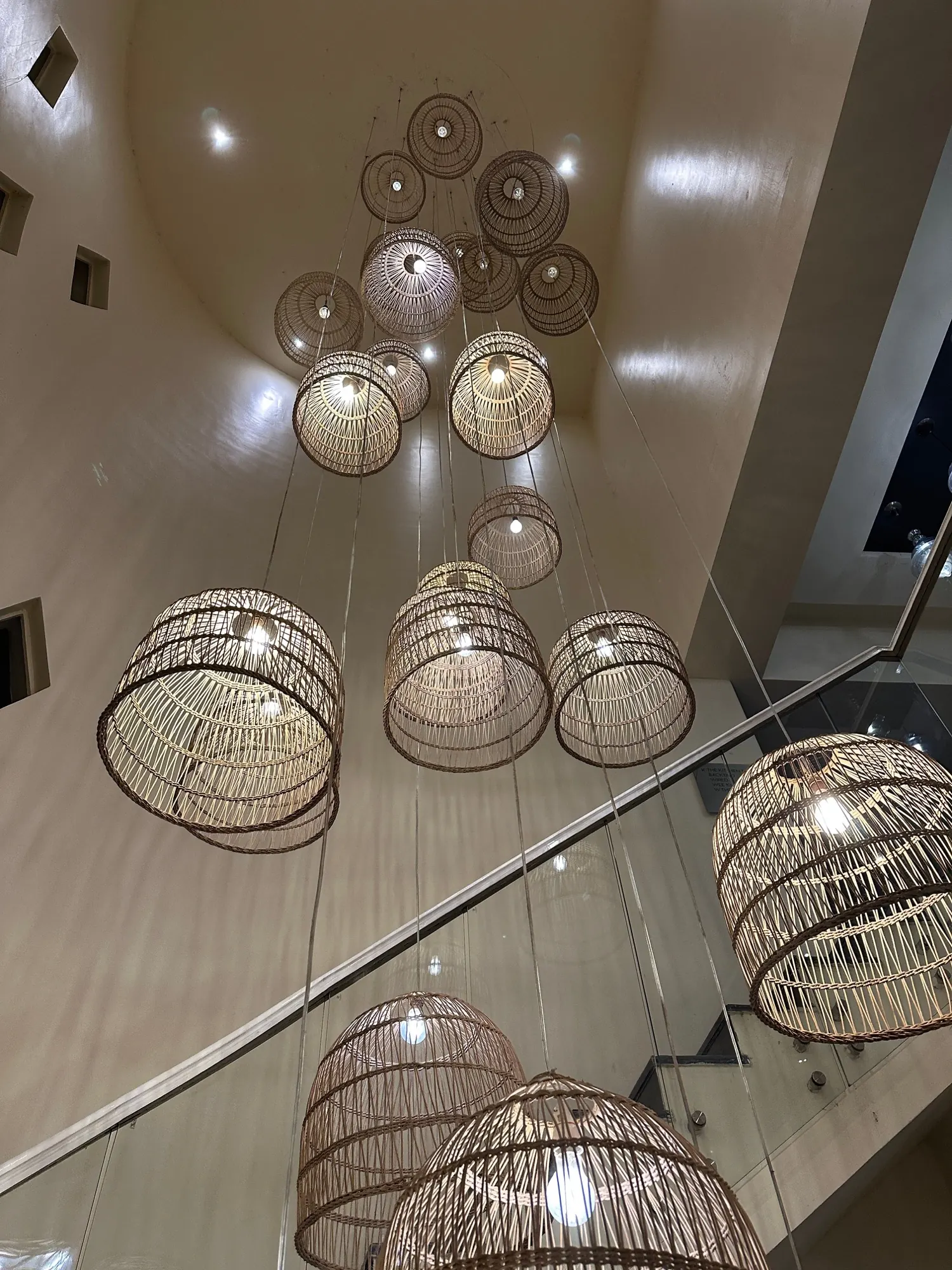
For a double-height residence, hotel lobby or staircase, designers should review the fixture together with:
- Floor-to-ceiling height
- Void or staircase dimensions
- Furniture position
- Viewing distance
- Suspension height
- Ceiling structure
- Human eye level from upper and lower floors
A chandelier that looks large in a catalogue may appear undersized in a multi-storey void. Conversely, an oversized fixture can obstruct views or hang too close to circulation areas.
2. Define the Material by Function, Not Only Appearance
Marble, alabaster, onyx, glass and crystal each behave differently when illuminated and assembled.
| Material | Best Design Quality | Key Specification Point | Typical Application |
|---|---|---|---|
| Marble | Architectural, natural | Weight, veining, thickness | Dining pendants, villas, reception |
| Alabaster | Soft and translucent | Diffusion, thickness, natural variation | Wall lights, bedrooms, hotels |
| Onyx | Dramatic illuminated veining | Backlighting and slab selection | Feature lighting, bars, lobbies |
| Glass | Flexible shape and color | Thickness, texture, color consistency | Restaurants, pendants, chandeliers |
| Crystal | Reflection and brilliance | Density, cut, suspension arrangement | Ballrooms, entries, statement fixtures |
The best material is therefore not simply the most decorative one. It is the material that creates the required visual effect while remaining suitable for the fixture structure and project environment.
3. Specify Natural Stone Variation Before Approval
Natural stone is not a printed surface. Two pieces from the same material family can vary in color, veining, clouding and translucency.
For marble, onyx and alabaster lighting, the project team should confirm what level of natural variation is acceptable before production.
- Stone color range
- Veining direction
- Translucency
- Surface finish
- Thickness
- Edge treatment
- How adjacent pieces should visually relate
For illuminated stone, reviewing both the unlit and lit appearance is especially useful because internal patterns may become more visible when the LED is switched on.
4. Decide the Lighting Effect Before Finalizing the Structure
The same decorative fixture can look completely different at 2700K, 3000K or 4000K. LED position and diffusion also affect whether the material appears soft and uniform or produces visible bright spots.
Before production, confirm:
- Color temperature
- CRI requirement
- Dimming requirement
- LED position
- Driver location
- Access for maintenance
- Direct vs diffused light
- Desired brightness level
For stone and opal glass, the distance between the LED and the decorative material can be just as important as the LED specification itself.
5. Coordinate Metal Finishes With the Interior Palette
Metal is often the visual link between a custom light and the surrounding interior.
Popular project finishes can include brushed champagne gold, brushed brass, antique brass, bronze, matte black and mirror chrome.
Rather than approving a finish only by name, designers should use a physical sample or an agreed reference whenever possible. Terms such as 'brass' or 'champagne gold' can look very different between suppliers.
6. Plan the Ceiling Plate and Suspension Early
The ceiling plate is sometimes left until late in the design process, but it can significantly affect the final appearance and installation.
For multi-pendant and large custom chandeliers, confirm:
- Ceiling plate diameter or length
- Shape and finish
- Number of suspension points
- Cable exit positions
- Canopy depth
- Structural fixing method
- Whether the ceiling plate should be visible or concealed
This is particularly important for linear island lights, staircase clusters and large lobby chandeliers with many suspension cables.
7. Design for Installation, Packing and Maintenance
A custom chandelier is not finished when it leaves the factory. It still needs to survive transport and be assembled on site.
Large fixtures should therefore be designed with practical questions in mind:
- Can the fixture be divided into modules?
- Can fragile glass or stone be packed separately?
- Are components numbered for installation?
- Can LEDs or drivers be accessed later?
- Are replacement decorative parts possible?
- Does the installer have clear assembly information?
For international projects, modular construction can reduce packing risk and make site installation more manageable.
8. Prepare Engineering Drawings Before Mass Production
For project lighting, engineering/detail drawings are one of the most important communication tools between the designer, manufacturer and installer.
A useful drawing package can identify:
- Overall dimensions
- Component dimensions
- Materials
- Metal finishes
- Suspension lengths
- Ceiling plate details
- LED specifications
- Wiring arrangement
- Assembly structure
- Installation notes
This step helps identify conflicts before materials are cut and fabricated.
Where Custom Lighting Works Especially Well in Australian Projects
Australia’s high-end hospitality and residential market includes projects where custom interiors, natural materials and site-specific design are central to the experience. One Barangaroo in Sydney, for example, combines luxury hotel and residential uses with rare stone, marble and custom lighting elements, illustrating how decorative lighting can be integrated into a broader architectural material language.
- Sydney waterfront residences and penthouses
- Luxury hotels and boutique hospitality
- Melbourne restaurants and design-led commercial interiors
- Coastal and resort properties
- Double-height private residences
- Staircase voids and entrance halls
- Dining rooms and kitchen islands
- Reception and bar areas
A Practical Custom Lighting Brief for Australian Designers
Before requesting a quotation, designers and project buyers can prepare the following information:
- Project location
- Fixture application
- CAD drawing or 3D rendering
- Overall dimensions
- Ceiling height
- Preferred material
- Metal finish reference
- Glass or stone reference
- Color temperature
- Voltage
- Dimming requirement
- Quantity
- Required project documentation
- Target delivery schedule
A clear brief helps the manufacturer evaluate the design more accurately and reduces unnecessary revisions later.
What Can Meiyun Lighting Do for Australian Projects?
ZHONGSHAN MEIYUN LIGHTING CO., LTD. supports custom decorative lighting projects for architects, interior designers, contractors, lighting brands and project buyers.
Custom Development
Develop fixtures from CAD drawings, 3D models, sketches, reference images or an initial design concept.
Natural Stone Lighting
Custom marble, onyx, alabaster and other decorative stone applications.
Custom Glass Lighting
Clear, amber, smoked, opal, frosted, textured and other project-specific glass options.
Crystal & Decorative Lighting
Custom crystal arrangements for feature chandeliers and large decorative installations.
Metal & Finish Customization
Custom dimensions and finishes including brushed champagne gold, brass, bronze, matte black and chrome effects.
Engineering Detail Drawings
Develop detailed production drawings to confirm dimensions, materials, structure and installation details.
Material Samples
Support stone, glass and metal finish confirmation when required by the project.
OEM & ODM Manufacturing
Custom manufacturing support for project companies, lighting brands, distributors and designers.
Inspection & Export Packing
Production inspection and protective packing for international shipment.
From Design Concept to Finished Fixture
01 — Send the Design
CAD / 3D / sketch / reference image
02 — Review the Application
Space / ceiling height / dimensions / quantity
03 — Confirm Materials
Stone / glass / crystal / metal / finish
04 — Technical Development
Structure / LED / suspension / installation
05 — Engineering Drawings
Detailed drawings for approval
06 — Sample or Material Confirmation
When required
07 — Production
Manufacture according to approved specifications
08 — Quality Inspection
Check dimensions, appearance, lighting and assembly
09 — Export Packing
Protect decorative components for international shipment
FAQ: Custom Lighting for Australia
Can an Australian designer order custom lighting from a manufacturer in China?
Yes. Project lighting can be developed from CAD drawings, 3D models, sketches and reference images. The project team should confirm technical, electrical, certification and installation requirements applicable to the specific project before ordering.
What information is needed for a custom chandelier quotation?
Useful information includes overall dimensions, ceiling height, material, finish, LED requirements, quantity, drawings or renderings and the project location.
Is marble suitable for custom pendant lighting?
Yes. Marble can work well for architectural pendants and decorative lighting, provided weight, thickness, fixing and the desired light effect are considered during development.
Is alabaster suitable for luxury residential lighting?
Yes. Alabaster is often selected where designers want a soft, naturally translucent appearance for wall lights, pendants and decorative fixtures.
Can Meiyun customize glass colors and metal finishes?
Yes. Glass appearance and metal finishes can be developed according to the project design and manufacturing feasibility.
Can a large staircase chandelier be shipped in sections?
Yes. Large fixtures can often be engineered as modules to make packing, transport and site installation more practical.
Does Meiyun provide engineering detail drawings?
Yes. Meiyun can support project development with detailed drawings covering dimensions, materials, structure and production-related details.
Can one project use the same design language across different fixtures?
Yes. A material and design concept can be developed into a family of chandeliers, pendants, wall lights and other decorative fixtures with different dimensions.
Custom Lighting Manufacturer for Australian Projects
Good custom lighting is not only about creating a unique shape. It is about coordinating proportion, material, light, structure and installation so that the final fixture belongs in the space.
For Australian luxury residences, hotels, restaurants and commercial interiors, Meiyun Lighting can support the process from design interpretation and material development to engineering drawings, manufacturing, inspection and export packing.
Have a lighting concept? Send your CAD drawing, 3D model, sketch or reference image to discuss custom development.