
Project Guides
Custom Lighting in Singapore: How to Create Luxury Without Overcrowding the Interior
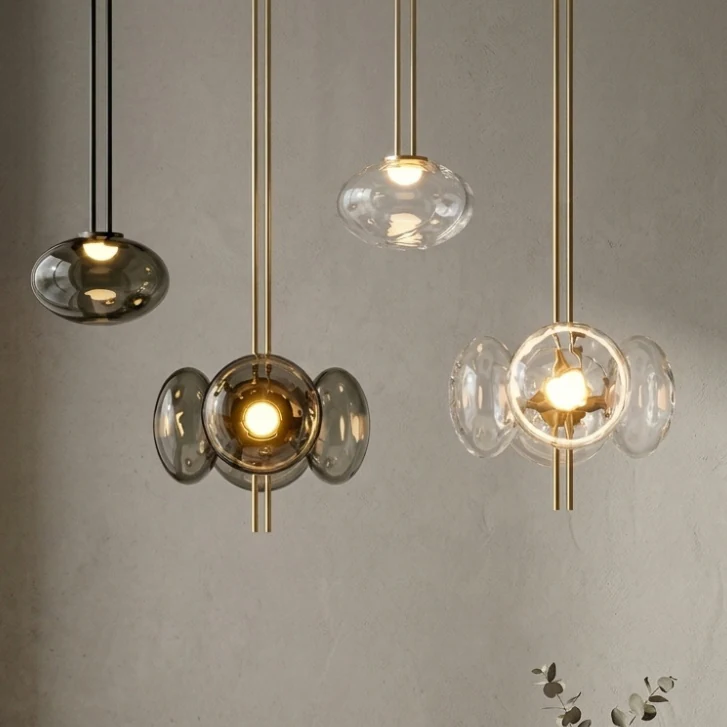
A Practical Guide to Custom Lighting for Singapore Hotels, Restaurants, Apartments and High-End Residential Projects
Singapore’s luxury interiors are often defined by a careful balance between architecture, natural materials, greenery, functionality and refined details. In this environment, a decorative light does not always need to be oversized or highly ornate to become a focal point.
For hotels, restaurants, luxury residences, apartments and commercial interiors, the challenge is often different:
How can a custom lighting fixture create a strong sense of luxury without making the space feel visually crowded?
The answer usually comes down to proportion, material selection, lighting layers, transparency, craftsmanship and precise customization.
For architects, interior designers, contractors and project buyers, custom lighting provides an opportunity to create fixtures that are developed specifically for the architecture rather than selected from a standard catalogue.
Why Custom Lighting Is Important for Singapore Interiors
Singapore projects often combine contemporary architecture with warm, natural and sophisticated interior materials.
A typical high-end project may include:
Natural stone
Marble
Timber
Glass
Metal
Textured surfaces
Indoor greenery
Architectural lighting
Large windows and natural daylight
If the decorative lighting is too heavy, it can compete with these elements.
If it is too small or visually simple, it may disappear within the architecture.
Custom lighting allows the fixture to be developed according to the actual space.
Instead of asking:
“Which chandelier from the catalogue fits this room?”
Designers can ask:
“What type of lighting should this space have?”
This changes the entire design process.
1. Start With Visual Weight, Not Just Fixture Size
Two chandeliers can have exactly the same dimensions but create completely different visual impressions.
For example, a dense crystal chandelier may feel much heavier than an open glass chandelier of the same diameter.
A solid stone fixture may also have greater visual weight than a slim metal structure with small stone elements.
Before confirming the dimensions of a custom fixture, designers should consider:
Ceiling height
Room width
Furniture scale
Viewing distance
Circulation paths
Natural daylight
Architectural features
Density of decorative elements
Position of the fixture within the room
For apartments and more compact luxury interiors, an open structure or carefully spaced pendant arrangement can create a premium appearance without overwhelming the room.
For double-height spaces, a vertical composition can use the height of the architecture more effectively.
2. Use Layered Lighting Instead of One Large Decorative Fixture
Luxury lighting does not necessarily mean one giant chandelier providing all the light.
A more sophisticated approach is to combine different lighting layers.
Ambient Lighting
Provides comfortable general illumination.
Examples include:
Architectural LED lighting
Cove lighting
Indirect lighting
Ceiling lighting
Decorative Lighting
Creates visual identity.
Examples include:
Chandeliers
Pendant clusters
Sculptural lighting
Statement fixtures
Accent Lighting
Highlights specific architectural or decorative elements.
Examples include:
Wall lights
Feature lighting
Illuminated stone
Decorative niches
Task Lighting
Supports specific activities.
Examples include:
Dining pendants
Bedside lighting
Kitchen island lighting
Bar lighting
When these layers are coordinated, the decorative fixture does not need to carry the entire lighting responsibility.
This gives designers more freedom to create elegant, lightweight and visually controlled fixtures.
3. Use Natural Materials to Create Luxury Without Excessive Decoration
A fixture does not need complicated ornamentation to look sophisticated.
The material itself can become the design feature.
Marble Lighting
Marble works particularly well when the interior already includes natural stone.
A marble pendant above a dining table or kitchen island can visually connect the lighting with:
Flooring
Countertops
Walls
Furniture
Architectural stone details
For contemporary interiors, smaller marble components or thin stone elements can provide a more refined appearance than a large solid structure.
Alabaster Lighting
Alabaster is suitable for spaces where designers want a soft and warm visual effect.
Its natural translucency allows light to pass through the material, creating a gentle glow rather than a strong exposed light source.
It can be used for:
Wall sconces
Pendant lights
Bedroom lighting
Hotel lighting
Dining lighting
Decorative architectural lighting
Onyx Lighting
Onyx can become a dramatic feature when illuminated from behind.
Its natural veining can create a different visual effect on every piece of stone.
Onyx works especially well for:
Hotel reception areas
Bars
Feature walls
Luxury residences
Statement pendants
Sculptural lighting
However, stone selection and backlighting need to be carefully coordinated before production.
Glass Lighting
Glass provides more visual lightness than many opaque materials.
Clear, amber, smoked, frosted, opal and textured glass can create very different atmospheres.
For Singapore interiors, glass can be particularly useful when the designer wants the fixture to provide visual interest without creating a large solid mass.
4. Let the Architecture Determine the Shape of the Fixture
A custom lighting fixture should respond to the architecture.
Instead of starting with a standard chandelier shape, designers can develop the fixture according to the geometry of the space.
Dining Room
A long dining table can work well with:
Linear pendant → elongated chandelier → multiple suspended modules
Double-Height Space
A high ceiling can support:
Vertical chandelier → cascading pendants → multi-level installation
Circular Reception Area
A circular architectural layout may work with:
Ring chandelier → radial structure → circular pendant composition
Staircase
A staircase can use:
Different suspension heights → vertical cascade → architectural rhythm
Narrow Corridor
Instead of one large fixture:
Repeated wall lights → small pendants → linear decorative lighting
This approach makes the lighting feel like part of the architecture rather than an object simply placed inside the room.
5. Consider How the Fixture Looks During the Day
One important aspect of decorative lighting is often overlooked:
What does the fixture look like when it is switched off?
In a space with significant natural daylight, the light fixture may remain switched off for many hours.
Therefore, the material, silhouette and craftsmanship become important.
A good custom fixture should work in two conditions:
Lights OFF
The viewer sees:
Material
Shape
Texture
Metal finish
Glass form
Craftsmanship
Lights ON
The viewer sees:
Light diffusion
Shadow
Reflection
Transparency
Stone veining
Glass texture
Overall atmosphere
This is particularly important for natural stone and glass lighting.
A rendering should therefore ideally show both the illuminated and non-illuminated appearance.
6. Create a Family of Lighting Fixtures for the Same Project
A luxury project does not necessarily need a completely different design for every room.
Instead, one design concept can be developed into a lighting family.
For example:
Hotel Lobby: Large statement chandelier
Lounge: Medium pendant
Restaurant: Linear or clustered pendant
Guestroom: Smaller decorative pendant
Corridor: Wall sconce
Private Dining: Feature chandelier
The fixtures do not need to be identical.
Instead, they can share:
The same metal finish
The same glass texture
The same stone
The same geometric language
The same design details
This creates consistency throughout the project while allowing each fixture to respond to its specific space.
7. Minimal-Looking Fixtures Often Require More Engineering
A simple-looking chandelier may actually require more engineering than a highly decorative fixture.
For example, a suspended glass or stone fixture may require careful coordination of:
Suspension points
Cable positions
Ceiling plate
Fixture weight
LED location
Driver position
Internal structure
Installation sequence
Maintenance access
For large custom lighting projects, these details should be considered before production.
A beautiful rendering is only the beginning.
The final fixture needs to be:
Designed → Engineered → Manufactured → Installed
8. Modular Design Can Make International Projects Easier
Large custom chandeliers can become difficult to transport and install if they are designed as one oversized structure.
A modular approach can make the process more practical.
For example, a large chandelier can be divided into:
Main structural frame
Decorative modules
Glass components
Stone components
LED modules
Suspension components
Each component can be numbered and packed separately.
This can help with:
International transportation
Protective packaging
Site installation
Handling
Maintenance
Replacement of individual components
For overseas projects, packaging and installation should therefore be considered during the design stage rather than after production.
9. Custom Lighting Applications in Singapore
Custom lighting can be used across a wide range of Singapore projects.
Luxury Hotels
Lobby entrances
Reception areas
Lounges
Restaurants
Ballrooms
Guestroom corridors
High-End Apartments
Living rooms
Dining areas
Kitchen islands
Bedrooms
Entryways
Private lounges
Private Residences
Staircase chandeliers
Double-height chandeliers
Dining pendants
Sculptural lighting
Wall sconces
Restaurants & Bars
Glass, metal, stone and crystal can be combined to create a recognizable lighting identity.
Commercial Interiors
Reception areas
Showrooms
Clubhouses
Retail spaces
Private offices
Hospitality lounges
What Should a Designer Prepare Before Requesting a Custom Lighting Quote?
A clear project brief can make communication with a manufacturer much more efficient.
Ideally, provide:
CAD drawings
3D renderings
Interior elevations
Fixture dimensions
Ceiling height
Installation location
Quantity
Material preference
Metal finish
Glass reference
Stone reference
Color temperature
CRI requirement
Dimming requirement
Voltage
Installation requirements
Project schedule
If the design is still at the concept stage, even a sketch or reference image can be a useful starting point.
What Can Meiyun Lighting Do for Singapore Projects?
ZHONGSHAN MEIYUN LIGHTING CO., LTD. provides custom decorative lighting manufacturing support for architects, interior designers, contractors, lighting brands and project buyers.
Custom Design Development
CAD drawings
3D models
Interior renderings
Hand sketches
Reference images
Initial design concepts
Natural Stone Lighting
Marble
Onyx
Alabaster
Other decorative stone materials
Custom Glass Lighting
Clear glass
Amber glass
Smoked glass
Opal glass
Frosted glass
Textured glass
Metal Customization
Brushed champagne gold
Brass
Bronze
Matte black
Chrome
Other project-specific finishes
Engineering Detail Drawings
Dimensions
Structure
Materials
Suspension
Ceiling plate
LED arrangement
Installation details
OEM & ODM Manufacturing
Interior design studios
Contractors
Lighting brands
Distributors
Project procurement companies
From Design Concept to Finished Custom Lighting
01 — Design Concept: CAD / 3D / Sketch / Reference Image
02 — Project Review: Space / Ceiling Height / Dimensions / Quantity
03 — Material Development: Stone / Glass / Crystal / Metal
04 — Technical Development: Structure / LED / Suspension / Installation
05 — Engineering Drawings: Detailed drawings for approval
06 — Sample Confirmation: Material samples or prototype when required
07 — Production: Manufacturing according to approved specifications
08 — Quality Inspection: Appearance / Dimensions / Lighting / Assembly
09 — Export Packing: Protective packaging for international shipment
FAQ: Custom Lighting in Singapore
Where can Singapore interior designers order custom lighting?
Designers can work with a professional custom lighting manufacturer that can develop fixtures from CAD drawings, 3D renderings, sketches or reference images.
What type of chandelier works well in a Singapore luxury interior?
The appropriate fixture depends on the room scale and architectural style. Open glass structures, natural stone pendants, linear fixtures and carefully proportioned chandeliers can all be developed for different applications.
Can custom lighting be designed for apartments with lower ceilings?
Yes. Custom fixtures can be designed with reduced depth, shorter suspension and a more horizontal composition to suit lower ceiling heights.
Is marble suitable for custom lighting?
Yes. Marble can be used for pendants, chandeliers, wall lights and architectural decorative lighting. Weight, thickness, fixing and light diffusion should be considered during engineering.
Is alabaster suitable for hotel lighting?
Yes. Its natural translucency makes it suitable for fixtures where designers want a soft and warm lighting effect.
Can glass and marble be combined in one chandelier?
Yes. Glass, marble, metal and other materials can be combined when the structure and assembly method are properly engineered.
Can a Chinese lighting manufacturer develop a fixture from a 3D rendering?
Yes. A 3D rendering can be used as a design reference, followed by technical development, material confirmation and engineering drawings before production.
Can large custom chandeliers be manufactured in modules?
Yes. Modular construction can make large fixtures easier to manufacture, pack, transport and install.
Custom Lighting Manufacturer for Singapore Projects
Luxury does not always mean adding more decoration.
In many Singapore interiors, luxury can come from proportion, material quality, controlled lighting, craftsmanship and attention to detail.
The right custom fixture should not compete with the architecture.
It should become part of it.
For hotels, restaurants, luxury residences and commercial interiors, Meiyun Lighting can support the process from initial design development and material selection to engineering drawings, manufacturing, inspection and export packing.
Have a custom lighting concept for a Singapore project?
Send us your CAD drawing, 3D rendering, sketch or reference image and let’s discuss how to turn the concept into a manufacturable lighting solution.