Project Guides
From Sketch to Finished Fixture: How Custom Lighting Manufacturers Turn Design Ideas into Production
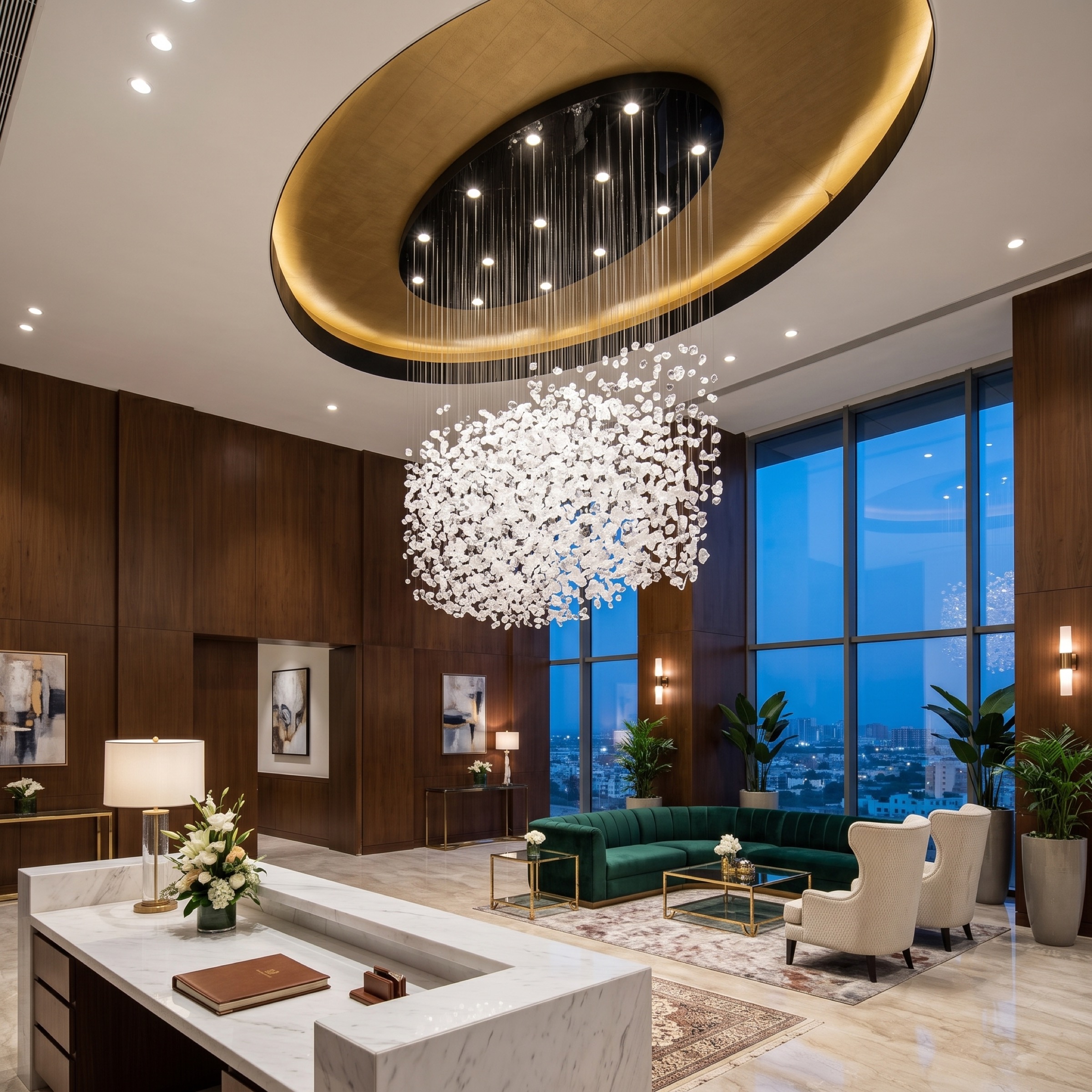
A custom lighting project often starts with a simple sketch, a product reference image, a CAD drawing, a 3D rendering or a designer’s concept. However, turning that idea into a safe, repeatable and manufacturable lighting fixture requires much more than copying the appearance of the original design.
A professional custom lighting manufacturer needs to translate the visual concept into dimensions, materials, structures, electrical specifications, surface finishes, assembly methods and quality-control requirements.
This process is especially important for chandeliers, large pendant lights, natural stone lighting, decorative glass fixtures, crystal installations and other project-specific products. For architects, interior designers, contractors, lighting brands and purchasing teams, understanding the manufacturing process can make custom lighting projects more efficient and reduce unexpected changes during production.
1. Start with the Design Intent, Not Just the Product Image
A reference image shows what a lighting fixture should look like, but it does not always explain how the product should be manufactured.
Before engineering begins, the manufacturer should understand the overall design concept, intended installation location, fixture width, length and height, ceiling height, number of light sources, desired materials and finishes, lighting effect, quantity, target market and project requirements.
A chandelier designed for a double-height lobby may look similar to a chandelier for a dining room in a photograph, but the engineering, suspension system, component size and installation method can be completely different.
2. Converting a Sketch into Engineering Information
The next step is to convert the design concept into measurable information.
A production-ready custom lighting drawing normally needs to define overall dimensions, component dimensions, material thickness, connection points, suspension positions, canopy dimensions and electrical components. For complex fixtures, elevation drawings, plan views, sectional details and enlarged component drawings may all be necessary.
This is where engineering becomes an important part of custom lighting manufacturing. A beautiful concept must also be physically manufacturable, installable and maintainable.
3. Choosing Materials for the Actual Fixture
Material selection affects not only appearance but also weight, structure, light transmission, manufacturing difficulty and transportation.
Common materials for decorative custom lighting include natural stone, alabaster, marble, travertine, glass, crystal, brass, stainless steel, aluminum and rattan. A professional manufacturer should evaluate the material together with the fixture structure rather than treating material selection as a purely aesthetic decision.
4. Designing the Internal Structure
The exterior appearance of a custom chandelier may look simple, but the internal structure often determines whether the finished product can be manufactured and installed successfully.
Engineering may need to consider load-bearing components, welding or mechanical connections, glass and stone fixing methods, suspension rods or cables, ceiling canopy construction, electrical wiring routes, driver locations, access for maintenance and component segmentation for transportation.
For large chandeliers, the fixture may need to be divided into multiple modules. The manufacturer can then number the components and prepare an installation sequence for the project team.
5. Integrating the Lighting System
Custom decorative lighting should not be designed only as an object. The light itself is part of the design.
During technical development, manufacturers and project teams may need to confirm LED type or lamp holder type, wattage, color temperature, dimming requirements, driver specifications, light distribution, diffuser requirements, glare control, heat management and maintenance access. A decorative fixture with beautiful materials can still fail to achieve the intended atmosphere if the light source, diffusion or brightness is not properly coordinated.
6. Developing the Metal Finish
Metal finish can significantly change the visual character of a lighting fixture.
Depending on the design, finishes may include brushed champagne gold, polished brass, antique brass, bronze, matte black, brushed stainless steel or mirror finishes. For high-end custom projects, it is better to confirm the finish with a physical sample whenever possible. A finish sample also helps designers and buyers compare the lighting fixture with other interior hardware, furniture and architectural materials.
7. Making a Prototype or Material Sample
Not every project needs a full prototype, but samples can be extremely useful for complex or high-value custom lighting. A sample may focus on glass color and shape, stone texture and translucency, metal finish, crystal arrangement, LED diffusion, structural connection or decorative details.
For a large hotel project, approving key materials and finishes before mass production can reduce the risk of producing a large quantity of fixtures that does not match the design expectation.
8. Quality Control Before Mass Production
Custom lighting requires quality control at several stages rather than only at the end of production. Typical inspection points include material inspection, dimension inspection, structural inspection, surface and finish inspection, component inspection, electrical and lighting checks where applicable, assembly inspection, appearance inspection and packing inspection.
For projects with repeated fixtures, consistency is especially important. Related fixtures should share the same visual language and finish quality.
9. Packaging Is Part of Custom Lighting Manufacturing
Large and delicate lighting fixtures can travel through multiple handling stages before reaching the project site. Glass, crystal, natural stone and finished metal components need appropriate protection during export transportation.
For complex projects, manufacturers can organize component numbering, individual protective packaging, installation sequence labels, packing lists, assembly instructions and separate packaging for fragile parts. Good packaging helps protect the fixture and makes installation more efficient.
10. Why Custom Lighting Needs Communication Between Designer and Manufacturer
The best custom lighting projects usually involve continuous communication between the design team and the manufacturer.
Designers provide the visual direction and project requirements. Manufacturers contribute knowledge about materials, fabrication, structure, assembly and production feasibility. Early questions should include whether the proposed shape can be manufactured, whether the fixture is too heavy, whether the selected material can achieve the desired light effect, whether the finish can be reproduced consistently, how the fixture will be installed, how it will be transported and how maintenance will be performed.
11. Custom Lighting for Different Project Types
The same manufacturing process can support very different applications.
For hotels, manufacturers may develop lobby chandeliers, reception lighting, restaurant pendants, corridor sconces, guestroom fixtures and suite lighting. For luxury villas, the focus may be on entrance chandeliers, dining pendants, staircase installations, living-room statement fixtures and bedroom lighting. For restaurants and commercial spaces, lighting may need to combine brand identity, atmosphere and practical illumination. For lighting brands, OEM and ODM manufacturing can turn an original product concept into a repeatable product series.
12. What Should You Send to a Custom Lighting Manufacturer?
To receive a more accurate quotation and technical assessment, project buyers can prepare CAD drawings, 3D models or renderings, hand sketches, product reference images, overall dimensions, quantity, material requirements, metal finish requirements, glass or stone specifications, lighting specifications, installation information, destination market and target delivery schedule.
Even when a complete CAD drawing is not available, a clear reference image with dimensions can be a useful starting point for discussion.
13. How Meiyun Lighting Supports Custom Lighting Development
ZHONGSHAN MEIYUN LIGHTING CO., LTD. supports international custom lighting projects from concept development to manufacturing and export. Meiyun Lighting can work from CAD drawings, sketches, 3D renderings, product references and project requirements.
Capabilities include custom chandeliers, pendant lights, linear decorative lighting, wall sconces, natural stone and alabaster lighting, marble and travertine lighting, custom glass fixtures, crystal chandeliers, brass, bronze, stainless steel and aluminum structures, custom metal finishes, engineering detail drawings, material and finish samples, OEM and ODM manufacturing, quality inspection and export packaging.
The objective is not simply to reproduce a picture. The goal is to develop a lighting fixture that can be manufactured consistently while preserving the designer’s original visual intent.
14. Custom Lighting Is a Development Process, Not Just a Product Order
The biggest difference between buying a standard lighting product and developing a custom fixture is the level of technical coordination involved. A standard product can usually be selected from an existing specification. A custom fixture requires decisions about dimensions, materials, structure, light sources, finishes, assembly and packaging.
For this reason, the manufacturer becomes part of the product-development process. When the design team and manufacturer work together from the beginning, the final result can better balance aesthetics, engineering, production efficiency, installation and project requirements.
Conclusion: Turning a Lighting Concept into a Real Product
A successful custom lighting fixture starts with a strong design concept, but it becomes a real product through engineering, material selection, prototyping, manufacturing and quality control. From a simple sketch to a finished chandelier, every stage matters: proportion, structure, material, finish, lighting effect, installation and packaging all contribute to the final result.
For architects, interior designers, contractors, lighting brands and project buyers looking for a custom lighting manufacturer, choosing a supplier with both design-development and manufacturing capabilities can make the entire process more efficient.
Meiyun Lighting provides custom lighting development for chandeliers, pendant lights, wall lights, natural stone lighting, glass lighting, crystal fixtures and other decorative lighting products. Whether you have a finished CAD drawing or only an initial concept, the project can begin with a technical review and a discussion of materials, dimensions and production requirements.
FAQ: Custom Lighting Manufacturing
Q: What is custom lighting manufacturing?
A: It is the process of developing a lighting fixture according to specific design, dimensions, materials, finishes, lighting and installation requirements instead of selecting an unchanged standard product.
Q: Can a manufacturer make a chandelier from a sketch?
A: Yes. A sketch, rendering or reference image can be the starting point. The design is then translated into dimensions, materials, structure, electrical specifications and production drawings.
Q: What is the difference between OEM and ODM lighting?
A: OEM generally means manufacturing according to the customer’s design or specifications. ODM can include greater manufacturer involvement in product development, engineering and production.
Q: Can custom lighting use natural stone?
A: Yes. Alabaster, marble, travertine and other natural stones can be incorporated into chandeliers, pendants, wall lights and decorative installations, subject to structure and weight considerations.
Q: Can the same design become a whole lighting collection?
A: Yes. A main chandelier can be developed into related pendants, wall sconces, ceiling lights and other fixtures while maintaining a consistent material and design language.
Q: Do custom lighting projects require samples?
A: Not always, but samples are highly useful for complex projects or when material, glass color, stone texture or metal finish is important.
Q: What information should I provide for a quotation?
A: Useful information includes drawings or reference images, dimensions, quantity, materials, finishes, lighting specifications, installation conditions, destination and target delivery schedule.
Recommended Internal Links for the Meiyun Lighting Website
- Custom Lighting — overview of Meiyun Lighting’s OEM and ODM capabilities
- Custom Lighting Detailing Portfolio — engineering drawings and technical development
- Natural Stone Lighting — alabaster, marble, travertine and other stone lighting
- Glass Lighting — custom glass pendants and decorative glass fixtures
- Crystal Chandeliers — statement lighting and hospitality applications
- Projects — examples of custom lighting developed for different spaces
- Contact Us — submit drawings, renderings or project requirements for a quotation