Project Guides
Amber Glass Lighting: Is the Colour in the Glass or on the Surface?
Scene illustration
“Amber glass” describes an appearance, but it does not fully identify how a lamp shade was made. The colour may be part of the glass material or involve an applied surface treatment. For custom decorative lighting, ask for the proposed construction as well as the preferred shade of amber before treating two offers as equivalent.
Three descriptions that answer different questions
A lighting schedule can describe the glass as hand-blown, amber and ribbed. Those words concern forming, colour appearance and texture respectively. They are useful, but together they still leave the colouring method open. Asking how the colour is produced adds material information without changing the designer's chosen appearance.
Keep the distinction in the enquiry: how is the glass formed, how is its colour created, and what additional finish is applied? A supplier should be able to discuss those questions separately for the proposed component. The answer may involve more than one process, so avoid reducing every decorative glass product to a choice between “real colour” and “paint”.
Colour within glass is one manufacturing route
The Corning Museum of Glass explains that dissolved metallic oxides can impart colour throughout glass. Its account also identifies other colouring mechanisms, including dispersions and pigment particles. This is useful background for understanding why glass can carry its own colour; it does not identify the composition or recipe of a particular amber lamp from its photograph.
For a proposal described as body-coloured glass, ask the manufacturer to define that description for the supplied shade. Establish whether the glass construction includes distinct layers or any additional surface decoration. The purpose is a clear material declaration, not a request to disclose a proprietary formula or prove authenticity by damaging a sample.
Colour applied to a surface is not one single finish
The Museum's Images on Glass guide discusses applied decoration through techniques such as painting and enamelling. It defines enamel as a glass-based material coloured with metallic oxide and applied before firing. This illustrates why “surface colour” is too broad to serve as a complete process specification: a fired enamel and another painted finish should not automatically be treated as the same system.
If a quotation proposes a coloured coating or decoration, ask what process is intended and where it is located: outside, inside, or on specified areas of the component. Ask whether a clear or protective finishing layer is part of that proposal. Record the supplier's actual answer rather than adding a layer to the specification simply because it seems likely from the image.
A surface-treated shade is not automatically an inferior product, and colour within the glass is not a blanket guarantee of performance. Compare the documented material and finish against the project's appearance, care and use requirements. Do not assign a universal scratch resistance, fading period or service life to either category from its name alone.
Hand-blown does not complete the colour description
Hand-blowing describes the forming process. An enquiry that requires hand-blown glass should still state the intended colouring and finishing scope. Conversely, the phrase “amber finish” should not silently replace a requirement about the forming process. Keeping those descriptions separate makes it easier to understand exactly which part of a proposal is being changed.
For example, a supplier may offer an alternative route to the requested amber appearance. Before deciding on the alternative, ask whether only the colour treatment changes or whether the glass construction, texture or forming method also changes. This is a purchasing comparison, not an assertion that Meiyun supplies every combination or that different methods will produce an identical result.
Attach the process declaration to the specific shade reference. A fixture with several glass components need not have one identical construction for all of them. Identify which description applies to each component, including any deliberately clear or differently finished part, so the order does not rely on an ambiguous description for the whole chandelier.
What the hotel operator needs to know
Request care instructions for the finished component, including any relevant restrictions on products or methods used during cleaning. A generic instruction for bare glass may leave an applied finish unaddressed. Do not scrape, dissolve or abrade a shade to discover its colouring method; obtain the specification from the supplier instead.
When reviewing a material or finish alternative, include the operator's intended cleaning procedure in the discussion. Ask the responsible supplier to confirm its suitability for that particular finish. Appearance approval and acceptance of the care requirements are related decisions, but a pleasing amber tone does not answer both.
Meiyun Lighting's official company introduction includes in-house hand-blown-glass fabrication and material-sample approval for bespoke decorative lighting. Send the desired glass profile, colour reference, texture, quantity and destination, together with any required process description. Confirm the feasible construction and available finish for the selected design rather than assuming all catalogue colours share one method.
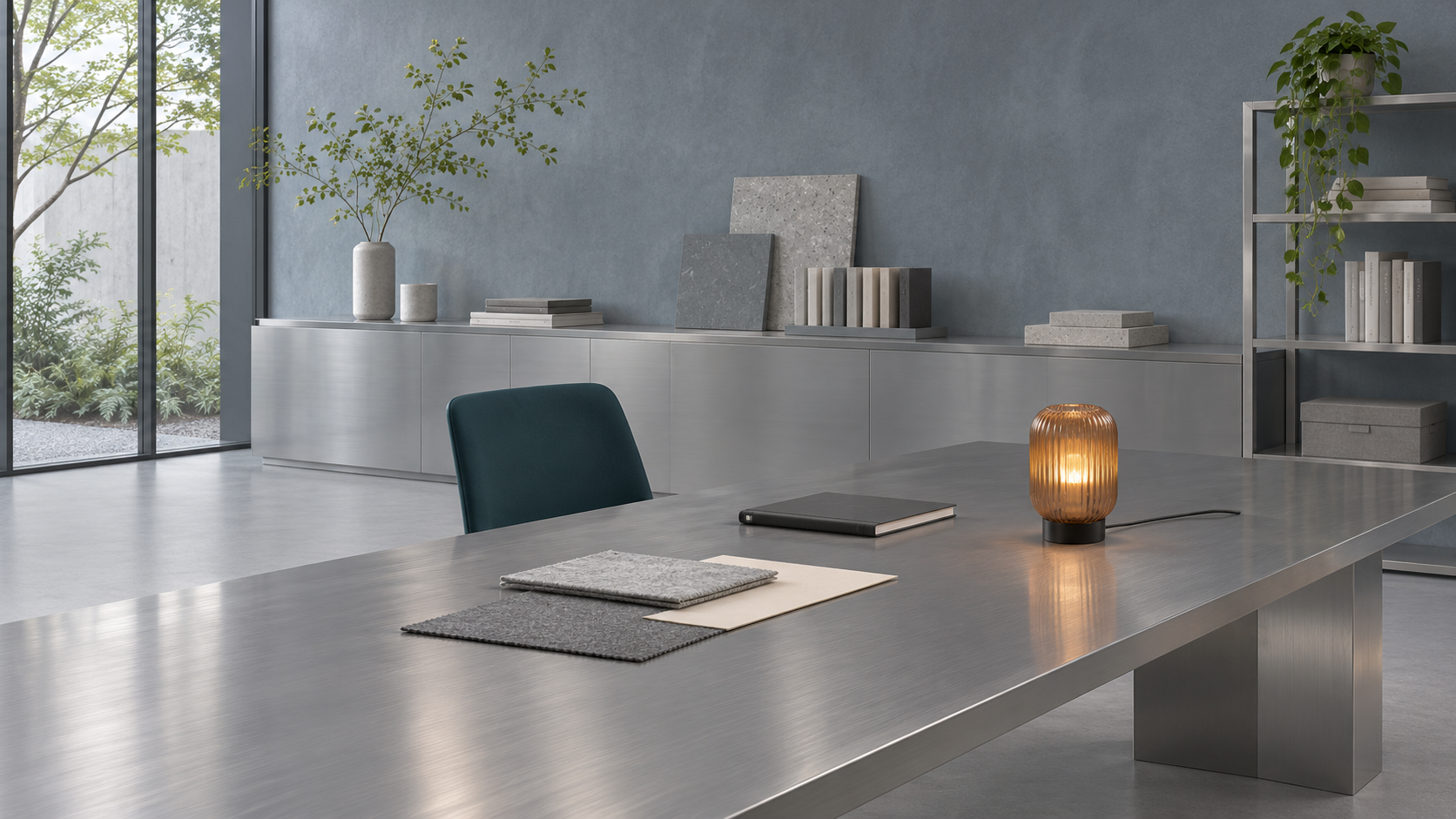
A useful glass specification connects the intended appearance to a declared construction and the instructions for looking after it. Our transparent glass lighting guide considers the separate design question of what remains visible inside the shade. The scene illustration here shows an amber lamp in a design setting; it establishes neither its colouring process nor an exact production colour.