
Project Guides
Transparent Glass Lighting: Design the Source You Can See
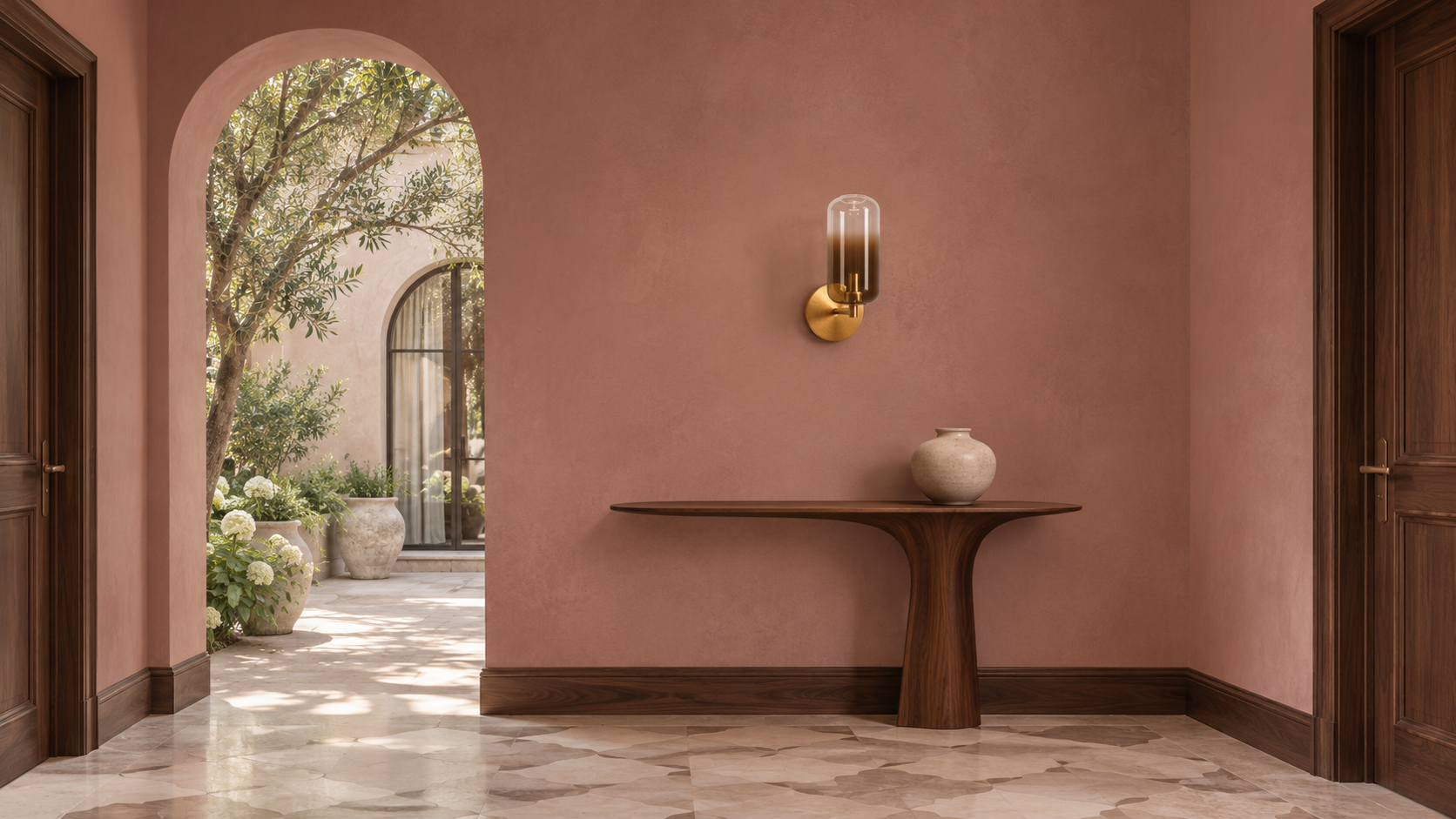
Scene illustration
In a clear or smoked-glass decorative fixture, the visible lamp and its support belong to the composition. Develop the glass envelope and the source together, so the interior of the fitting looks intentional in daylight as well as when illuminated.
An interior designer selects an elegant glass wall light for a hotel lounge. In the first drawing, the glass outline carries the design. During sample review, another shape becomes equally noticeable: the lamp inside it. A broad white lamp, a slender clear lamp or a visible LED assembly would each create a different composition within the same outer envelope. This is a hypothetical design problem, not a description of a supplied Meiyun project.
The useful starting point is to draw what remains visible through the glass. Include the source, socket or LED support and their relationship to the outer profile. If those parts are omitted from a rendering, the client is judging an incomplete object. Transparency makes the interior part of the exterior design.
Decide which outline should lead
Imagine the proposed fitting switched off against a pale wall. Should the eye follow the glass edge first, or notice a clearly defined form inside it? A visible source can be an intentional centrepiece. It can also compete with a carefully shaped shade. The design choice is the relationship between those two outlines, rather than a rule that all internal parts must disappear.
Work through that relationship in an elevation and a section. Show the source at its actual proposed size, with the support that will hold it. Look at the space above it, beside it and between it and the glass edge. A small graphic change to the source in a drawing may alter the balance of the whole fitting; it should be a discussed design choice rather than an illustration shortcut.
For a repeated wall-light arrangement, consider the rhythm created by the internal forms as well as the outer glass. Consistent visible sources may help the group read as a deliberate series. If the design calls for variation, show where that variation belongs. Avoid leaving the installer or later purchaser to make an aesthetic decision that the original designer intended to control.
Give daylight and evening different questions
Daylight review is about the object: the glass tint, internal outline, socket colour and visible construction. Evening review is about the illuminated composition and the experience of looking towards it. Keep both questions in the design discussion. A preferred unlit appearance is a reason to develop the sample further, not a conclusion about its lit comfort.
ERCO explains in its discussion of brilliance and glare that reflections and refraction can create attractive highlights, while very high luminance can produce glare. It also notes that printed images cannot reproduce the actual luminance contrast. Use photographs to communicate the design, and assess the proposed illuminated fitting in person rather than treating a flattering image as a comfort assessment.
For the hypothetical lounge, review the sample from the nearby chair and the approach to that chair. Ask the designer whether the visible source should remain prominent or whether the internal arrangement needs another design iteration. Retain the intended glass character while exploring feasible options with the manufacturer. Any change must remain consistent with the electrical, thermal and construction requirements of that fitting.
Separate the design alternative from a bulb substitution
Where a fixture uses replaceable lamps, two candidates should only enter the appearance comparison after their suitability for the fixture has been confirmed. The visual discussion does not authorise a different base, size, rating or control configuration. Where the source is integrated, a proposed visual change may involve the LED assembly or its surrounding construction rather than a lamp that can simply be exchanged.
Record the accepted source configuration with the complete sample, not only the glass component. If the visible lamp is to be supplied by another party, identify that boundary in the purchase documents. The decorative-lighting offer and the separately purchased source need to describe the same intended finished appearance.
Develop the complete fitting with Meiyun
Meiyun Lighting combines in-house hand-blown-glass fabrication, metalworking, finishing and LED assembly with engineering drawing and material-sample support. For a custom glass pendant or wall-light enquiry, send an image showing the intended internal appearance as well as the external silhouette. Indicate which visible elements are essential and which are open to development.
The custom lighting production process guide explains how drawings and samples become manufacturing information. For transparent decorative lighting, include the parts seen through the shade in that information. A resolved design gives the glass, the source and its support a considered relationship, both as an unlit object and as a light in the room.