
Project Guides
Natural Stone Lighting for Luxury Interiors: 7 Design Applications Beyond the Chandelier
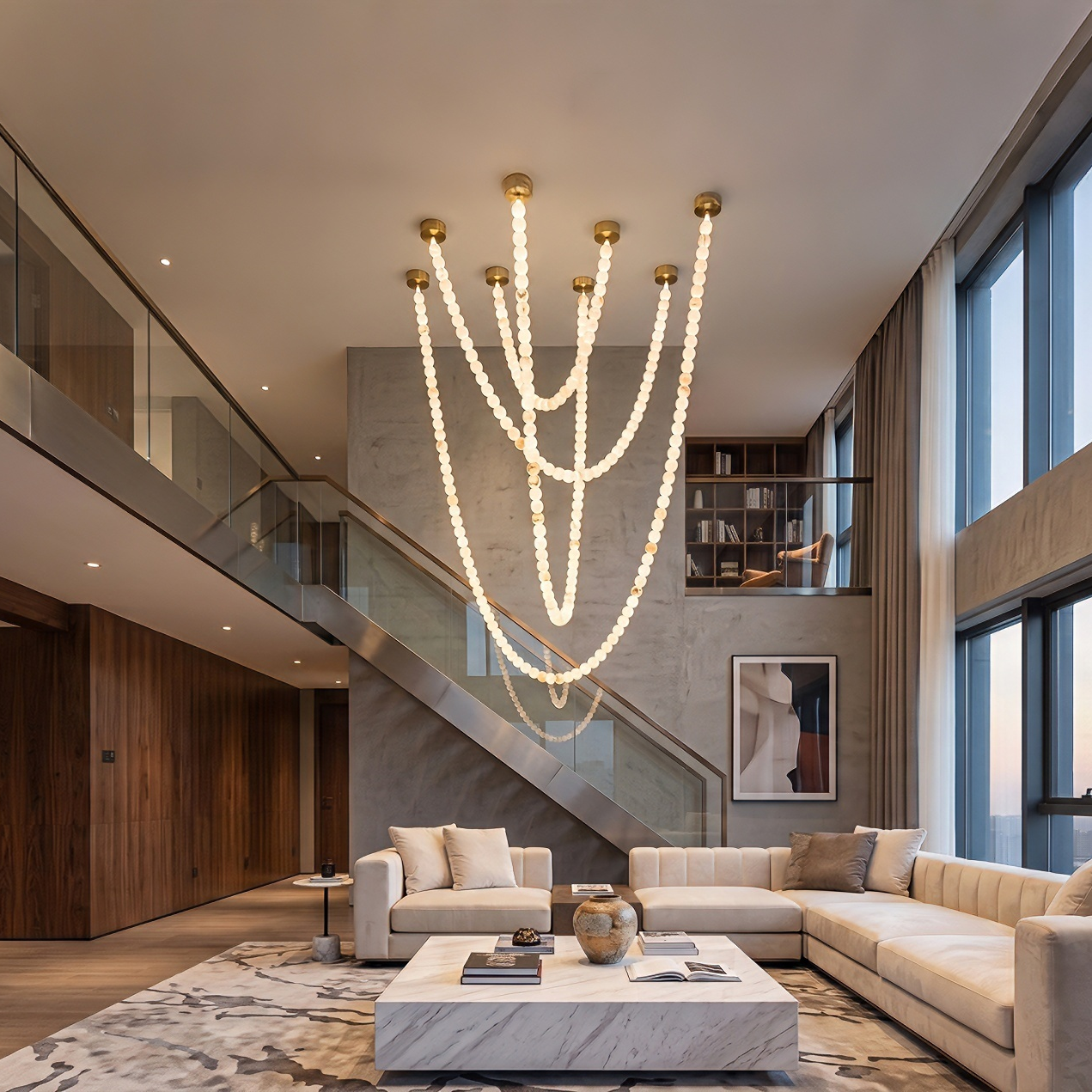
Cover image: design visualization of a bespoke alabaster chandelier in a residential interior.
A practical guide to marble, onyx, alabaster and travertine lighting for residential, hospitality and commercial projects.
Natural stone lighting extends beyond the traditional decorative chandelier. In contemporary luxury interiors, stone can become a luminous surface, a sculptural shade, a feature wall element, or a carefully engineered component inside a bespoke lighting system.
Why Natural Stone Works So Well in Lighting Design
Stone brings a quality that manufactured surfaces cannot completely replicate: natural variation. Veining, mineral structure, color movement and translucency can change from one slab to another. When the material is combined with a controlled light source, those natural characteristics become part of the visual effect.
For translucent materials such as onyx and alabaster, thickness and internal structure strongly influence how light appears. Instead of simply transmitting light like clear glass, the stone can soften and scatter the source, creating a deeper, more atmospheric glow. For a closer comparison, see our guide to onyx and alabaster in custom lighting.
7 Applications for Custom Natural Stone Lighting
1. Statement Chandeliers in Hotel Lobbies
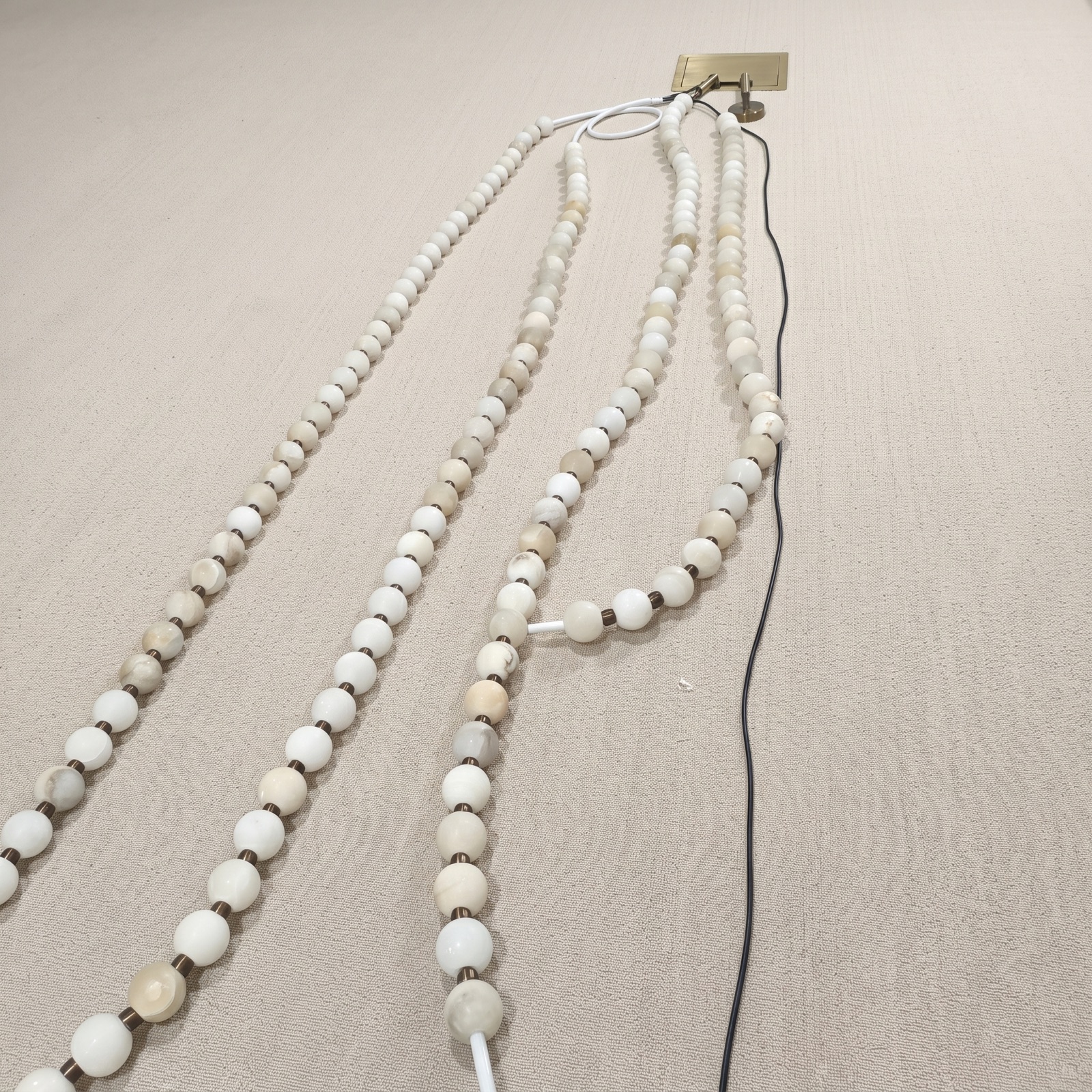
Large hospitality spaces need a focal point that is visible from a distance without making the interior feel visually heavy. Custom stone chandeliers can combine multiple stone modules with brass, bronze, black metal, glass or concealed LED sources. The geometry can be scaled to the lobby, staircase or atrium rather than being limited to a standard catalogue size.
2. Luxury Villa and Dining-Room Pendants
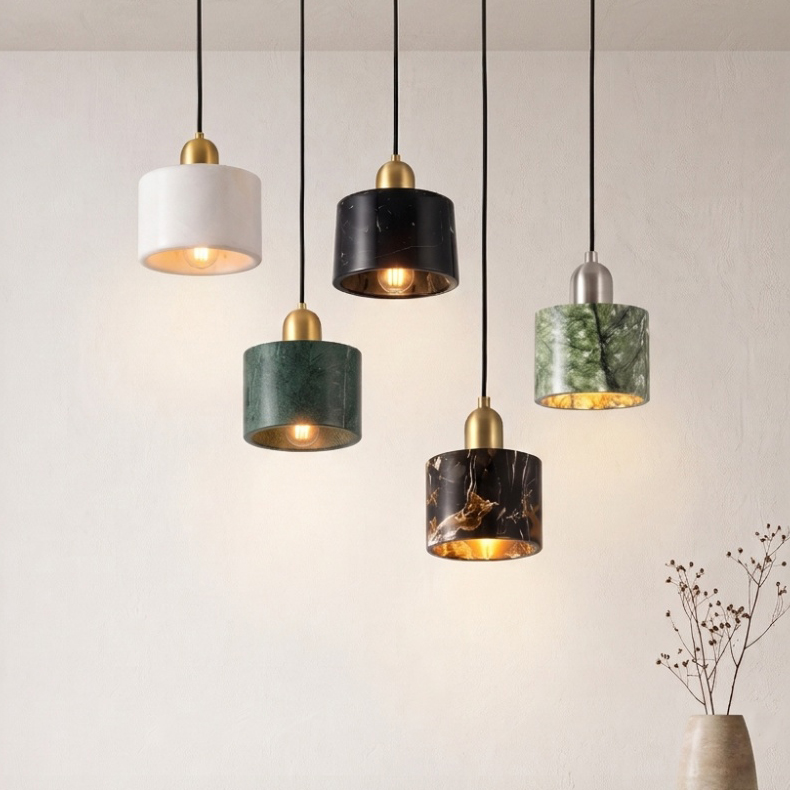
In private residences, a stone pendant above a dining table, kitchen island or double-height stair landing can introduce a strong material connection between architecture and lighting. Marble can provide a solid sculptural appearance, while translucent onyx or alabaster can create a softer illuminated effect.
3. Backlit Stone Wall and Architectural Features
Stone does not have to be used only as the shade of a lamp. Translucent stone can be incorporated into illuminated feature walls, reception backgrounds, bar fronts, partitions and architectural panels. The lighting system needs to be engineered for uniform illumination so that hotspots, visible LED points and uneven brightness do not distract from the stone itself.
4. Custom Wall Sconces
Wall lights are particularly suitable for thin stone elements because the viewer sees the material close-up. A small alabaster, onyx or marble panel can become the visible surface of a sconce while the light source remains concealed behind it. This approach works well in corridors, guest rooms, restaurants, powder rooms and residential living spaces.
5. Reception Desks, Bars and Feature Counters
Hospitality designers can extend the lighting language from the ceiling to the architecture. Backlit stone can be coordinated with a custom pendant or chandelier so that the same material appears in multiple locations. This creates a more cohesive interior rather than treating the decorative fixture as an isolated object.
6. Sculptural Staircase Lighting
Staircases offer an opportunity to use stone lighting vertically. Custom pendants can follow the height of a stair void, while wall-mounted stone lights can repeat the rhythm of the steps. For large projects, the fixture dimensions, suspension points and mounting structure can be developed around the architectural drawings.
7. Linear and Modular Stone Lighting
Natural stone can also be integrated into contemporary linear lighting. Long stone elements, repeated modules or mixed stone-and-metal sections can be developed for dining tables, conference rooms, hospitality corridors and retail interiors. Modular construction makes it easier to adjust overall length and spacing to different project dimensions.
How to Choose the Right Stone for a Lighting Project
| Material | Visual character | Typical lighting role | Project considerations |
|---|---|---|---|
| Marble | Strong veining; solid and architectural | Decorative pendants, chandeliers, bases and sculptural elements | Weight, thickness, veining direction and structural support |
| Onyx | Distinctive veining; translucent and visually dramatic | Backlit pendants, chandeliers, feature panels and statement pieces | Natural variation, translucency, slab selection and backlighting |
| Alabaster | Soft, cloudy and warm | Pendants, sconces and ambient decorative lighting | Thickness, translucency, fragility and light diffusion |
| Travertine | Earthy, porous and architectural | Contemporary pendants, wall lights and mixed-material fixtures | Surface texture, weight and desired light transmission |
For more detail on material trade-offs, read our marble, travertine and alabaster lighting comparison.
What Makes Custom Stone Lighting Different from a Standard Fixture?
A catalogue fixture starts with a fixed product. A project-based custom fixture starts with the space. That difference affects almost every stage: material selection, dimensions, suspension height, stone thickness, metal finish, LED configuration, driver placement, ceiling structure, packaging and installation.
For architects, interior designers, contractors and developers, the value of a custom manufacturer is therefore not only the ability to produce a different shape. It is the ability to translate a design concept into a manufacturable, testable and installable lighting package.
What Meiyun Lighting Can Do for Custom Stone Lighting Projects
Zhongshan Meiyun Lighting Co., Ltd. focuses on custom decorative lighting and supports projects from concept development through engineering and production. The company describes a 4,000+ square meter manufacturing base, 14+ years of manufacturing experience and exports to 100+ markets on its company page.
- Design development from CAD drawings, 3D models, sketches, reference images or project specifications.
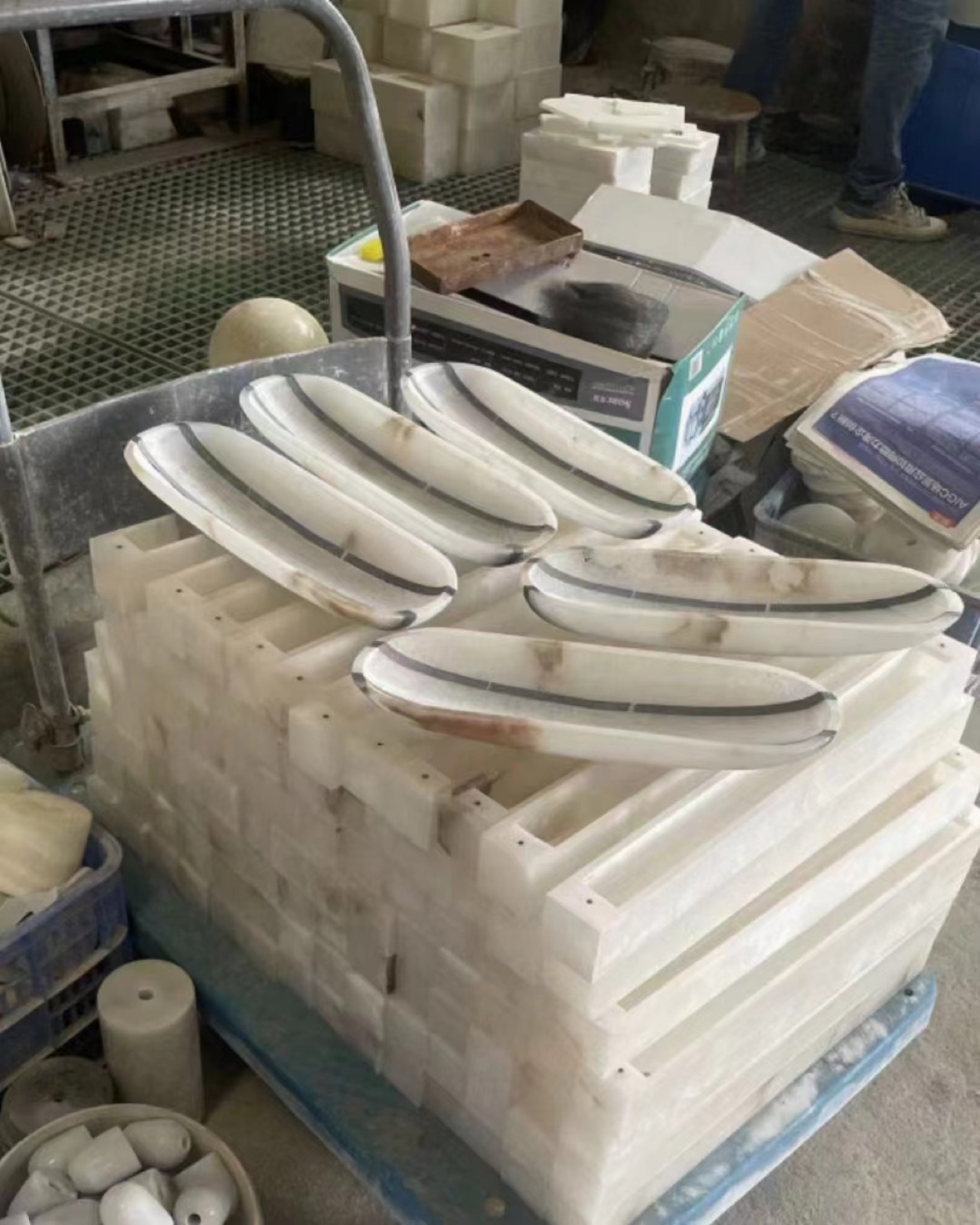
- Natural stone selection and coordination, including marble, onyx, alabaster, travertine and other decorative stone options.
- Custom dimensions, stone module sizes, pendant spacing, suspension heights and overall fixture configurations.
- Metalwork coordination with finishes such as brushed champagne gold, brushed brass, polished chrome, brushed stainless steel, matte black and bronze.
- LED integration, including linear LED and custom lighting configurations according to project requirements.
- Engineering and detailed manufacturing drawings for project review and approval.
- Prototype or material sampling for important projects before full production.
- Pre-assembly, illumination testing, inspection and export packing before shipment.
- Support for overseas project communication, documentation and installation coordination.
From Design Concept to Finished Fixture
- Share the design briefSend drawings, renders, dimensions, material references or even a simple sketch.
- Review feasibilityThe manufacturing team reviews stone selection, structure, lighting integration, dimensions and installation requirements.
- Develop engineering drawingsThe approved concept is translated into detailed production information.
- Confirm materials and finishesStone, metal finish, lighting specification and other visible components are confirmed.
- Prototype and testFor selected projects, samples or key components can be produced for approval before mass production.
- Manufacture and inspectThe fixture is produced, assembled and checked before export.
- Pack for project deliveryCustom packing and component identification help reduce risk during international transportation and installation.
Design Questions to Ask Before Ordering Custom Stone Lighting
- What stone appearance should be visible when the fixture is switched off?
- How should the stone look when illuminated?
- Does the project require a specific slab, color family or veining direction?
- What overall dimensions and suspension height are required?
- How will the stone weight be supported?
- Is dimming required, and which control system will the project use?
- What electrical specification is required for the destination market?
- Will the fixture need shop drawings or submittal documentation?
- Should a physical stone sample or prototype be approved before production?
FAQ: Custom Natural Stone Lighting
Can Meiyun make a stone lighting fixture from my own design?
Yes. Meiyun can develop custom lighting from CAD drawings, 3D models, sketches, reference images and project specifications, then translate the concept into engineering and manufacturing information.
What natural stones can be used for custom lighting?
Depending on the design, options can include marble, onyx, alabaster, travertine and other decorative or translucent natural stones. Material selection depends on color, veining, thickness, translucency, weight and the required lighting effect.
Can the size of a custom stone chandelier be changed?
Yes. Overall dimensions, fixture height, module count, stone dimensions, pendant spacing, suspension height, canopy and mounting structure can be customized for the project.
Can stone be combined with metal, glass or crystal?
Yes. Natural stone can be coordinated with brass, stainless steel, aluminum, bronze, glass, crystal and linear LED systems to create different design languages.
Can Meiyun support US lighting projects?
Meiyun’s US project guide describes project-specific electrical configurations, engineering documentation, testing and export packing. Requirements should be confirmed for each project and destination.
Discuss a Custom Stone Lighting Project
Share your drawings, dimensions, material references and installation requirements with Meiyun Lighting. The team can review feasibility, stone options and the next steps for your project.