
Project Guides
Marble vs. Travertine vs. Alabaster Lighting: Which Natural Stone Is Best for Your Project?
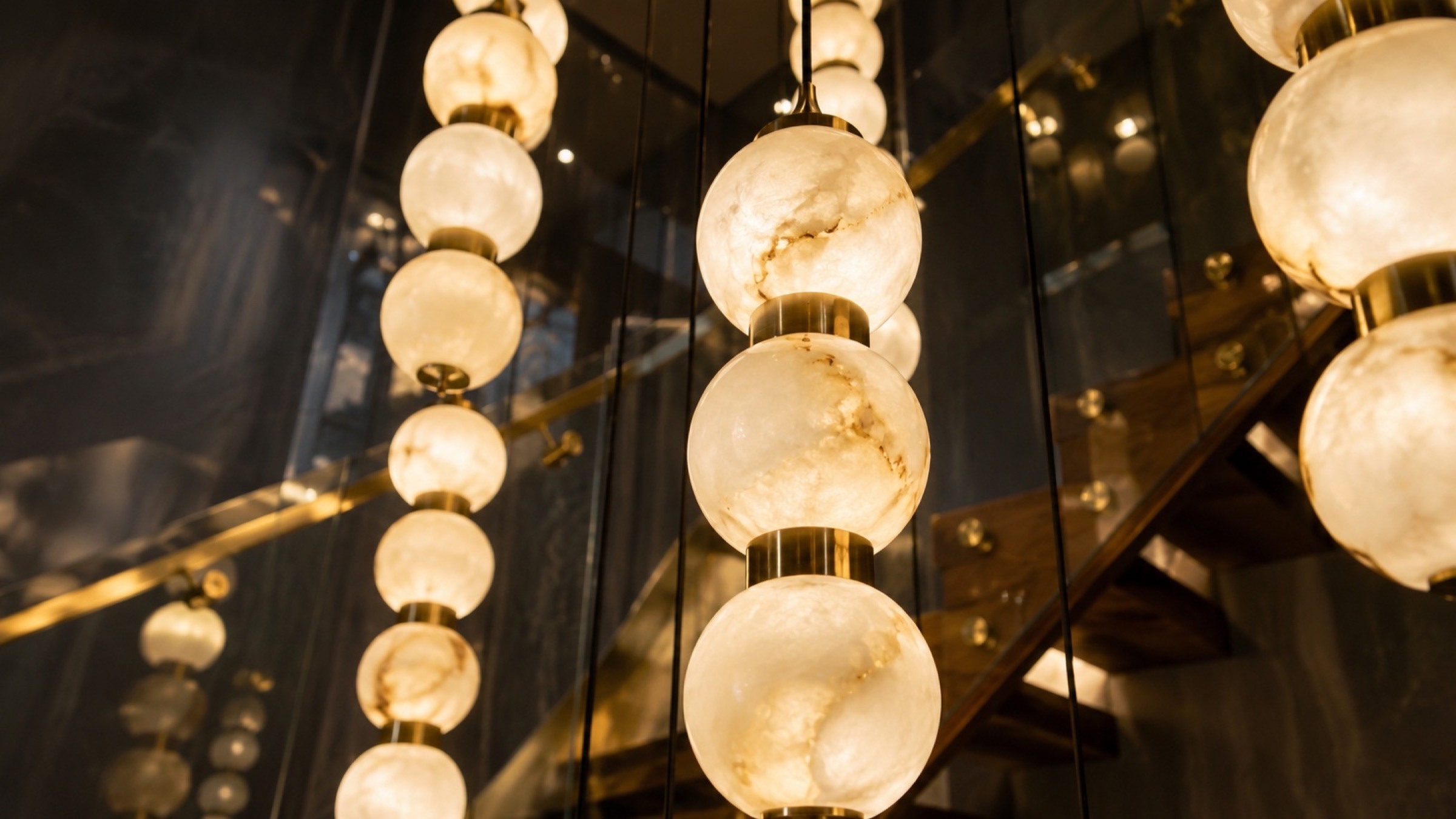
Natural stone lighting is becoming an increasingly popular choice for luxury residences, hotels, restaurants, commercial spaces, and custom architectural projects.
Unlike conventional glass, metal, or acrylic fixtures, natural stone lighting brings unique textures, colors, patterns, and natural variations into a space. Among the most commonly used materials are marble, travertine, and alabaster.
But which stone is right for your project?
The answer depends on the desired aesthetic, lighting effect, durability, project requirements, and level of customization.
Marble, Travertine and Alabaster: What Is the Difference?
| Marble | Travertine | Alabaster | |
|---|---|---|---|
| Material Character | Rich natural veining | Natural pores and warm texture | Translucent and softly luminous |
| Light Transmission | Low | Medium | High |
| Visual Style | Luxurious and sophisticated | Natural and architectural | Soft and artistic |
| Common Colors | White, black, grey, beige | Cream, beige, ivory, sand, light brown | White, beige, amber |
| Durability | ★★★★★ | ★★★★ | ★★★ |
| Customization Potential | ★★★★★ | ★★★★★ | ★★★★★ |
| Suitable Styles | Luxury, Modern, Classic | Organic, Wabi-Sabi, Modern | Luxury, Modern, Art Deco |
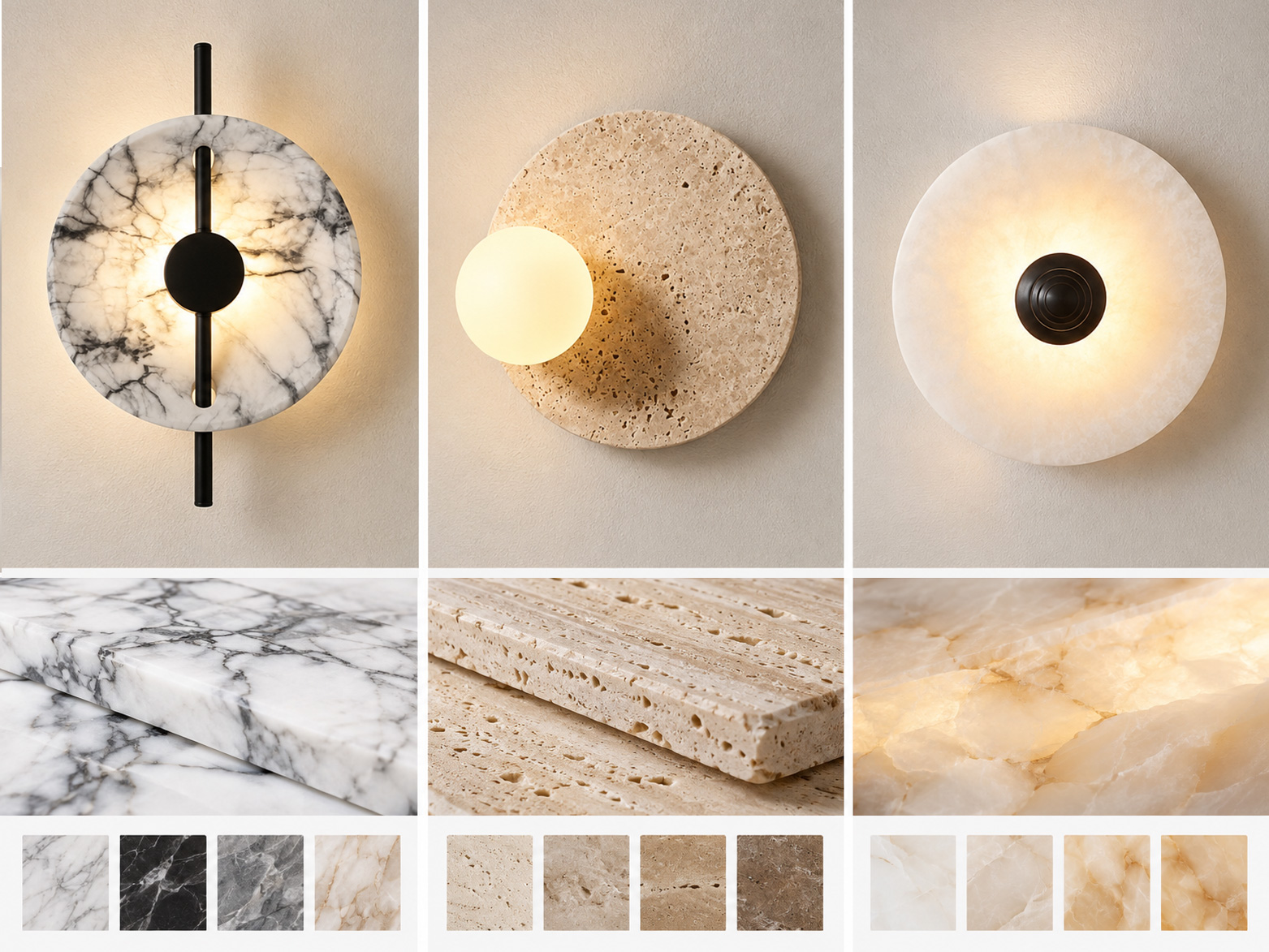
In simple terms:
- Choose Marble Lighting for luxurious natural veining and a strong architectural presence.
- Choose Travertine Lighting for warmth, natural texture, and an organic aesthetic.
- Choose Alabaster Lighting when a soft, translucent glow is the priority.
1. Marble Lighting
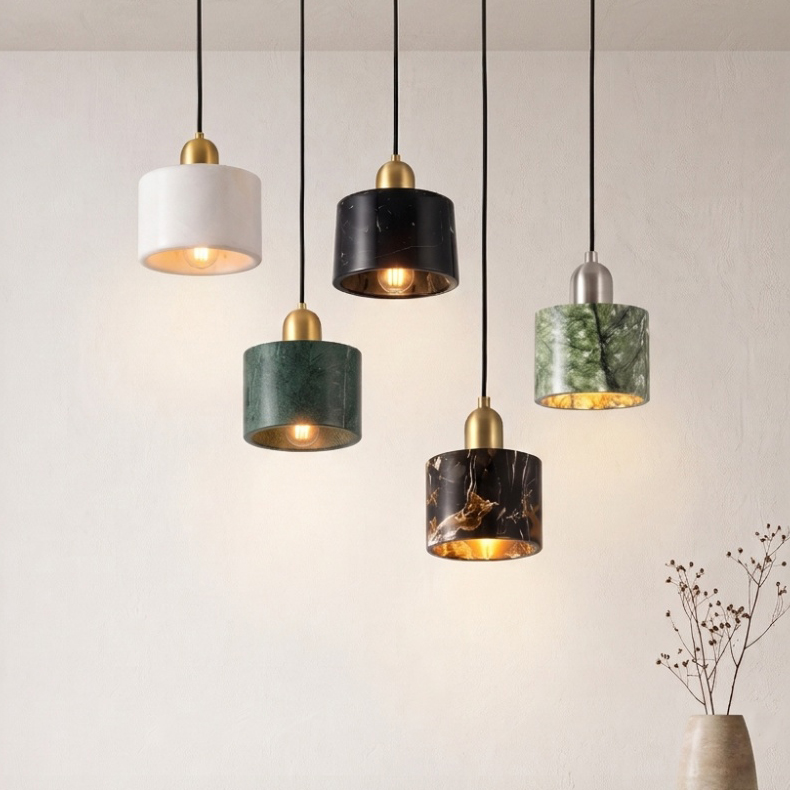
Marble lighting is a classic choice for high-end interior design.
The main appeal of marble is its distinctive natural veining. Different stone varieties and origins offer different colors, patterns, and visual characteristics, making marble particularly suitable for artistic and luxurious custom lighting.
Key Features of Marble Lighting
Rich natural patterns
Common options include White Marble, Calacatta Marble, Carrara Marble, Black Marble, Grey Marble, and Beige Marble.
A strong luxury aesthetic
Marble works particularly well in luxury villas, high-end residences, five-star hotels, restaurants, clubhouses, and commercial interiors.
Excellent durability
Compared with alabaster, marble generally offers higher hardness and durability, making it suitable for long-term architectural and hospitality projects.
Where Is Marble Lighting Suitable?
- Luxury Villas
- High-End Residences
- 5-Star Hotels
- Luxury Restaurants
- Shopping Malls
- Commercial Lobbies
- Clubhouses
- Custom Interior Projects
2. Travertine Lighting
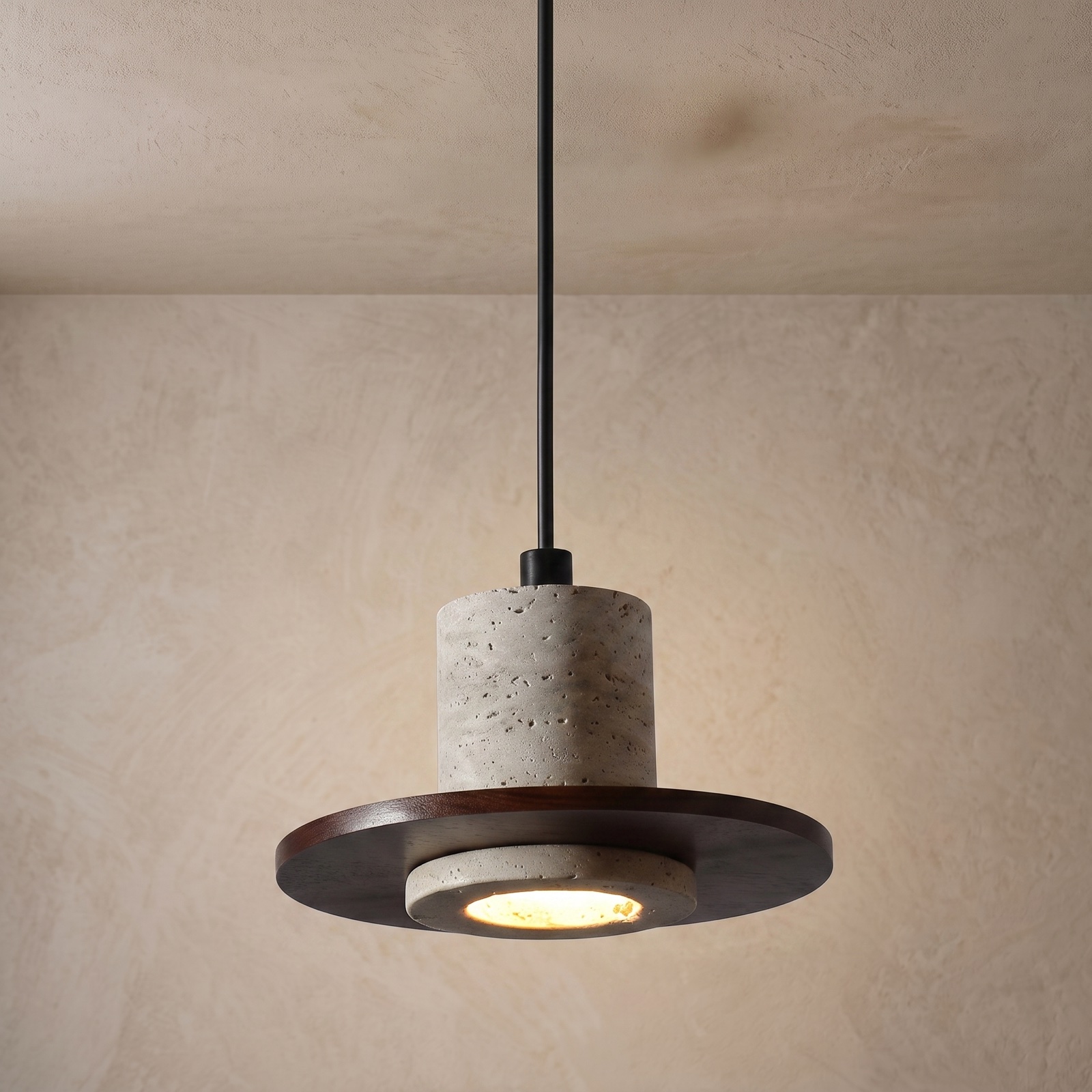
Travertine lighting is gaining attention in modern residential, hospitality, and nature-inspired interiors.
Its characteristic natural pores, layers, and warm tones create a distinctive architectural material effect.
Key Features of Travertine Lighting
Natural and warm appearance
Common tones include cream, beige, ivory, sand, and light brown.
Distinctive porous texture
Depending on the design, some natural pores can be retained to emphasize the authentic character of the stone.
Ideal for organic interiors
Travertine pairs naturally with wood, neutral walls, natural fabrics, metal, microcement, and other architectural materials.
Where Is Travertine Lighting Suitable?
- Modern Villas
- Boutique Hotels
- Restaurants
- Resorts
- Spas
- Residential Projects
- Wabi-Sabi Interiors
- Mediterranean Interiors
- Organic Modern Interiors
3. Alabaster Lighting
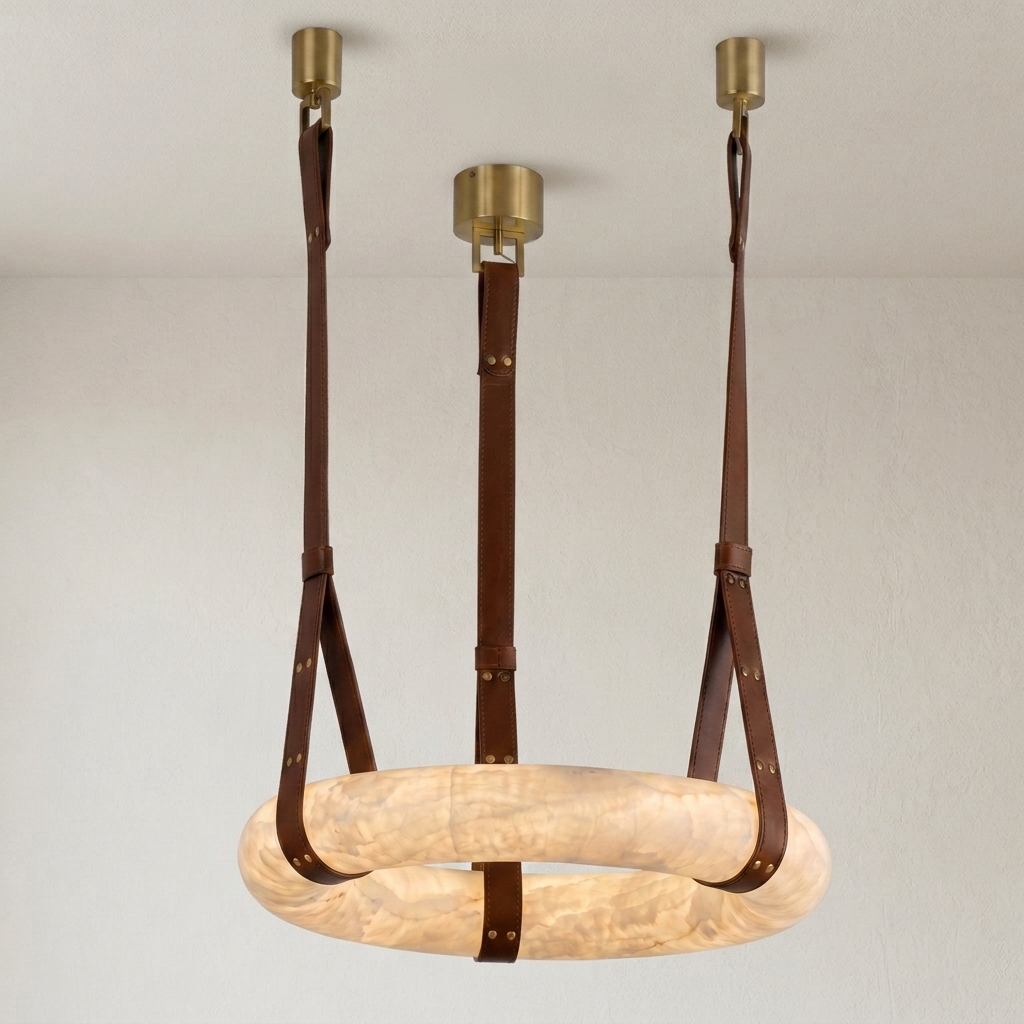
One of the most distinctive characteristics of alabaster is its translucency.
When a light source is positioned behind or inside the stone, light can pass through the material and create a soft, warm, layered glow.
This makes alabaster particularly attractive for decorative lighting where the material itself becomes part of the lighting experience.
Key Benefits of Alabaster Lighting
Soft and atmospheric illumination
Alabaster naturally diffuses light, helping create a sophisticated and comfortable atmosphere.
Natural patterns become more visible when illuminated
The stone’s unique patterns and variations can become more prominent when the fixture is switched on.
Where Is Alabaster Lighting Suitable?
- Luxury Hotels
- Hotel Lobbies
- High-End Villas
- Luxury Residences
- Restaurants
- Bars
- Private Clubs
- Reception Areas
- Feature Walls
4. How to Choose Between Marble, Travertine and Alabaster?
There is no single “best” natural stone for every project.
The right choice depends on the desired material character and lighting effect.
| Project Requirement | Recommended Material |
|---|---|
| Luxury appearance | Marble |
| Rich natural veining | Marble |
| Warm and natural atmosphere | Travertine |
| Wabi-Sabi style | Travertine |
| Soft translucent glow | Alabaster |
| Luxury hotel lobby | Alabaster / Marble |
| Luxury residence | Marble / Alabaster |
| Modern residential interior | Travertine / Marble |
| Restaurant ambient lighting | Alabaster / Travertine |
| Artistic decorative lighting | Alabaster |
| Large custom chandeliers | Marble / Alabaster / Travertine |
For large custom lighting projects, different materials can also be combined with metal structures, glass, or other decorative elements to create a more distinctive design.
5. How Much Does Natural Stone Lighting Cost?
The cost of natural stone lighting cannot be determined simply by asking which stone is the most expensive.
The final price is normally affected by multiple factors, including:
- Stone Type
- Stone Quality
- Fixture Size
- Stone Thickness
- CNC Processing
- Hand Finishing
- Metal Structure
- LED Lighting System
- Customization Quantity
- Installation Requirements
For example, a large custom chandelier may require significantly more processing, reinforcement, structural engineering, packaging, and installation considerations than a small decorative pendant.
For this reason, custom natural stone lighting is usually quoted according to the specific design and project requirements.
6. Can Natural Stone Lighting Be Customized?

Yes.
This is one of the major advantages of natural stone lighting for architectural and interior design projects.
A professional custom lighting manufacturer can develop fixtures based on:
- CAD Drawings
- 3D Models
- Design Sketches
- Dimensions
- Material Samples
- Reference Images
For example, a hotel project may require a 2.5 m × 1.5 m custom alabaster chandelier.
The fixture can be customized according to the project’s requirements, including:
- Overall Dimensions
- Stone Shape
- Stone Thickness
- Metal Finish
- Number of Light Sources
- Color Temperature
- Dimming System
- Ceiling Canopy
- Suspension Length
This allows designers and project contractors to maintain greater control over both the visual appearance and technical requirements of the final fixture.
7. What Should You Check Before Purchasing Natural Stone Lighting?
1. Confirm the Stone Sample
Natural stone is a natural material, so color, pattern, and texture can vary.
Whenever possible, confirm the actual stone sample or material sample before production rather than relying only on digital renders.
2. Check the Actual Dimensions and Weight
Large stone fixtures require careful consideration of:
- Stone Size
- Lamp Weight
- Ceiling Load
- Suspension System
- Installation Method
These details should be confirmed before production and installation.
3. Check the Lighting Effect
This is especially important for Alabaster Lighting.
The appearance of translucent stone can change significantly when illuminated. Ideally, request both light-on and light-off photos or videos before final approval.
4. Confirm Electrical Standards
For international projects, electrical and certification requirements should be confirmed according to the target market, fixture type, and installation requirements.
Depending on the market, relevant standards or certifications may include UL, ETL, CE, UKCA, and SAA.
5. Pay Attention to Packaging and Transportation
Natural stone fixtures are generally heavier than conventional lighting products, and some stone components may be fragile.
Proper custom packaging, drop protection, and export packing are therefore important for international transportation.
8. Why Is Natural Stone Lighting Ideal for Custom Projects?
For designers, architects, contractors, and project buyers, the value of natural stone lighting goes beyond illumination.
A well-designed stone fixture can simultaneously function as:
Lighting + Material + Decoration + Architectural Feature
This is why Custom Natural Stone Lighting is increasingly being used in hotels, villas, restaurants, commercial spaces, and high-end residences.
Instead of simply adding a light source to a room, natural stone fixtures can become an integral part of the interior architecture.
Marble, Travertine or Alabaster — Which One Should You Choose?
The best material depends on the design concept, lighting effect, project requirements, and desired material character.
Choose Marble when you want luxury, durability, and distinctive natural veining.
Choose Travertine when you want warmth, natural texture, and an organic architectural feel.
Choose Alabaster when you want a soft, translucent glow and a sophisticated decorative effect.
For complex projects, the best solution may also be a combination of different materials and finishes.
Frequently Asked Questions
Is marble suitable for lighting fixtures?
Yes. Marble can be used for custom chandeliers, pendant lights, wall sconces, table lamps, and other decorative lighting. Its rich natural veining makes it particularly suitable for luxury interior projects.
Is travertine good for lighting?
Yes. Travertine is well suited to modern, organic, and natural interior styles. Its warm colors and porous texture create a distinctive architectural aesthetic.
Is alabaster good for lighting?
Yes. Alabaster is widely used for decorative lighting because its translucent properties allow light to pass through the stone, creating a soft and warm glow.
What is the difference between alabaster and marble lighting?
The main difference is translucency.
Marble is generally selected for its natural veining, solid appearance, and durability, while alabaster is often selected for its ability to transmit and diffuse light.
Can natural stone lighting be customized?
Yes. A custom lighting manufacturer can customize the stone material, dimensions, shape, metal finish, lighting system, suspension structure, and other details according to architectural or interior design requirements.
What natural stone is best for a luxury hotel?
Both marble and alabaster can be excellent choices for luxury hotels.
Marble creates a solid and luxurious architectural appearance, while alabaster provides a softer and more atmospheric lighting effect.
Custom Natural Stone Lighting for Your Project
Every natural stone has its own character.
At the design stage, we can work from your CAD drawing, 3D model, sketch, dimensions, material sample, or reference image to develop a custom lighting solution for your project.
From stone selection and processing to metal structure, lighting system, finishing, and final production, the fixture can be developed around your specific requirements.
Have a custom lighting idea? Send us your drawing or reference image to discuss your project.