
Manufacturing Insights
Choosing Glass, Crystal and Metal Finishes for Decorative Lighting
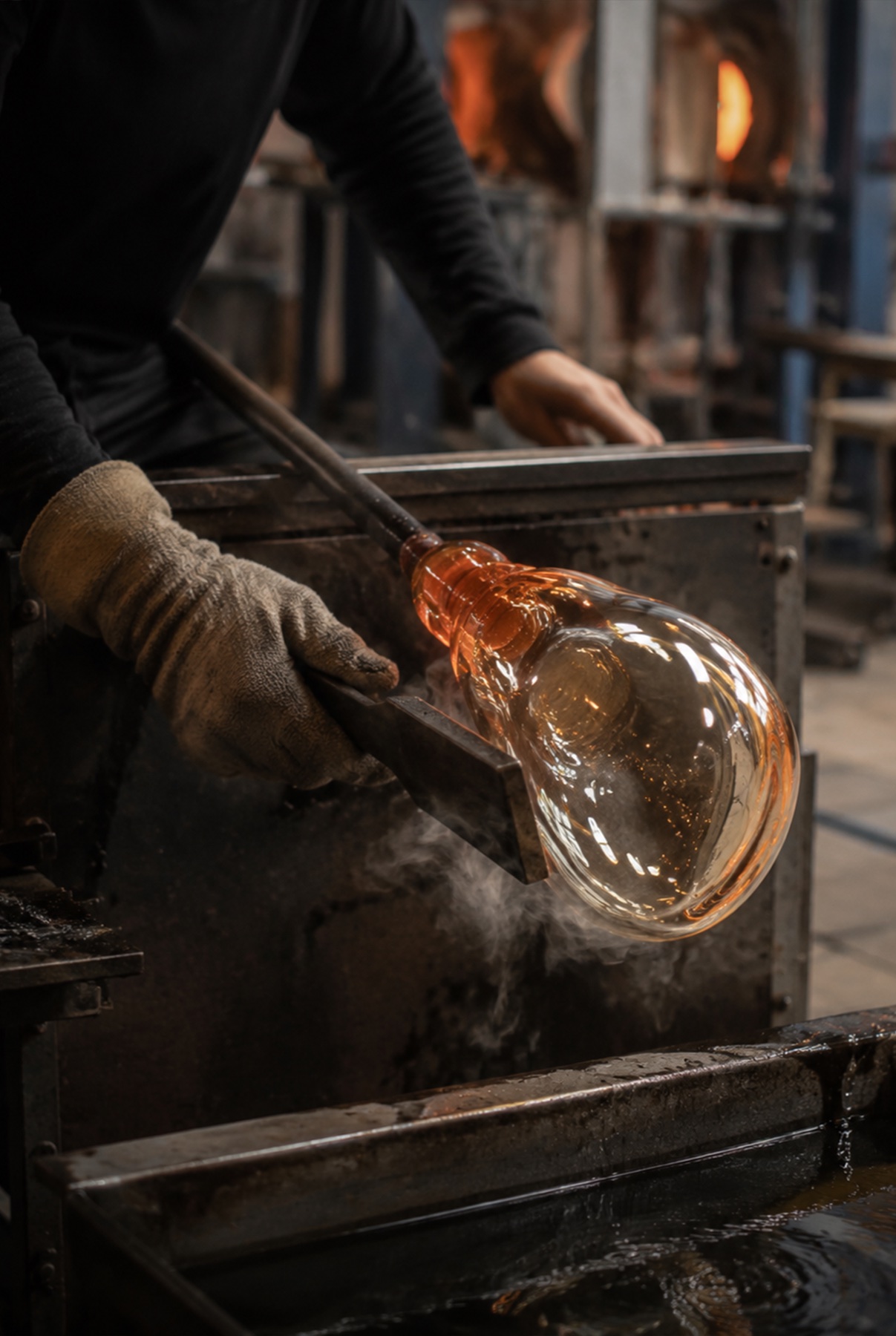
Material choice changes more than the appearance of a decorative light. It affects weight, light distribution, cleaning, production tolerance and the way the fixture ages in its environment. A finish that works in a private residence may not be the best choice for a busy hotel entrance or a coastal project.
Reference images are useful for establishing a direction, but they should be followed by physical samples. Screens display colour differently, and polished surfaces reflect the room around them. A sample viewed beside the actual interior finishes gives a more reliable basis for approval.
Glass offers shape and texture
Decorative glass can be clear, coloured, frosted, seeded, ribbed or formed by hand. Clear glass gives a lighter visual effect and lets the light source remain visible. Textured or frosted glass softens glare and adds detail even when the fixture is switched off.
Handmade glass will show small differences in thickness, bubbles, edge shape and colour. These variations are part of the process, but the acceptable range should be discussed before production. For a large installation, approve a representative set rather than a single perfect piece. That makes the agreed standard more realistic for the full quantity.
Crystal changes sparkle and weight
Cut crystal produces sharper reflections and a more formal appearance. The cut pattern, clarity and arrangement determine how much sparkle the chandelier creates. Crystal also adds weight, so the supporting frame, suspension hardware and ceiling structure need to be designed accordingly.
Ask how pieces are attached and whether replacements can be ordered later. In hospitality projects, keeping a small quantity of spare crystal can simplify future maintenance. The installation manual should identify repeated shapes and sizes so the site team can place them correctly.
Metal finishes respond to the surrounding interior
Brass tones, bronze, black, nickel and painted colours can all work well, but finish names alone are not precise enough for approval. One supplier's antique brass may be much darker or redder than another supplier's version. A signed sample or colour code removes that uncertainty.
Polished finishes reflect more of the room and show fingerprints easily. Brushed finishes are quieter and usually easier to maintain. Plated, painted and chemically treated surfaces have different colour tolerances, especially across separate production batches. If matching wall panels, handles or other metalwork is important, send a physical control sample to the lighting factory.
Match the material to the location
Humidity, salt air, cleaning chemicals and direct contact can affect a fixture over time. Tell the manufacturer where the light will be installed and whether it is close to an entrance, kitchen, spa or exterior opening. The team can then review the finish system and identify any areas that need extra protection.
The final material schedule should list the approved glass or crystal reference, metal finish, visible cable colour and canopy finish. Keep one approved sample with the buyer and one with the factory. Those samples become the practical reference during production inspection and final approval.