
Project Guides
How Custom Lighting Manufacturers Craft Natural Stone into High-End Fixtures | Meiyun Lighting
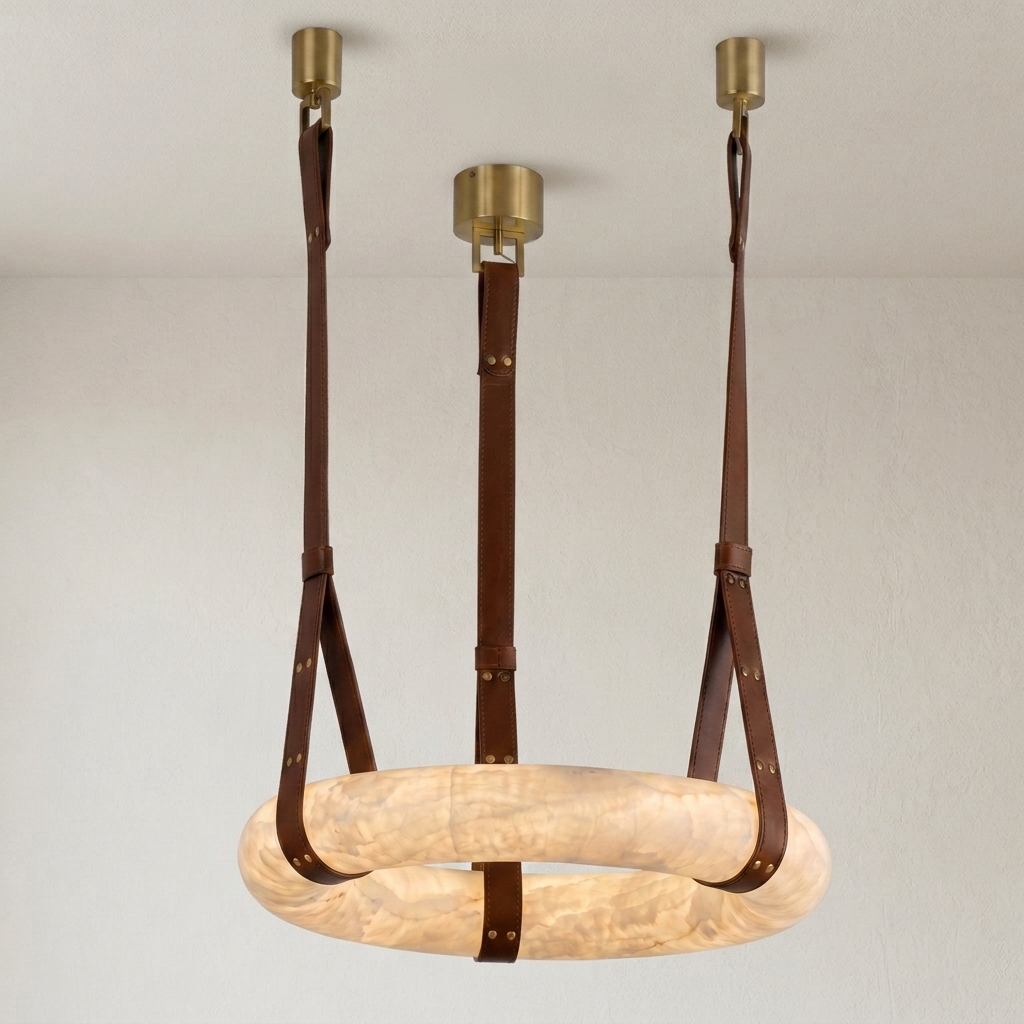
A practical guide to stone selection, precision fabrication, lighting integration, customization and quality control
Why Natural Stone Is Becoming a Premium Lighting Material
Natural stone brings something that manufactured materials cannot fully reproduce: every slab has its own mineral structure, color variation and veining. When carefully selected and engineered, marble, onyx, travertine and other natural stones can become refined lighting elements for luxury residential, hospitality and commercial interiors.
For a custom lighting manufacturer, the challenge is not simply cutting stone into a lamp. The real process is to balance the natural character of the material with optical performance, structural safety, heat management, electrical components and the design requirements of a project.
1. Selecting the Right Natural Stone
The manufacturing process begins before cutting. A professional lighting manufacturer evaluates stone color, veining, thickness, density, translucency, surface condition and consistency across the required quantity.
Marble is often selected for its sophisticated veining and architectural appearance. Onyx is especially valuable when a design requires transmitted light because its translucent structure can create a warm, layered glow. Travertine and other textured stones can provide a softer, more natural aesthetic.
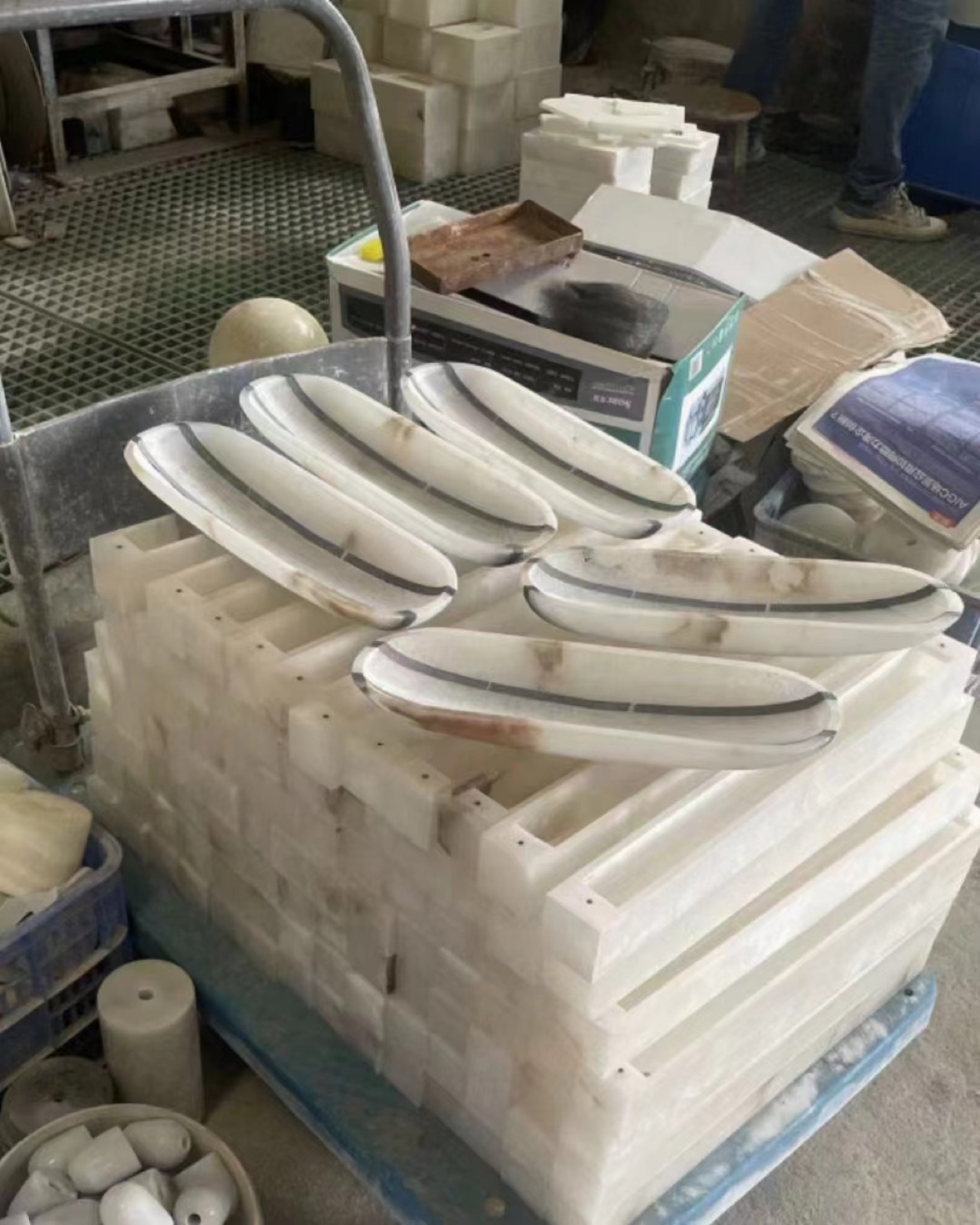
2. Turning a Stone Slab into a Lighting Component
Natural stone is heavy and relatively rigid, so fabrication requires controlled cutting and finishing. Depending on the design, manufacturers may use CNC machining, precision sawing, waterjet cutting, edge grinding, drilling and hand polishing.
For custom lighting, dimensional accuracy is particularly important. A stone diffuser may need to fit a metal frame, LED module, glass component or concealed mounting structure with very small tolerances. The final surface must also be finished without destroying the visual characteristics that make the stone unique.
3. Creating the Right Light Transmission
The appearance of a natural-stone lamp depends heavily on how light interacts with the material. For translucent stones, the thickness of the stone, LED position, diffusion layer, cavity depth and light intensity all influence the final effect.
A high-quality design avoids visible LED hotspots and uneven illumination. Manufacturers may combine LEDs with diffusers, internal reflectors or concealed optical structures so the stone appears to glow naturally rather than looking like a conventional LED fixture.
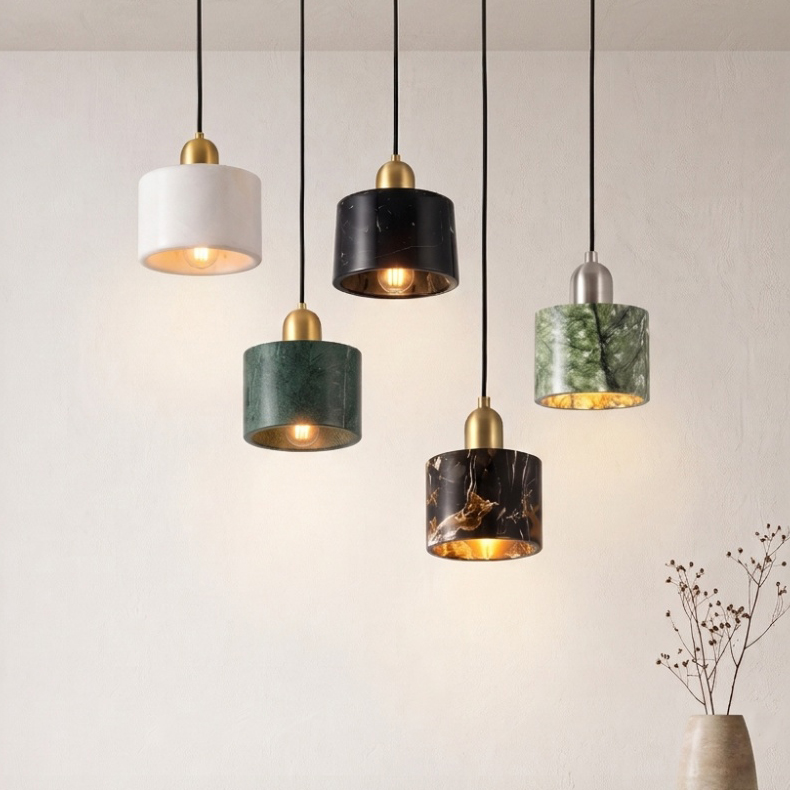
4. Combining Stone with Metal, Glass and Other Materials
Luxury lighting rarely relies on one material alone. Natural stone can be combined with brass, stainless steel, aluminum, glass, crystal, acrylic or other engineered components.
The key is proportion and detailing. A thin metal edge can visually frame a stone panel, while concealed hardware can keep attention on the stone itself. For hospitality and residential projects, these combinations allow the same basic concept to be customized for different interior styles.
5. Customization: From Drawing to Finished Fixture
Custom lighting projects often begin with an architectural drawing, designer sketch, CAD file, reference image or a required installation dimension. The manufacturer then converts the design into a production-ready structure.
- Review the designer’s drawings and project dimensions.
- Select suitable stone and confirm its visual characteristics.
- Develop the internal structure, mounting method and electrical layout.
- Create CAD drawings, prototypes or samples when required.
- Confirm surface finish, color, dimensions and lighting effect.
- Move into controlled production and final inspection.
6. Engineering Matters as Much as Appearance
A high-end stone light must be engineered for real-world installation. Weight, suspension points, structural connections, electrical safety, heat dissipation, service access and packaging all need to be considered.
This is especially important for large chandeliers, hotel lobby installations, stairwell fixtures and multi-piece custom lighting. A beautiful prototype is not enough; the finished product must also be practical to manufacture, transport, install and maintain.
7. Quality Control for Custom Stone Lighting
Because natural stone is a natural material, quality control is different from inspecting a mass-produced plastic or metal component. Manufacturers need to control both the material and the finished fixture.
- Stone inspection for cracks, defects and unsuitable areas.
- Dimensional inspection after cutting and machining.
- Surface and edge inspection after finishing.
- LED illumination and color consistency testing.
- Electrical and functional testing.
- Structural and assembly checks.
- Final appearance inspection before packaging.
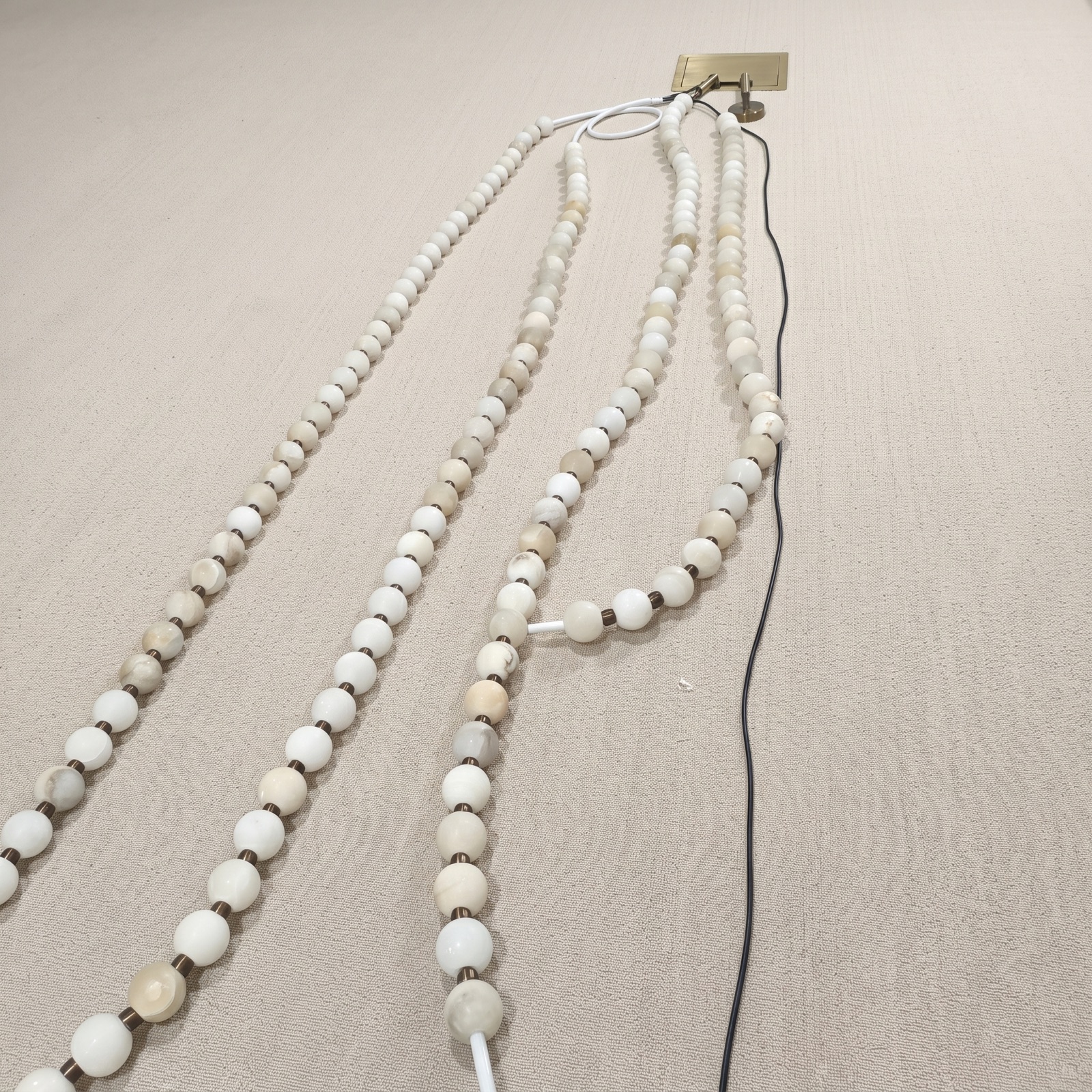
8. Why Manufacturer Experience Makes a Difference
Working with natural stone for lighting requires coordination between material sourcing, stone fabrication, lighting engineering, metalwork, assembly and quality control. A manufacturer with experience across these processes can identify potential problems earlier and adapt the design before mass production.
For architects, interior designers, hospitality groups and lighting buyers, this means a custom lighting supplier can contribute more than production capacity. The supplier can also help translate a design concept into a manufacturable lighting solution.
9. What Zhongshan Meiyun Lighting Can Provide for Custom Natural Stone Projects
Zhongshan Meiyun Lighting Co., Ltd. is a custom decorative lighting manufacturer in Zhongshan, China, with more than 14 years of manufacturing experience and a 4,000+ m² manufacturing base. Meiyun develops project-specific lighting from design and engineering through production, testing, packing and delivery.
For natural stone lighting projects, Meiyun can support:
- Natural stone lighting development — stone, marble and alabaster components can be developed around the required size, shape, finish and lighting effect.
- Custom chandeliers and pendant lights — project-specific dimensions, structures and proportions can be developed for villas, residences, hotels, clubs, malls and other architectural spaces.
- Stone fabrication and matching — natural stone components can be cut, matched and finished for repeatable assembly.
- Metal structure and hardware — metal fabrication supports frames, brackets, structural parts and connections for custom fixtures.
- Glass, crystal and mixed-material lighting — stone can be combined with hand-blown glass, crystal, metal and other materials to create coordinated lighting designs.
- Engineering and shop-drawing support — Meiyun works from CAD drawings, 3D models, sketches, dimensions or reference images and develops the structure, suspension, wiring and installation details.
- Sample and prototype development — samples or critical details can be produced when a project needs design or manufacturing verification before production.
- Lighting testing and quality control — dimensions, appearance, assembly, LED operation and illumination effects are checked before packing.
- Export packing and project support — custom fixtures can be prepared with labelled components and packing arrangements suited to overseas project installation.
For architects, interior designers, contractors and lighting buyers, this means the stone lighting concept can be developed as a complete fixture rather than as a stone component alone. Meiyun can coordinate material selection, stone fabrication, metal structure, lighting integration, finishing, assembly and final quality checks within one custom-lighting workflow.
Start with a drawing, 3D model, reference image, material idea or project dimensions. Meiyun can review the concept and develop the next production step around the project requirements.
10. Natural Stone Lighting for Luxury Projects
Natural-stone lighting can be developed for private residences, villas, luxury hotels, restaurants, clubs, retail spaces, offices and other architectural environments. Applications include chandeliers, pendant lights, wall lights, ceiling fixtures, linear lighting details and bespoke statement installations.
Conclusion
Turning natural stone into high-end lighting is a combination of material expertise, precision fabrication, lighting technology and custom engineering. The value is not only in the stone itself, but in the manufacturing process that transforms an individual piece of natural material into a functional architectural light.
For projects requiring custom dimensions, special materials or one-off lighting concepts, choosing a manufacturer capable of handling design development, fabrication and final assembly can help reduce production risk and achieve a more consistent result.