Project Guides
Office Reception and Meeting Room Lighting: Combining Brand Identity with Everyday Performance
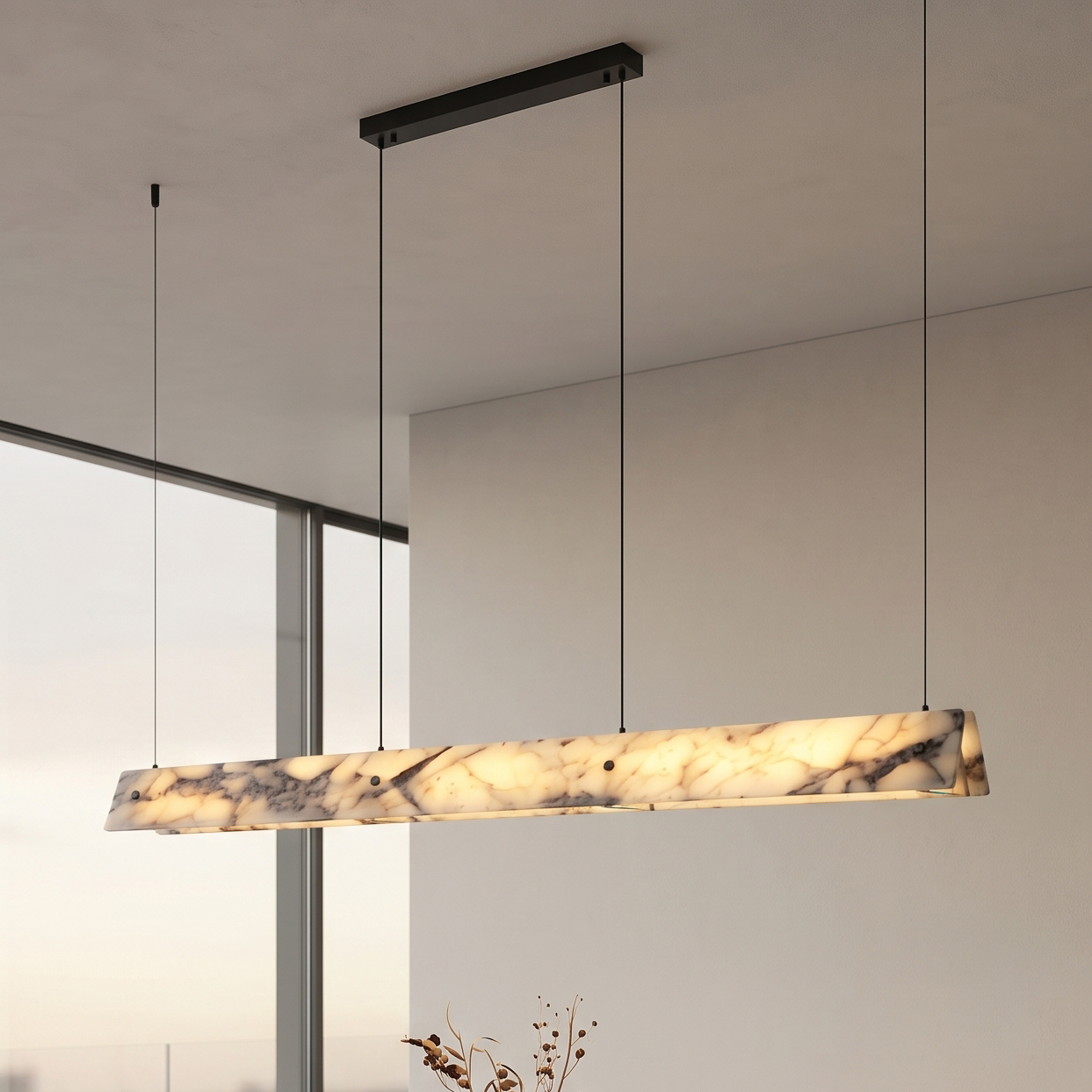
Cover: approved product-library reference, not a photograph of a completed office project.
PROJECT & PROCUREMENT GUIDE
Introduction
An office reception creates the first impression for visitors, while meeting rooms support conversations, presentations, and focused work. Lighting in these areas needs to communicate the organisation’s character without sacrificing comfort or functionality. Custom decorative fixtures can help connect the interior design to the brand, provided they are coordinated with the practical lighting requirements of the space.
1. Make the Reception Area Memorable
The reception desk is often the visual centre of an office entrance. A custom pendant, linear feature, or sculptural chandelier can help define the space and give visitors a clear impression of the brand. Fixture shape, finish, and material should relate to the reception desk, wall finishes, signage, and overall interior concept. Scale matters: a statement fixture should feel intentional, not oversized or distracting.
2. Support the Work of the Space
Reception areas need comfortable illumination for greeting visitors, reading information, and moving safely through the entrance. Meeting rooms require light that supports faces, documents, screens, and presentations. Decorative fixtures can establish atmosphere, but task and ambient lighting should be planned to meet the room’s actual uses.
3. Reduce Glare and Improve Visual Comfort
Glare from exposed light sources, reflective surfaces, or poorly positioned fixtures can make people uncomfortable and interfere with screen-based meetings. The lighting layout should consider screen locations, camera positions, window daylight, table orientation, and the reflectivity of desks and walls. Diffusers, shielding, suitable optics, and appropriate fixture placement can help manage glare.
4. Choose Colour and Control Carefully
Colour temperature and colour rendering influence how a workplace feels and how finishes and people appear. The right specification depends on the design intent, the building’s existing lighting, and the activities carried out in the room. Dimming and scene controls can be useful in meeting rooms—for example, brighter settings for discussion and note-taking, and reduced light levels near screens during presentations.
5. Use Custom Fixtures to Reinforce Brand Identity
Customisation allows a company to carry its design language into lighting through distinctive silhouettes, signature finishes, branded colour accents, or coordinated fixture families. The goal is not simply to display a logo, but to express the brand through proportion, material, craftsmanship, and consistency. A reception fixture can become a subtle signature when it is designed as part of the wider interior.
6. Plan for Ceiling Conditions and Maintenance
Office ceilings vary widely, from open ceilings and exposed services to suspended grids and feature ceilings. Before production, confirm ceiling construction, mounting points, available space, driver access, suspension length, and coordination with HVAC, sprinklers, and other services. Fixtures should also be easy enough to maintain without disrupting daily office operations.
7. A Checklist for Project Teams
Confirm the room layout, ceiling height, desk and table positions, screen locations, target light effect, finish, dimensions, control requirements, installation method, and applicable standards. Share drawings and reference photos with the manufacturer early. For custom designs, approve the sample and final specifications in writing before production begins.
Give the Reception Area a Clear Visual Focus
A custom pendant, chandelier, or coordinated wall fixture can help express a company’s character. Its size and position should relate to the reception desk, ceiling, signage, and visitor approach without obstructing circulation or the reception team’s work.
Design Meeting Rooms Around Their Tasks
Meeting rooms support video calls, presentations, workshops, and discussion. Consider table position, screens, cameras, daylight, and document reading. Decorative fixtures contribute atmosphere, while general and task lighting provide practical visibility.
Control Glare and Reflections
Review fixtures from seated positions as well as from the doorway. Coordinate light with screens, glossy tables, glass partitions, windows, and polished finishes. Dimming and separate lighting layers may help adapt the room to different activities.
Coordinate Finishes, Controls, and Building Services
Review samples alongside the actual interior palette. Confirm whether dimming or preset scenes are needed, and check compatibility between the fixture, driver, dimmer, and control system. Coordinate mounting and service access with HVAC, sprinklers, detectors, and ceiling panels.
Plan for Maintenance and Future Changes
For multi-room or multi-site projects, document fixture schedules, finishes, and specifications so future additions remain coordinated. Discuss cleaning methods and access to replaceable components before the ceiling and interior finishes are finalised.
Common Mistakes to Avoid
- Choosing a statement light without checking ceiling and furniture proportions.
- Placing bright sources where they reflect on screens or glossy surfaces.
- Using decorative lighting as the only source for work tasks.
- Failing to verify dimmer and control compatibility.
A Practical Project Checklist
- Floor plan, ceiling height, desk/table positions, screen and camera locations.
- Brand style, interior materials, desired atmosphere, and reference fixtures.
- Fixture dimensions, finish, light distribution, and control requirements.
- Mounting, maintenance access, and coordination with other building services.
- Quantity, schedule, destination market, and required technical documents.
What Zhongshan Meiyun Lighting Co., Ltd. Can Do
Zhongshan Meiyun Lighting Co., Ltd. focuses on decorative lighting and custom project enquiries. For this type of project, Meiyun can discuss decorative fixture selection and project-specific customisation based on the client’s reference images, drawings, dimensions, material preferences, finishes, and estimated quantities. Depending on the design, discussions may cover fixture proportions, material combinations, finish options, mounting details, sample requirements, production considerations, and coordinated fixture styles. Specific feasibility, available materials, minimum quantities, technical performance, samples, certifications, lead time, warranty, and commercial terms must be confirmed for each product and project.
Information to Include in Your Enquiry
- Project type, location, and intended application.
- Drawings or reference photos, dimensions, ceiling or mounting conditions, and preferred style.
- Materials, finish references, estimated quantity, and whether a sample is required.
- Destination country, target delivery date, and any required technical documents or certifications.
Conclusion
Great office lighting makes a space feel like the organisation it represents while helping people work comfortably. By balancing visual identity, glare control, flexible use, and practical maintenance, reception and meeting-room lighting can be both distinctive and effective.
Meiyun Lighting offers custom decorative lighting for offices, reception areas, meeting rooms, and other commercial interiors. Send us your layout, reference images, desired finish, dimensions, and quantity to explore a suitable solution.
Frequently Asked Questions
Can Meiyun customise reception or meeting-room fixtures?
Meiyun can discuss decorative fixtures based on project drawings, reference images, dimensions, finishes, materials, and quantities. Feasibility, samples, technical details, and terms should be confirmed for each project.
What matters when choosing a reception chandelier?
Consider ceiling height, desk size, visitor sightlines, brand identity, glare, mounting, and the relationship with signage and surrounding materials.
Can decorative lights work in a video-meeting room?
Yes, if the design is coordinated with screen positions, camera angles, glare control, and general lighting. Review the complete layout for the room’s actual use.
Can the lights support dimming or different scenes?
This depends on the selected fixture, driver, and control system. Specify the desired controls early so compatibility can be checked.
What do you need to prepare a quotation?
Share drawings or photos, dimensions, finish preferences, quantity, destination country, target delivery date, and any control or certification requirements.