Project Guides
Retail Store Lighting Design: Using Custom Decorative Fixtures to Strengthen Brand Experience
A detailed guide for boutiques, flagship stores, showrooms and premium retail interiors
Introduction: Retail Lighting Is Part of the Brand, Not Just the Fit-Out
Retail store lighting affects what shoppers notice, how they move through a space, how materials and merchandise appear, and what they remember after leaving. In a boutique or flagship store, decorative lighting can communicate brand character while functional lighting helps merchandise remain clear and inviting.
A strong retail lighting plan balances product visibility, visual hierarchy, comfort, flexibility, energy management, and maintenance. The right fixture is not necessarily the brightest or most dramatic; it is the one that supports the store’s commercial and design objectives.
1. Map the Customer Journey and Merchandise Priorities
Begin with the store plan and customer journey: entrance, window display, hero product, main merchandise zones, consultation or fitting areas, checkout, and circulation. Identify where customers should pause, what products need emphasis, and which routes must remain clear. This map informs the balance between general illumination, accent lighting, task lighting, and decorative fixtures.
Avoid choosing decorative fittings before the display strategy is understood. A large pendant can become a focal point, but if it competes with the featured product or blocks a sightline, it may weaken rather than strengthen the store experience.
2. Build a Clear Lighting Hierarchy
Ambient lighting
Ambient lighting supports orientation and establishes the overall visual tone. Its brightness and distribution should work with the ceiling height, surface reflectance, daylight, and merchandising plan. Uniform light may be appropriate in some areas, while a more varied approach can help distinguish zones.
Accent lighting
Accent lighting draws attention to selected merchandise, displays, artwork, or architectural features. Beam angle, aiming, distance, and contrast all affect the result. Test the light on the actual products rather than relying only on nominal fixture output or a rendering.
Task lighting
Task lighting supports checkout, product inspection, consultation, and other activities that require clear visibility. It should be functional without creating uncomfortable glare for staff or customers.
Decorative lighting
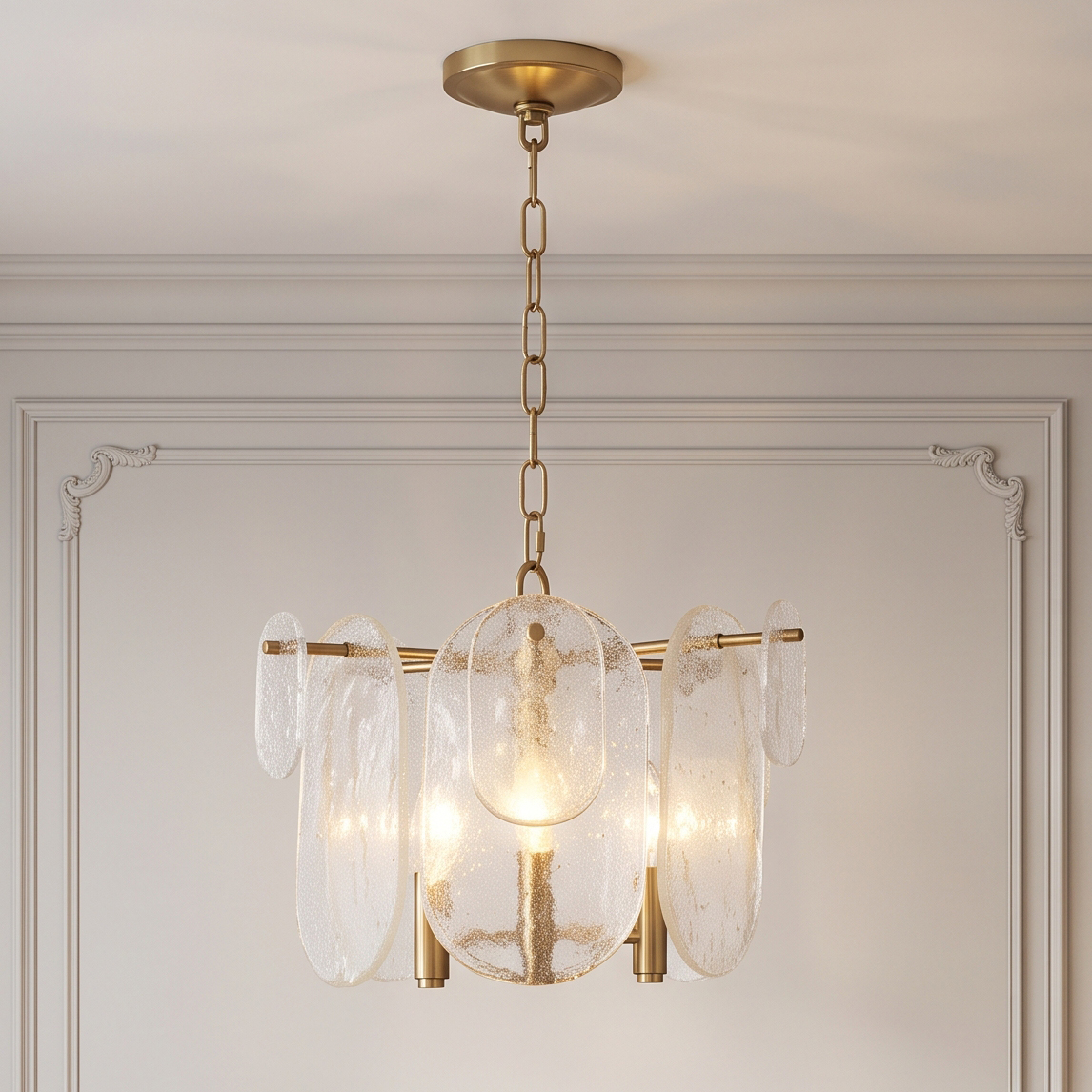
Decorative pendants, chandeliers, sconces, and sculptural fixtures can create brand recognition and a memorable visual anchor. They should complement the merchandise and architecture, not compete with every display at once.
3. Render Merchandise and Materials Accurately
Color rendering is important because customers judge fabrics, cosmetics, jewelry, leather, food, and other products by their appearance. A lighting source that shifts color or creates strong unwanted reflections may lead to an inaccurate impression of the product. Select color quality and beam characteristics based on the category of merchandise and the brand’s requirements.
Different products respond differently: glossy packaging may reflect the source, dark fabrics may absorb light, and polished metal or glass may create bright highlights. Test representative products under the proposed fixtures, including the angles from which shoppers are likely to view them.
4. Use Decorative Fixtures to Express Brand Identity
A custom pendant over a central display, a repeated wall-light family, or a sculptural fixture near the entrance can help make a store recognizable. The form, material, finish, and scale should reflect the brand story. For example, a minimalist fashion brand may prefer clean geometry and restrained finishes, while a lifestyle boutique may use tactile materials and softer shapes.
Consistency matters when the concept expands to multiple locations. A documented family of fixtures can preserve the visual language while allowing adjustments for different ceiling heights, store footprints, and local installation conditions.
5. Coordinate Fixtures with Glass, Mirrors and Reflective Surfaces
Retail environments often include glass display cases, mirrors, glossy floors, polished metal, and illuminated signage. These surfaces can multiply reflections and make bright sources distracting. Check the store from customer eye level and from the cashier or consultation position. Adjust shielding, source location, aiming, and beam distribution as needed.
Lighting should also work with security cameras, signage, sprinkler heads, ceiling access, and merchandising systems. Early coordination helps avoid late changes that compromise either the design or the installation.
6. Plan for Seasonal Merchandising and Store Updates
Retail layouts change for new collections, holidays, promotions, and product launches. Adjustable track heads, flexible circuits, dimmable zones, and accessible aiming can help the lighting adapt. Decorative fixtures should be located so they do not restrict display changes or block important views across the store.
If the same fixture is used in multiple branches, document the approved mounting position, finish, light-source specification, and control settings. This helps local teams make changes without unintentionally changing the brand’s appearance.
7. Consider Energy, Controls and Operating Schedules
Retail stores may need different scenes for opening hours, window display, cleaning, stock handling, and after-hours security. Choose a control approach that fits the staffing model and can be operated reliably. Check dimming compatibility, sensor behavior, and control zoning with the electrical design.
Energy efficiency should be evaluated alongside light quality and maintenance. A solution that requires frequent adjustment or difficult replacement may create operational costs that are not obvious at the time of purchase.
8. Specify Custom Fixtures for Rollouts and Repeat Orders
For multi-store projects, product consistency is a major procurement concern. Confirm dimensions, materials, finish codes, driver details, mounting hardware, packaging, installation instructions, and spare parts. Approve samples before bulk production and define which variations are acceptable for natural materials or hand-finished components.
A full-scale mock-up or sample installation can reveal whether a fixture feels too large, creates glare, interferes with signage, or looks different under the store’s actual finishes. These checks are especially valuable before a rollout to several locations.
9. Retail Lighting Specification Checklist
- Map the customer journey, merchandise priorities, and visual focal points.
- Define the role of ambient, accent, task, and decorative lighting.
- Test color rendering and reflections on representative products.
- Check decorative fixture scale and customer sightlines.
- Coordinate with display systems, signage, sprinklers, cameras, and ceiling access.
- Plan flexible scenes and aiming for seasonal merchandising.
- Document samples, finish codes, dimensions, drivers, mounting, packaging, and spare parts.
Frequently Asked Questions (FAQ)
What types of lighting are used in retail stores?
Most stores combine ambient lighting, accent lighting, task lighting, and decorative fixtures. The balance depends on merchandise, layout, brand identity, and operating needs.
Can custom lighting strengthen a retail brand?
Yes. A coordinated fixture family, distinctive materials, and carefully considered scale can reinforce the brand when integrated with the architecture and merchandising plan.
How can retail lighting avoid distracting reflections?
Review the space from customer viewpoints, test reflective products and surfaces, and adjust source position, shielding, optics, and aiming.
What matters when specifying lighting for multiple stores?
Repeatability of dimensions, finishes, light quality, mounting details, controls, packaging, spare parts, and approved samples is essential.
Should a retailer test fixtures before bulk ordering?
A sample or mock-up helps verify scale, light distribution, color appearance, glare, and coordination with real products and finishes.
How Meiyun Lighting Can Support Your Project
Zhongshan Meiyun Lighting Co., Ltd. provides OEM and ODM custom decorative lighting development for hospitality, residential, and commercial projects. We work with importers, interior design studios, lighting consultants, contractors, project buyers, and cross-border sellers to discuss product concepts and manufacturing requirements.
For retail and showroom projects, Meiyun can discuss custom pendants, chandeliers, wall lights, ceiling fixtures, and coordinated decorative fixture families based on brand references, interior drawings, desired dimensions, materials, and finish palettes.
- Custom development based on drawings, reference images, approved samples, or a written design brief.
- Material and finish discussions covering glass, crystal, metal, and stone-inspired options such as marble, onyx, and travertine, subject to design and technical feasibility.
- Project-specific dimensions, mounting details, finishes, and fixture configurations.
- Drawing and sample review before production, helping project teams identify design or installation questions early.
- Manufacturing and export coordination, with specifications documented to support repeat orders and multi-phase projects.
To start a conversation, send your drawings or reference images, target dimensions, material and finish preferences, project quantity, destination market, and required timeline. The more clearly the installation conditions and performance requirements are defined, the easier it is to evaluate a suitable custom solution.
Meet Meiyun Lighting at the Canton Fair
The Canton Fair is taking place in Guangzhou from October 15–19, 2026. If you are visiting the fair, we welcome you to meet Meiyun Lighting at booth 14.4 H06 and discuss custom decorative lighting for upcoming hotel, retail, resort, and commercial projects. If you cannot visit in person, contact us to arrange a follow-up conversation after the fair.
Email: sharen@meiyunlighting.com | Websites: www.meiyunlighting.com and www.meiyunlight.com